The politics of tomorrow: Why Kenya keeps replacing the future with the next election
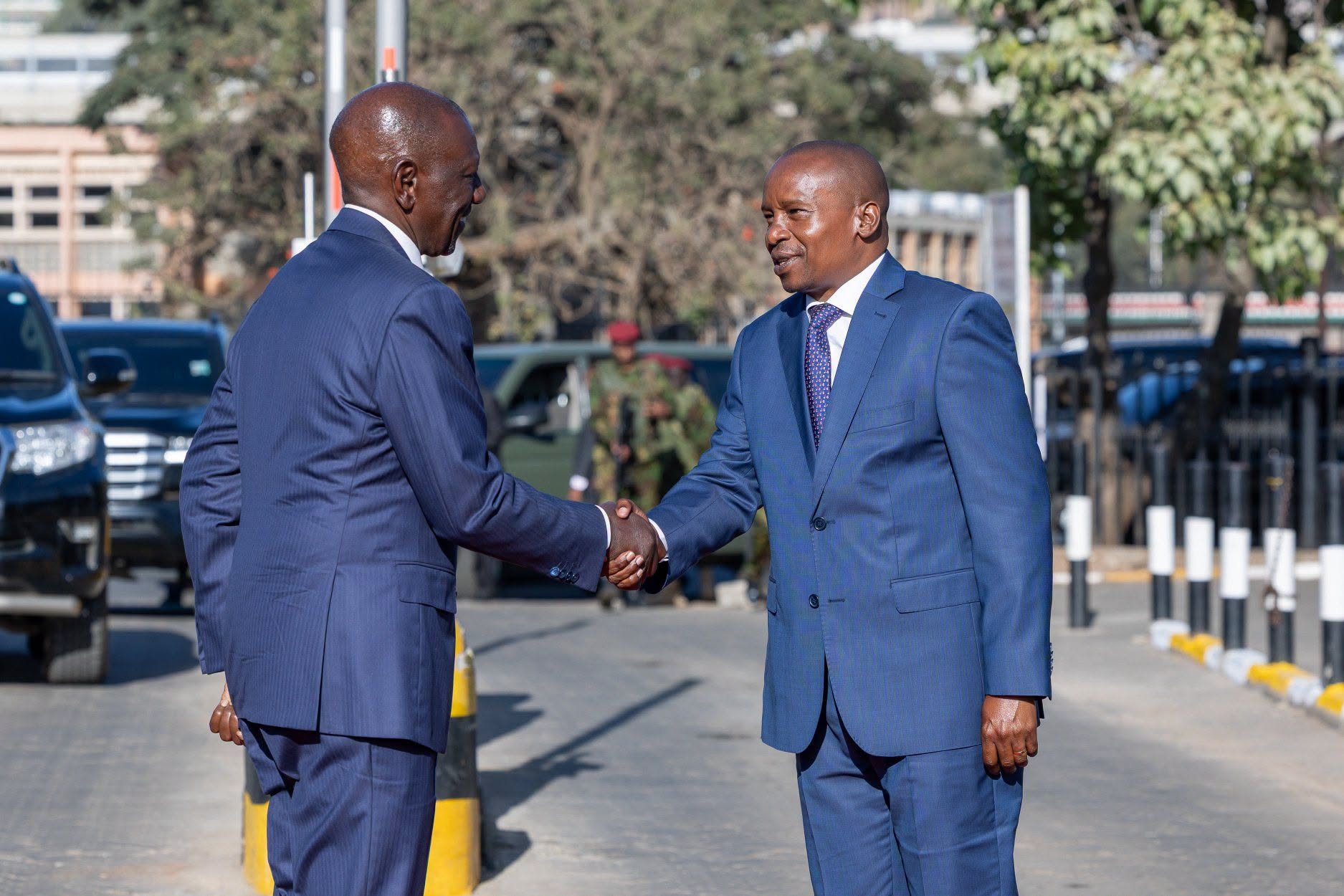
President William Ruto and his deputy Kithuire Kindiki
Kenya has launched a national conversation about 2060 while its political class is already consumed by 2027 — and that contradiction may be the most important story of this moment.
By Levis Wangamati
Kenya is having another conversation about the future. Yesterday, the country formally launched nationwide consultations on a long-term development framework looking beyond Vision 2030, with Vision 2060 emerging as the proposed horizon. President William Ruto has called on Kenyans to help shape the country’s direction — an invitation to imagine the Kenya that future generations will inherit.
That should be encouraging. A country that stops thinking about tomorrow eventually becomes trapped by today. But there is an uncomfortable contradiction at the heart of this latest national conversation. We are being invited to imagine 2060 at precisely the moment when our political discourse is being consumed by 2027. Kenya is trying to look four decades ahead while much of its political class is already looking one election ahead.
There is nothing inherently wrong with politicians thinking about elections. Elections are the mechanism through which citizens choose their leaders. The problem begins when the electoral calendar displaces the national calendar — when the next campaign matters more than the next generation, and when every long-term ambition is forced to compete with the immediate demands of political survival.
Vision 2030 was itself an attempt to escape that cycle. It gave Kenya a long-term development framework intended to guide the country beyond individual administrations. Yet as its horizon approaches, Kenya is once again asking what comes next. That does not automatically mean Vision 2030 failed. Long-term plans must be reviewed, adjusted and renewed as circumstances change. But it should prompt a harder question: why is it so difficult to maintain national continuity when political leadership changes?
The answer lies partly in the incentives of politics. Elections reward visible results. Politicians understandably gravitate towards projects that can be pointed to, inaugurated and associated with their names. But some of the most important investments a country can make produce no immediate political reward. A school built today may educate children for decades. A policy reform may take years before its benefits become obvious. A research programme may produce breakthroughs under a government that did not create it. A forest planted today may matter more to a Kenyan in 2060 than any campaign slogan of 2027.
Political careers are short. National development is supposed to be long. That tension is the root of the problem.
Vision 2060 should not, therefore, simply become another document launched with speeches, logos and ambitious targets. It must become a genuine test of whether Kenya can finally separate national planning from political succession. The government has said the new vision should be insulated from electoral politics. Prof Anyang’ Nyong’o has argued that long-term development goals should not be disrupted by electoral cycles. Those are the right sentiments. But promises deserve public scrutiny, because the credibility of any 2060 plan will ultimately depend on what happens when the politicians who launched it are no longer in office.
A genuine national vision must survive a change of government.
Kenya should be mature enough to say that a good idea does not become bad simply because it was proposed by a political opponent. A new administration should not feel compelled to erase the previous administration’s fingerprints before it can claim ownership of the future. That is how countries lose time. And time is precisely what Kenya cannot afford to waste.
The 2060 conversation is particularly urgent because the people who will live with its consequences are already among us. Today’s young Kenyans are not merely the leaders of tomorrow. They are students, workers, entrepreneurs, voters, innovators and citizens whose choices are already shaping the country. For years, we have told young people that they are leaders of tomorrow. It sounds inspiring. It can also become a convenient way of postponing their participation.
Tomorrow is not a guarantee.
The young people being invited to imagine Kenya in 2060 deserve more than a seat in a conference hall. They deserve a meaningful role in deciding what that future looks like — the right to ask what education they will receive, what jobs they will find, what environment they will inherit, what institutions will protect their rights, and whether public resources will still be consumed by short-term political calculations. If Vision 2060 is truly about the future, young people cannot merely be its audience. They must be among its authors.
This is also why the national conversation must be more than a government exercise. Public participation cannot mean gathering citizens, presenting a finished idea and calling the meeting a consultation. It must mean listening seriously, incorporating competing views and creating mechanisms through which citizens can later determine whether the promises made today are actually being fulfilled. The questions should be uncomfortable. What happens to Vision 2060 when governments change? Who measures its progress? Which targets will be legally protected? How will Parliament, counties, civil society and ordinary citizens hold successive administrations accountable?
A serious vision should welcome those questions.
Because the future is not created by optimism alone. It is created by institutions, budgets, policies, discipline and continuity. When the next election consistently overwhelms the next generation, democracy becomes dangerously short-sighted. Leaders begin governing for the next opinion poll instead of the next decade. Long-term projects become vulnerable to political transitions, while short-term announcements receive disproportionate attention.
A country can win every election and still lose its future.
That is the warning Kenya must carry into the Vision 2060 conversation. We do not need another grand document that looks impressive on a shelf. We need a national commitment that survives political seasons — leaders who understand that governing is not merely the art of delivering what can be seen before the next election, but the responsibility of building things whose full value may only be appreciated long after they have left office.
Let 2027 be about choosing leaders. Let 2030 be a lesson in what worked, what failed and what must change. But let 2060 remind us that this country belongs to more than the people currently occupying political office.
The future should not be a campaign promise. It should be a national responsibility. And if today’s leaders truly want to be remembered as architects of Kenya’s tomorrow, they must be willing to build for people they may never meet, in a country they may never live to see.
Because tomorrow is not a guarantee.
It is a responsibility.
Similar Posts by The Mt Kenya Times:
- Mt Kenya Times ePAPER September 30, 2026
- Ruto mocks UNGA critics: “That requires someone with sense”
- Media warns: Information gaps fuel 2027 disinformation risk
- Gachagua’s DCP holds strategic NEC meeting ahead of 2027 polls
- Sifuna’s unending party ownership hurdles
About the Author