Rejecting the billions: Can crowdfunding clean up Kenyan politics?

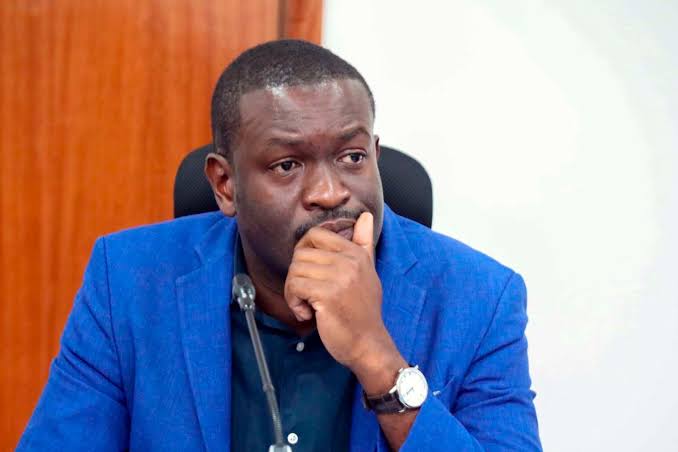
Nairobi Senator Edwin Sifuna
The Linda Mwananchi movement has sparked a serious question about whether citizen-funded campaigns can break the grip of money on Kenya’s democracy.
By Angela Mwanga
Kenya’s political culture may be shifting in ways that would have seemed improbable even five years ago. Voters who once accepted cash handouts as a routine feature of election season are increasingly questioning the influence of wealthy political patrons — and, in some cases, putting their own money behind the candidates they believe in. It is an early and fragile development, but it is real, and it deserves to be examined honestly.
The clearest recent example is the Linda Mwananchi movement led by Nairobi Senator Edwin Sifuna. In a deliberate break from the transactional financing that has long defined Kenyan politics, Sifuna invited ordinary citizens to contribute as little as KSh10 towards the movement’s activities. The response was striking. Within 36 hours, his campaign reported that more than 9,000 Kenyans had collectively contributed over KSh2.2 million. That figure subsequently rose to KSh6.5 million — a sum that, by conventional standards, is modest, but in political terms carries enormous symbolic weight.
What matters here is not the amount. It is the impulse behind it. These were not donations extracted through obligation, ethnic loyalty, or the quiet expectation of a future favour. They were voluntary, small, and spread across thousands of individuals who wanted a stake in something they believed was worth supporting. That is a meaningfully different political transaction from the one Kenyans have grown accustomed to — and the difference matters more than the money.
Sifuna has been deliberate in framing the Linda Mwananchi model as a challenge to the patronage system that has distorted Kenyan democracy for decades. The argument is straightforward: a politician who is funded by citizens answers to citizens. A politician who is funded by a handful of wealthy backers answers, eventually, to those backers. The funding structure of a campaign does not merely reflect the values of a candidate — it shapes the incentives of the leader they become. If that logic holds, then changing how campaigns are financed is not a peripheral reform. It is a central one.
A similar mood was visible in the recent Ol Kalou by-election, where voters demonstrated that electoral outcomes are not always dictated by the depth of a candidate’s pockets. The contest generated genuine conversation among Kenyans about whether something is changing in the relationship between money and votes — whether citizens are beginning to prioritise integrity and demonstrated commitment over the size of the handout placed in their hands on polling eve. The results were not conclusive proof of a revolution, but they were evidence of a conversation worth having.
It is tempting, and understandable, to read these developments as signs of a permanent cultural shift. But crowdfunding alone cannot eradicate corruption, and it would be a mistake to overstate what these early signals mean. Kenya’s governance challenges are structural as much as they are behavioural. Campaign financing rules remain weak and poorly enforced. Oversight institutions lack the independence and resources to hold powerful political actors to account. The Independent Electoral and Boundaries Commission has repeatedly faced questions about its capacity to monitor campaign expenditure in any meaningful way. And the informal economy of political patronage — the harambees, the handouts, the constituency development fund manipulation, the last-minute voter inducements — operates through channels that no fundraising platform can reach or disrupt on its own.
Research into Kenya’s campaign finance system consistently points to the same conclusions: meaningful reform requires empowered voters, yes, but also transparent disclosure requirements, enforceable spending limits, independent electoral oversight, and real consequences for those who break the rules. The legal framework exists in outline. The political will to enforce it has been consistently absent. Citizen enthusiasm is a necessary condition for change. It is not, by itself, a sufficient one, and history offers sobering lessons about how quickly popular energy can be absorbed and neutralised by entrenched systems.
There is also a class dimension to this conversation that is rarely addressed directly. The Kenyans most likely to contribute KSh10 to a crowdfunding campaign are also, broadly speaking, the Kenyans most likely to have alternatives — urban, connected, educated, and with enough economic security to make political choices based on values rather than immediate material need. In rural constituencies, where the economy is harder and the state more distant, the handout remains a rational calculation for many voters, not a moral failure. Any honest reckoning with money politics in Kenya must grapple with that reality rather than simply celebrating the behaviour of those who can afford to reject it.
None of that diminishes what is happening. The willingness of thousands of ordinary Kenyans to contribute KSh10 to a political movement — knowing it will not buy them a favour, a job, or a seat at any table — reflects a maturing democratic instinct that deserves to be taken seriously. It suggests that at least a meaningful portion of the electorate is no longer content to be a passive recipient of political largesse, but wants instead to be an active participant in how power is sought, exercised, and ultimately judged. That is not a small thing. In a country where politics has for so long been experienced as something done to citizens rather than by them, it represents a genuine shift in self-conception.
Technology has made this shift easier to act on. Kenya’s mobile money infrastructure — among the most advanced on the continent — means that small contributions can be aggregated quickly, transparently, and at scale. The barrier to political participation has been lowered in a practical sense, and platforms like M-Pesa have made it possible for the kind of broad-based fundraising that once required physical infrastructure to happen in days rather than months. That is a structural advantage that Kenyan reformers should be building on far more systematically than they currently are.
If the instinct visible in the Linda Mwananchi campaign can be sustained beyond the excitement of a single political moment, and if it is matched by the institutional reforms that Kenya’s democracy still urgently needs, the combination could genuinely alter the country’s political economy. Leaders funded by citizens tend to answer to citizens. That is not a Kenyan observation alone — it is a lesson drawn from every democracy that has tried to reduce the corrupting influence of concentrated money in public life.
The billions have not gone anywhere. They will return at the next election cycle, deployed with the same efficiency and the same expectations attached. The question is whether enough Kenyans will have decided, by then, that the price is simply too high — and whether the alternative they are beginning to build today will be strong enough, and broad enough, to hold.
Similar Posts by The Mt Kenya Times:
- Media warns: Information gaps fuel 2027 disinformation risk
- Gachagua’s DCP holds strategic NEC meeting ahead of 2027 polls
- Sifuna’s unending party ownership hurdles
- From leading within to changing the world: The Fredah Mainah story
- Kagwe launches nationwide soil testing drive to guide fertiliser use
About the Author