Celebrating community leadership: Unity and the power of grassroots development
 The Mt Kenya Times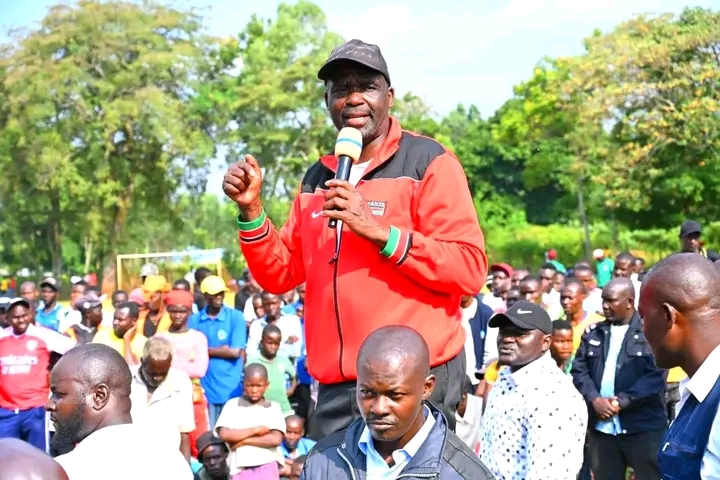
Eng. Nicolas Gumbo

A 40-year sporting milestone in Gem Constituency brought together residents, leaders and aspirants in a celebration of local initiative and shared purpose.
By James Kilonzo
Eng. Nicolas Gumbo yesterday attended the 40th anniversary celebration of Karariw Sports, hosted by the Karariw Self Help Group at Karariw Comprehensive School in Masogo A Village, Nyandiwa Sub-location, Central Gem Ward, Gem Constituency. His presence underscored the deep connection between leadership, community and the unifying power of sport.
The gathering was far more than a ceremonial milestone. It was a vivid demonstration of how local initiative and grassroots organisation can create spaces for young people to express themselves, for neighbours to reconnect and for a shared sense of purpose to be renewed. In a society where economic pressures and political contestation can strain community relations, coming together to celebrate a long-standing local institution offered a timely reminder that continuity, cooperation and collective effort remain central to the wellbeing of communities.
Karariw Sports, nurtured over four decades by the Karariw Self Help Group, has provided a platform for athletic development while simultaneously serving as a space for social interaction and community engagement. Through sport, young people develop values that extend well beyond the playing field — teamwork, discipline, commitment and responsibility — qualities that shape responsible citizens who understand the importance of cooperation and mutual respect.
The anniversary also shone a light on the importance of recognising institutions that have remained relevant across generations. The continuation of Karariw Sports reflects the quiet, sustained commitment of community members who have invested their time, energy and resources in an initiative that has served successive generations. Community development is not achieved solely through large government programmes. It depends equally on local people organising themselves around shared priorities and taking ownership of initiatives that improve their own lives.
The fundraising activities held during the anniversary underscored that point further. Local organisations require resources, skills and partnerships to sustain their work. Fundraising gives communities the opportunity to contribute directly to projects they understand and value. Public leaders, private actors and development partners all have a responsibility to support such efforts in ways that strengthen local capacity while promoting transparency and accountability.
The sporting programme provided another memorable dimension to the occasion. A match between Sirembe FC from North Gem Ward and Uriri FC from West Gem Ward drew players, supporters and residents together in an atmosphere of healthy competition and genuine community interaction. Sirembe emerged victorious with a narrow win, though the significance of the event reached far beyond the final score. The contest demonstrated how sport bridges communities, encourages young people to channel their talents constructively and creates meaningful opportunities for interaction across different areas.
Grassroots sporting development should therefore be viewed as an integral component of broader community development. Young people need organised spaces to participate, develop their abilities and build lasting relationships. Properly supported sporting programmes encourage discipline, teamwork and constructive use of time while also creating pathways for talented individuals who might otherwise lack access to structured opportunities. Supporting grassroots sport is ultimately an investment in young people and in the social structures within which they live.
The role of the Karariw Self Help Group deserves particular recognition. Self-help groups remain among the most important institutions in Kenyan communities — structures through which residents organise, pool resources and pursue projects that respond directly to local needs. Their effectiveness rests on committed leadership, active participation and meaningful partnerships with other stakeholders. Policymakers and county leaders should recognise such groups as genuine development partners, providing them with access to capacity building, technical assistance and appropriate funding rather than treating them merely as beneficiaries of public programmes.
Gumbo’s presence at the celebration also invites reflection on what grassroots leadership means in practice. As an aspirant for the Siaya County governor’s seat, his participation in a community event of this nature demonstrates the importance of remaining genuinely connected to ordinary residents. Leadership should not be confined to formal political meetings or major public occasions. It must also involve consistent engagement with community groups, youth organisations, sports associations and the countless other institutions that form the foundation of local society.
Communities are not passive recipients of development. They are active participants with ideas, institutions and capabilities that can contribute significantly to a county’s progress. The most effective leaders understand this — and create room for local efforts to grow while ensuring public resources are distributed fairly and responsibly.
The 40th anniversary of Karariw Sports was ultimately a celebration of people: the residents who have sustained an institution across four decades, the young athletes who carry it forward and the leaders willing to show up and listen. As Siaya County considers its development priorities and future leadership, the Karariw experience offers an enduring lesson — that strong communities are built not from the top down, but through sustained participation, local ownership and leadership that places people firmly at the centre of everything it does.
Similar Posts by The Mt Kenya Times:
- Mt Kenya Times ePAPER October 7, 2026
- Ruto signs KSh389B electric vehicle deal at State House
- Kenya mobilises KSh70B to fight Ebola as US and World Bank step in
- High Court freezes law school admissions over disputed entry rules
- Grade 11 textbooks head to schools as CBC transition gathers pace
About the Author