El Niño and Kenya’s 2027 election: Why preparedness must begin before the rains
With a major climate event potentially coinciding with the General Election, Kenya cannot afford to wait for the floods before it acts
By Paul Kinyanjui
El Niño is a recurring climate phenomenon in which ocean surface temperatures rise unusually across the central and eastern equatorial Pacific, weakening trade winds and disrupting atmospheric circulation across the globe. Though it originates thousands of kilometres from East Africa, its consequences arrive with force — altered rainfall patterns, extreme temperatures and, in Kenya’s case, devastating floods. Events occur irregularly, generally every two to seven years, and typically last between nine and twelve months.
Peruvian fishermen noticed the phenomenon centuries ago, observing unusually warm coastal waters around Christmas and naming it El Niño — Spanish for “the Little Boy” or “Christ Child.” Scientific understanding deepened considerably after the catastrophic 1982–83 and 1997–98 events demonstrated just how far-reaching its effects could be. In East Africa, El Niño is most commonly associated with enhanced rainfall during the October to December short rains season, raising the risk of flooding, landslides and waterborne disease. Its precise effects depend on the strength of each event and its interaction with other climate systems, particularly the Indian Ocean Dipole.
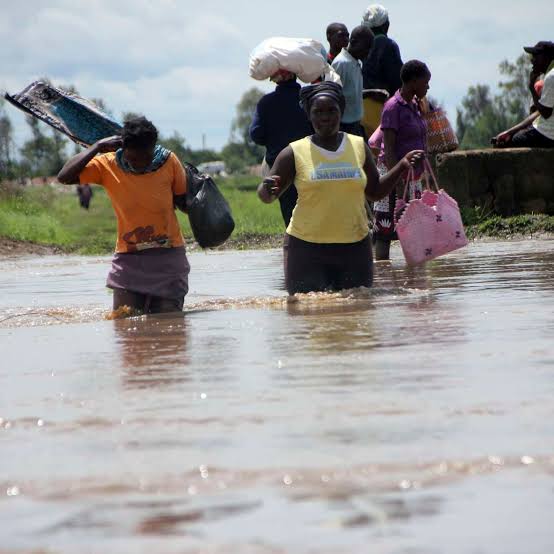
Kenya experienced this most recently and most painfully during the 2023–24 event. By December 2023, more than 545,000 people had been displaced by El Niño-enhanced floods. The United Nations reported that over half a million people were eventually displaced and more than 100 lives lost during the broader flooding crisis. Communities saw homes destroyed, roads submerged, livestock and crops lost, schools closed and clean water supplies cut off. The floods of March to May 2024 — driven partly by a strong Indian Ocean Dipole operating alongside El Niño — underscored a critical lesson: Kenya must prepare for compound climate hazards, not simply monitor El Niño forecasts in isolation.
The danger acquires a sharper political dimension as Kenya approaches the 2027 General Election. Severe flooding can destroy roads and bridges, disrupt electricity and telecommunications, displace voters and damage polling infrastructure. Economically, households can lose homes, businesses, crops and livestock while government is forced to divert scarce resources from development towards emergency relief and reconstruction. The social consequences are equally serious — displacement intensifies competition for land, food, water and public services. Politically, poor disaster response breeds public anger, fuels accusations of discrimination or corruption in relief distribution, and can deepen tensions during an already charged electioneering period.
Preparedness must therefore move well beyond emergency food parcels and rescue operations. National and county governments should map flood-prone settlements now, enforce risk-sensitive land-use planning, expand drainage and water-storage systems, and strengthen bridges and roads before the next crisis arrives. Hospitals, schools and critical public infrastructure need flood protection built in. Reliable early-warning and evacuation systems, delivering alerts in accessible local languages through multiple channels, are not optional extras — they are the difference between a managed emergency and a catastrophe.
Innovation must become central to Kenya’s adaptation strategy. In areas where relocation is impractical, authorities and engineers should explore flood-resilient and amphibious housing — raised structures, buildings designed to float or rise with floodwaters, elevated sanitation systems and community shelters positioned above projected flood levels. Such solutions must be professionally engineered, properly assessed and carefully piloted rather than introduced as experimental construction in already vulnerable locations. Climate-resilient design should be embedded into public procurement standards and county development plans as a matter of routine, not exception.
The scale of what Kenya faces becomes clearer when set against a familiar benchmark. COVID-19 delivered a nationwide economic shock through movement restrictions, business closures and disrupted trade — Kenya’s real GDP contracted by 0.3 percent in 2020 after years of consistent growth. El Niño operates differently: it does not shut down the entire economy simultaneously, but it destroys the physical foundations on which economic activity depends. The 2024 floods severely constrained household livelihoods and private consumption, with independent analysis estimating that they shaved approximately 0.3 percentage points off that year’s economic growth. The lesson is sobering: a climate event does not have to be a pandemic to inflict pandemic-scale damage.
Kenya has been given advance notice. The science is available, the historical record is documented and the consequences of inaction are well understood. What remains is the political will to act before the waters rise — not after they do.
_Paul Kinyanjui is an independent Researcher, Analyst, Critic, Writer on Emerging Issues and Trends with an aim to Create Awareness, Educate, Enlighten, Empower and Inspire_
Similar Posts by The Mt Kenya Times:
- Nigeria Starts Making Its Own Next-Generation Malaria Nets
- Diaspora Times Global Oct 3 – Oct 9, 2026
- Kwale’s electricity push moves from grid to growth
- Linguistic Features Of Chromatonyms In English And Uzbek
- A Poem, a Universe: A poetry book gaze at Jumaniyoz Jabborov’s “Ko‘zgudagi sanam”
About the Author

 Brenda Holo