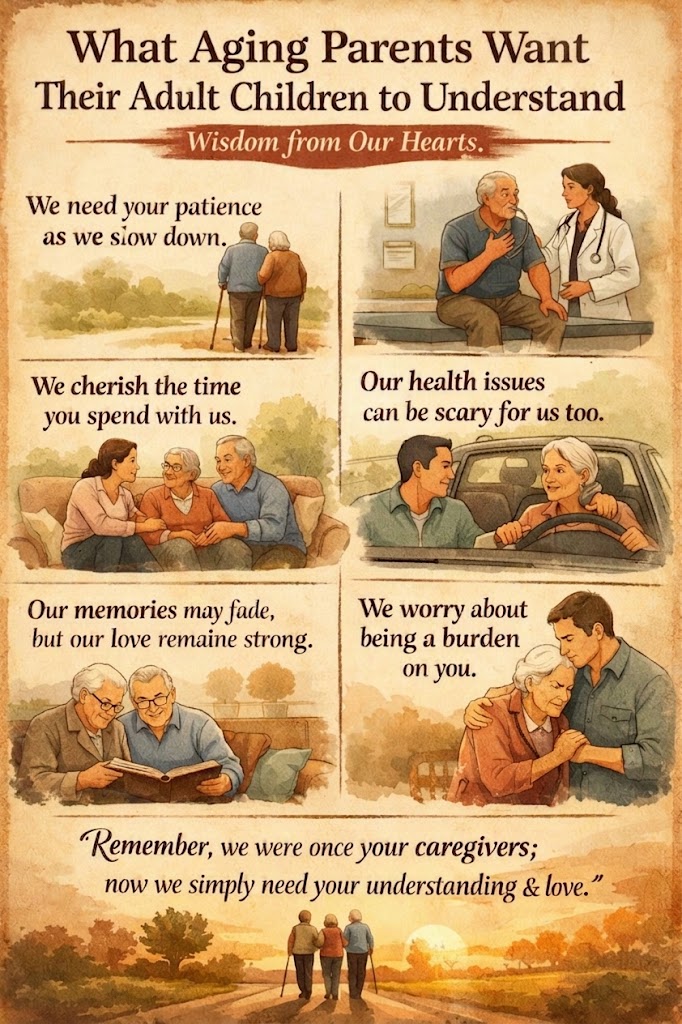
Across Kenya, a quiet generational reckoning is under way — and it begins with listening.
By Ashford Kimani
In Kenya, the relationship between parents and children is often built on sacrifice. Many parents raised large families on modest incomes, paying school fees through hardship — selling livestock, borrowing money, cultivating small farms and working long hours — while repeatedly placing their children’s needs above their own.
Their greatest hope was that education and hard work would give their children a better life. Yet as these parents grow older, a difficult transition begins: the people who once provided protection, authority and direction increasingly need support from the very children they raised.
This reversal of roles is emotionally complex. Aging parents may need help with healthcare, finances, transport, household responsibilities or major decisions — but needing assistance does not mean they are ready to surrender their independence. Growing old may change a person’s physical abilities; it does not erase their identity, wisdom, preferences or right to make choices about their own lives.
For adult children — especially those living and working far from home — understanding this distinction is essential.
One of the most important things aging parents want their children to understand is that growing old does not mean becoming useless. A parent may walk more slowly, forget certain details or struggle with technology, but age does not diminish the experiences that shaped them or the knowledge accumulated over a lifetime. Yet in many Kenyan homes, adult children begin speaking to elderly parents as though they have become children themselves — issuing instructions, dismissing opinions and making important decisions without consultation.
A son may decide his father must leave the rural home and move to Nairobi. A daughter may take control of her mother’s finances without fully explaining how they will be managed. Such actions may be motivated by love and concern, but they can leave an elderly parent feeling displaced, powerless and shut out of their own life.
Support should never become domination. There is a profound difference between asking, “Mum, how can we make this easier for you?” and announcing, “Mum, this is what we have decided for you.” Aging parents may welcome assistance, but they also want to remain active participants in decisions that affect their lives — help that preserves dignity rather than care that quietly takes away their voice.
They also want their adult children to understand that loneliness can sometimes hurt more than physical weakness. Many Kenyan families assume that sending money is the same as caring. Financial support is important — particularly when older parents depend on their children for medication, food and household expenses — but money cannot replace presence.
An elderly parent may receive an M-Pesa transfer every month and still feel forgotten. What they may long for is a phone call that is not rushed, a visit that has nothing to do with a funeral or family emergency, and a conversation that goes beyond a hurried “How are you?” before the line goes quiet.
Sometimes the more meaningful questions are: “What has been happening in the village?” “How are your neighbours?” “Tell me about your childhood.” Older parents often want to be heard — not merely checked on. They want to know that their stories still matter, that their memories are valued and that their lives remain important to the people they raised.
This matters deeply because many Kenyan adult children now live far from their ancestral homes. Employment, education and economic opportunity have scattered families across counties and continents. A parent may remain in Murang’a, Kitui, Kisii, Kakamega or Nyeri while their children build lives in Nairobi, Mombasa, Nakuru or abroad. Distance is sometimes unavoidable; emotional absence is not.
Technology has made it possible to stay connected across great distances. A regular phone call, a video conversation or even a simple message can reassure an aging parent that they have not been left behind. What matters is not only how often children reach out, but whether they listen — with patience and genuine interest.
Another difficult truth is that aging parents may fear becoming a burden. Some hide illness so as not to worry their children or disrupt their careers and family responsibilities. Others endure pain quietly, postpone hospital visits or conceal financial difficulties, saying they are fine even when they are struggling — because they do not want to appear needy.
Yet silence can turn manageable problems into crises. Families should discuss health, care preferences, finances and practical arrangements before an emergency forces difficult decisions upon them. Such conversations should not be treated as signs of impending death or as opportunities to take control of a parent’s property. They are acts of responsibility and preparation.
Adult children should create an environment where parents can speak honestly without feeling guilty. Questions about health should not sound like interrogations. Conversations about money should not immediately arouse suspicion. The purpose should be preparedness, transparency and mutual trust — not surveillance or control.
In Kenya, aging is often complicated by land and inheritance. For many elderly parents, land is far more than an economic asset. It represents identity, ancestry, security and the labour of an entire lifetime — the place where they raised their children, buried their loved ones and built a sense of belonging.
Conflict often begins when adult children start treating a parent’s land as future property rather than recognising it as the parent’s present home and source of independence. An aging father or mother may feel deeply hurt when children begin discussing the subdivision, transfer or sale of land while the parent is still alive and perfectly capable of making decisions.
Such conversations can create the painful impression that an elderly person’s value has been reduced to what they will leave behind. Adult children must remember that inheritance is not a substitute for relationship. A parent should not have to fear that growing old will make them vulnerable to pressure, manipulation or dispossession.
At the same time, aging parents want their children to remember that they are still parents. Even when physically weaker, they may continue to worry about their children’s marriages, employment, finances and wellbeing. Their advice may sometimes seem outdated or unwelcome — but it usually comes from a concern that has endured for decades.
Adult children do not have to follow every opinion or allow parents to make their decisions for them. But disagreement does not require humiliation. A parent can be heard respectfully even when their advice is not taken. The challenge is to maintain healthy boundaries without using age as a reason to dismiss or ridicule them.
The relationship must also become more reciprocal and realistic. Parents should not expect their adult children to abandon their own families, careers or financial stability to provide unlimited care. Caregiving can be physically, emotionally and financially demanding — particularly when one sibling carries most of the responsibility while others remain distant.
Families should share responsibilities fairly. One child may contribute financially, another may coordinate hospital visits, while another provides regular companionship or assists with household needs. Care should not automatically fall to the daughter who lives nearest, nor should one responsible child carry the entire weight while others stay absent.
Aging also does not erase complicated family histories. Some adult children carry wounds caused by harsh parenting, neglect, favouritism, emotional distance or unresolved conflict. Respect for aging parents should not require pretending that painful experiences never happened. Compassion and healthy boundaries can coexist. Adult children may choose to care for their parents without accepting continued emotional harm or sacrificing their own wellbeing.
Ultimately, aging parents want something simple but profound: to remain visible. To be respected without being feared. Supported without being controlled. Consulted without being dismissed. Remembered before a crisis forces anyone to pay attention.
The Kenyan value of utu — human dignity — should guide how families respond to aging. Our parents once held our hands when we could not walk, stayed awake when we were sick and made sacrifices we may never fully understand. They carried us through seasons when we had little power to care for ourselves.
As the balance of care shifts, our responsibility is not merely to keep them alive. It is to help them grow old with dignity, belonging, security and the enduring knowledge that they still matter.
The greatest gift adult children can offer aging parents may not be money, property or expensive medical care. It may be something far simpler — and far more powerful:
“You are still part of our lives. Your voice still matters. You are not a burden. We are here — not only because you need us, but because you are our parent.”
Similar Posts by The Mt Kenya Times:
- Mt Kenya Times ePAPER October 16, 2026
- Oburu marks birthday and brother’s death from Nairobi Hospital bed
- Natembeya and Orengo demand answers over security withdrawal
- Linda Mwananchi Movement: The brand that could reshape Ruto’s path to 2027
- ODM and Linda Mwananchi clash at Raila’s Bondo memorial
About the Author