The subaru state: When the rogue government hunts down the fourth estate members
 The Mt Kenya Times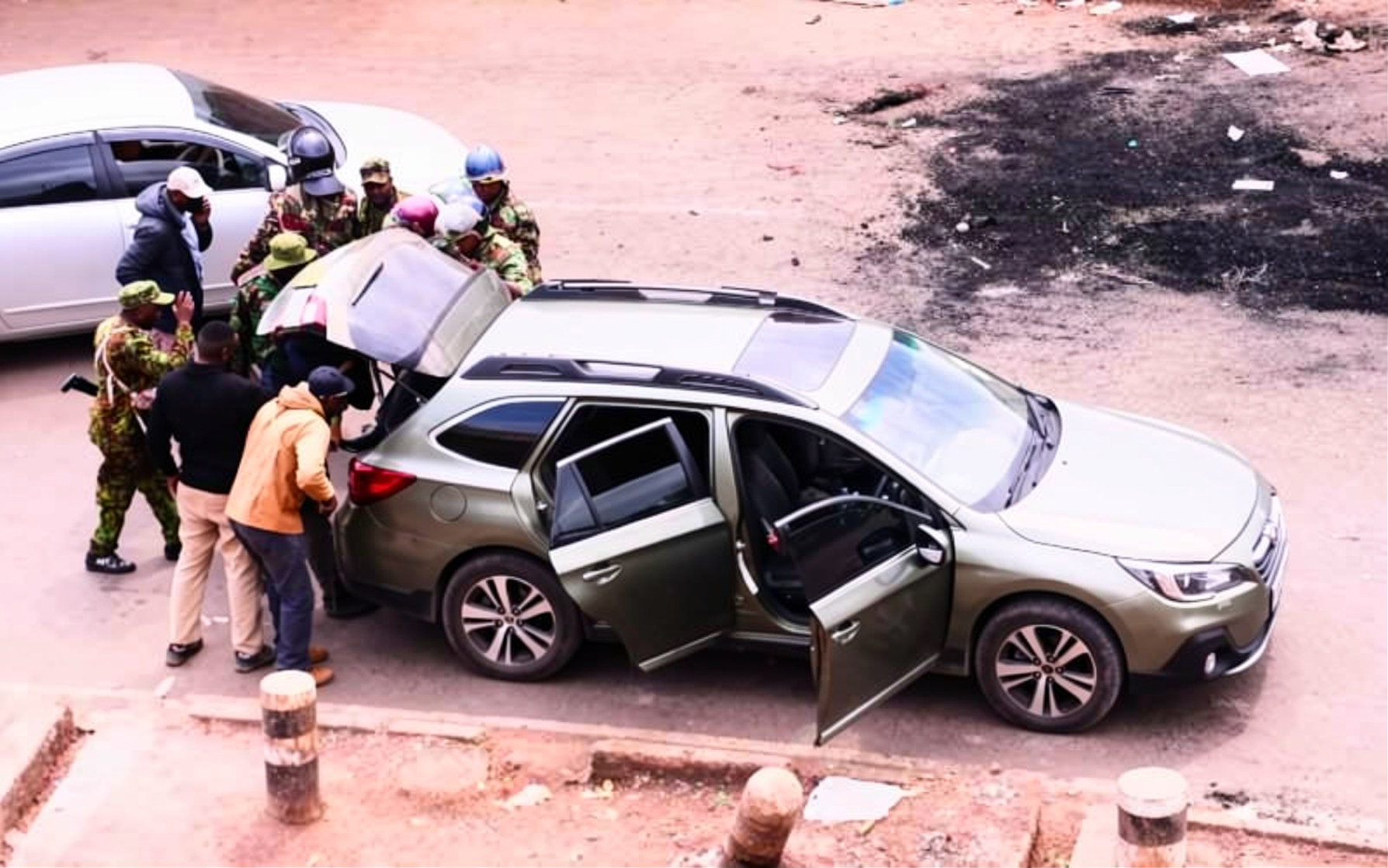
The Subaru state
By: Jerameel Kevins Owuor Odhiambo
On the night of September 1, 2026, along the Gilgil–Nakuru highway, four masked men brandishing AK-47 rifles forced a Toyota off the road, dragged its driver into a Subaru fitted with a police siren, and disappeared into the dark. Nine hours later, Standard Group Associate Editor Alex Kiprotich was found near Masinga Dam, more than two hundred kilometres away, shaken but alive, having sought refuge with a family that took in a stranger dumped by the roadside like refuse. That is the fact. Everything else the questions his captors asked about the Standard’s headlines, the roadblocks that waved the Subaru through without a single officer demanding its papers, the vehicle registration that traces back to government fleet records is the accusation Kenya must now answer.
This is the second time in sixty-six days that Kiprotich has been hunted. In June, along the same corridor of road, armed men in a Toyota Probox tried the same thing and failed only because he locked his doors and drove for his life. A man cannot survive two ambushes in two months and still be told, by the institutions sworn to protect him, that this is coincidence. There is a word for a pattern that repeats itself with this much precision, this much impunity, and this much silence from those who command the men in uniform: policy. Not rogue policy, perhaps but policy nonetheless, in the sense that a river is policy for the valley it carves. It did not happen once by accident. It is happening again by design.
Let us not mistake this for an isolated crime against one journalist. It is an assault on the very idea that a citizen may ask a government an uncomfortable question and live to publish the answer. Kiprotich’s supposed sin was doing his job editorial scrutiny of state conduct, headlines that made someone uneasy enough to send armed men after the man who approved them. When captors interrogate a hostage not about money but about “how headlines are decided,” they are not committing a robbery. They are conducting an audit of dissent, and grading it with a rifle.
Kenya has walked this road before, and history does not forgive those who forget its geography. This is the country that swallowed Pio Gama Pinto in 1965, that buried J.M. Kariuki in the Ngong forest in 1975, that watched Robert Ouko’s body smoulder on Got Alila hill in 1990 for the crime of knowing too much. It is the country whose basement at Nyayo House became a byword for what happens to citizens who think too loudly. Ngũgĩ wa Thiong’o wrote from a prison cell that the pen becomes dangerous precisely when it tells the truth the state cannot survive hearing; Chinua Achebe warned that a nation which will not punish those who abuse it teaches its children that abuse is simply how the strong behave. Kenya buried the men who built those chambers of silence, but it seems it exhumed their method and gave it a new registration plate.
And here is the theatre of it, the part that would be almost comic if it were not so grim: barely a week before Kiprotich was dragged from his car, President William Ruto stood at KICC for Katiba Day and declared, with full ceremonial solemnity, that no Kenyan should lose their life, liberty, or dignity for criticizing their government. Fine words, delivered in a fine hall, to an audience that applauded on cue. Then the Subaru rolled onto the Gilgil–Nakuru road, and the promise evaporated somewhere between the podium and the highway. A constitution is not honoured by a speech. It is honoured or betrayed in the space between what the state says at the podium and what its officers do on the tarmac at 9:20 p.m. On that measure, this government has failed a test it wrote for itself, in its own words, in its own week.
The mechanics of the abduction deserve their own indictment. A vehicle carrying a police siren and traceable government plates should not exist outside the chain of command unless that chain of command has grown a second, unaccountable branch. Officers at checkpoints who wave through armed, masked men without a single ID check are not merely negligent; they are, at minimum, complicit by omission, and any serious investigation must start with them, not end with a press statement. The Kenya Human Rights Commission has rightly refused to treat this as ordinary crime, pointing to a broader architecture of enforced disappearance that has metastasized beneath the language of routine policing. When the tools of the state its vehicles, its sirens, its checkpoints become the tools of the abductor, the distinction between government and gang collapses, and citizens are left asking not who will protect them, but from whom.
So let the demands be as categorical as the crime. The Independent Policing Oversight Authority must open an investigation that does not end in a drawer. The Inspector General must account, publicly and specifically, for a government-registered vehicle used in an armed abduction not with a denial, but with names. The Directorate of Criminal Investigations must be placed under scrutiny equal to the scrutiny it claims to apply to others. Parliament’s security oversight committee must summon the officers who commanded that checkpoint corridor on the night of September 1. The Judiciary, so recently reminded by its own Chief Justice that its credibility rests on independence, must ensure that if charges are ever filed, they are not quietly starved on a court calendar. And the Kenya Editors Guild, the Media Owners Association, and every newsroom in this country must resist the oldest trick in the intimidator’s playbook the slow return to normalcy that lets memory do the state’s forgetting for it.
Heads must roll, not as spectacle, but as evidence that this republic still distinguishes between a government and an armed racket wearing its uniform. Until they do, every editor in Nairobi drives to work each morning wondering if the next Subaru is theirs.
The writer is a social commentator.
Similar Posts by The Mt Kenya Times:
- Mt Kenya Times ePAPER October 21, 2026
- Kenya confirms ninth Ebola case as outbreak remains contained within single cluster
- Musk pledges SpaceX share for every American child in 2027
- Abiy calls for deeper Kenya-Ethiopia trade partnership at Eldoret ceremony
- Kenya’s oil moment: Promise, responsibility and the long road from Turkana to market
About the Author