Kenya secures AGOA extension to 2028, unlocking continued duty-free access to US market
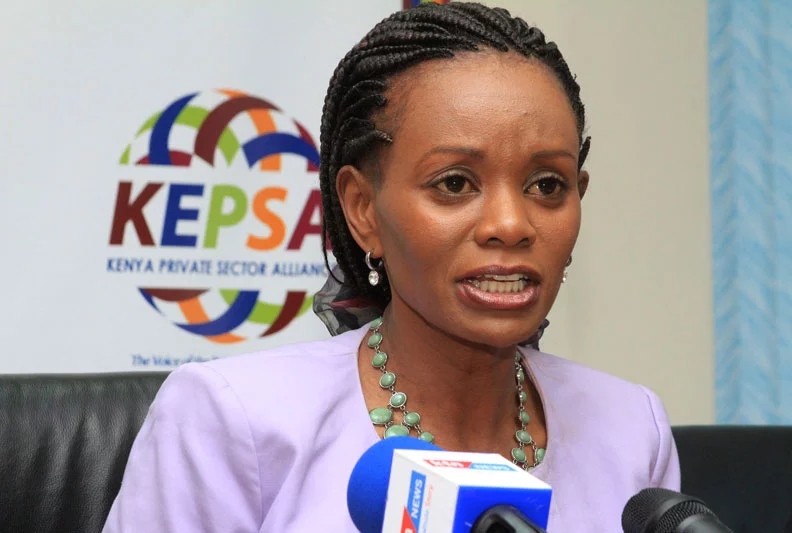
KEPSA Chief Executive Carole Kariuki
The renewal protects 66,800 jobs and KSh60B in apparel exports — but the private sector says the clock is already ticking on a permanent trade deal
By David Kimani
The Kenya Private Sector Alliance yesterday welcomed the signing into law by United States President Donald Trump of an extension of the African Growth and Opportunity Act through December 2028, securing continued duty-free access to the American market for Kenyan exports and offering critical breathing room to a textile and apparel sector that had been watching the negotiations with mounting anxiety.
The extension, which retains all existing provisions including the third-country fabric programme, follows months of sustained advocacy by KEPSA alongside government and regional partners. It builds on an initial one-year extension that had reauthorised AGOA through December 2026, and now stretches the window to the end of 2028 — directly aligning with the operational stability framework that Kenya’s private sector had been pushing for.
KEPSA Chief Executive Carole Kariuki welcomed the outcome in unambiguous terms. “This is a significant and welcome outcome for Kenyan businesses and workers,” she said. “AGOA has been the single most effective US trade policy tool for Africa over the last 25 years, and this extension, with the third-country fabric provision intact, gives our apparel and textile sector the certainty it needs to keep investing and creating jobs.”
The numbers behind that statement are considerable. In 2024, Kenya exported goods worth $470 million to the United States under AGOA, the bulk of it apparel. The programme supports an estimated 66,800 direct jobs, three quarters of them held by women, and underpins close to 800,000 livelihoods across the broader value chain. For factory owners, procurement managers and the workers on their production floors, the uncertainty surrounding AGOA’s renewal had become a real and immediate problem — one that was beginning to affect order books, delay investment decisions and freeze expansion plans.
The retention of the third-country fabric provision is particularly significant for Kenya’s garment manufacturers, who rely on the clause to source fabric inputs from outside the United States while still qualifying for duty-free treatment on finished goods exported to the American market. Had that provision been stripped from the renewal, the competitive economics of Kenya’s apparel sector would have shifted materially and quickly.
KEPSA had lobbied for a longer extension than the two years now secured, arguing that a more durable horizon — or, failing that, a transition window long enough to negotiate a bilateral free trade agreement between Kenya and the United States — was what the sector truly needed. While the 2028 deadline falls short of that ambition, Kariuki and the alliance have chosen to frame it as an opportunity rather than a concession. The window exists. The question is what Kenya does with it.
President William Ruto’s direct engagement with US counterparts on the AGOA question received specific acknowledgement from KEPSA, as did the role of Kenyan parliamentarians who championed the issue domestically. The renewal did not happen in a vacuum — it was the product of sustained diplomatic and advocacy effort at multiple levels, and KEPSA was careful to recognise those contributions publicly.
The alliance also used the moment to flag the situation facing other AGOA beneficiary countries, some of which continue to face uncertainty about their standing under the programme. KEPSA called for continued regional engagement to ensure the programme’s benefits are preserved and, where possible, extended across sub-Saharan Africa. Kenya’s gains, the alliance implied, are most durable when the broader regional framework that underpins AGOA remains intact.
Looking beyond 2028, KEPSA said it would continue working with its members, the Government of Kenya and development partners to ensure businesses capitalise fully on the current extension while pressing for a longer-term, predictable framework for US-Kenya trade. The two countries have held discussions on a bilateral trade deal for several years, with negotiations stalling and restarting at intervals that have frustrated business on both sides. The 2028 deadline gives those discussions a new urgency.
For Kenya’s textile and apparel workers — the women on production lines in Nairobi’s export processing zones, the smallholder cotton farmers in western Kenya, the logistics operators and suppliers woven into the value chain — the renewal is immediate and practical relief. Investment decisions that had been deferred can now be revisited. Orders that had been held back can move forward. The factories will keep running.
But the two-year clock is already ticking. And KEPSA’s message, beneath the relief, is clear: the extension is a bridge, not a destination. Kenya must use the time to build something more permanent — because 2028 will arrive faster than anyone expects, and the sector cannot afford to have this conversation all over again.
Similar Posts by The Mt Kenya Times:
- Mt Kenya Times ePAPER October 22, 2026
- Ruto heads to Harare for COMESA summit on trade and regional security
- Mudavadi and Wetangula walk out as Sifuna speaks at Nabwera memorial
- Police accountability on trial as seven officers face probe over journalist’s arrest
- Learners, teachers graduate from thrive for good organic farming training
About the Author