Meru University Mountain Run 2026. Photo by Brian Gitonga
On the slopes of Mount Kenya, a university run has quietly become something larger than a sporting event. Meru University of Science and Technology is considering establishing a cancer research centre to examine the true extent of the disease in Meru County — and the funds raised through its 2026 Mountain Run are expected to help make that ambition a reality.
Speaking at the university’s Marimba Campus, Vice Chancellor Prof Romanus Odhiambo said the run carried three distinct purposes: raising funds for needy students, supporting cancer research, and promoting environmental conservation through tree planting. The event, he said, forms part of a broader vision to build an endowment fund that would give students facing financial hardship a genuine chance to continue their education.
“There is a need to help poor students, and that is why I want to thank the people who have come here and stood with us to achieve this today,” Odhiambo said.
On environmental conservation, the vice chancellor pointed to Nchiru Campus as evidence of what sustained commitment can achieve. The university has planted trees there consistently for more than a decade, transforming what was once barren land into a site with over 15 per cent forest cover — above the national average. The university’s tree-planting work also contributes to President William Ruto’s national target of planting and growing 15 billion trees.
“When we started some 13 or 14 years ago, Nchiru Campus was basically a desert. But today, we are at over 15 per cent forest cover,” Odhiambo said. “From a desert to above the national average.”
It is the cancer research angle, however, that has generated the most attention. Meru County has long been associated with high cancer prevalence, but Odhiambo — himself a statistics professor — is careful about accepting that claim without scrutiny. He said the university decided it was time to examine the available evidence rigorously before drawing conclusions.
“As professors in the university, we have decided that we want to do research, first of all, to confirm whether this hypothesis is true or not,” he said. Should the findings validate the concerns, the university intends to establish a dedicated cancer research centre to help address the challenge head-on.
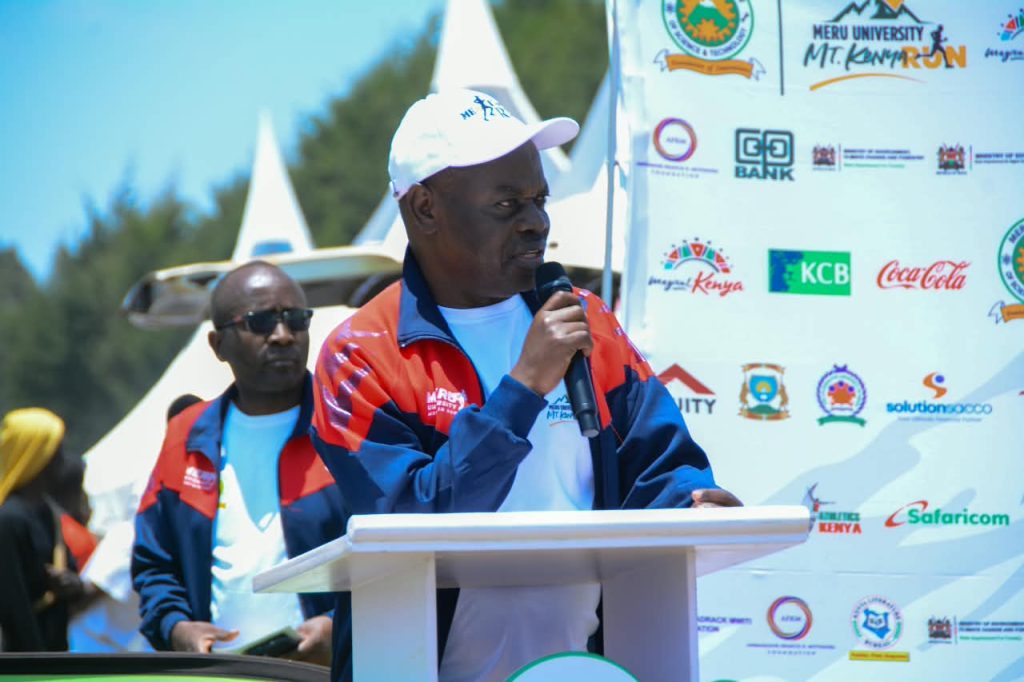
The proposal has already received the backing of the MUST Council. Chairperson Prof James Kanya said council members readily supported the initiative when it was presented to them, recognising cancer as a pressing concern that warranted institutional attention.
“When this idea was brought before the council, it was readily accepted, and my council gave it their support because we understand the problem of cancer,” Kanya said. He added that the university was also actively seeking partners to strengthen its research capacity as the initiative develops.
The event attracted senior government representation. Principal Secretary for the State Department of Youth Affairs, Creative Economy and Sports, Elijah Mwangi, commended the university’s contribution to talent development and drew attention to a financial incentive that organisers and sponsors may not be aware of. Under the Sports Act, the Cabinet Secretary for Youth Affairs has the mandate to recommend tax rebates for spending on eligible sporting initiatives.
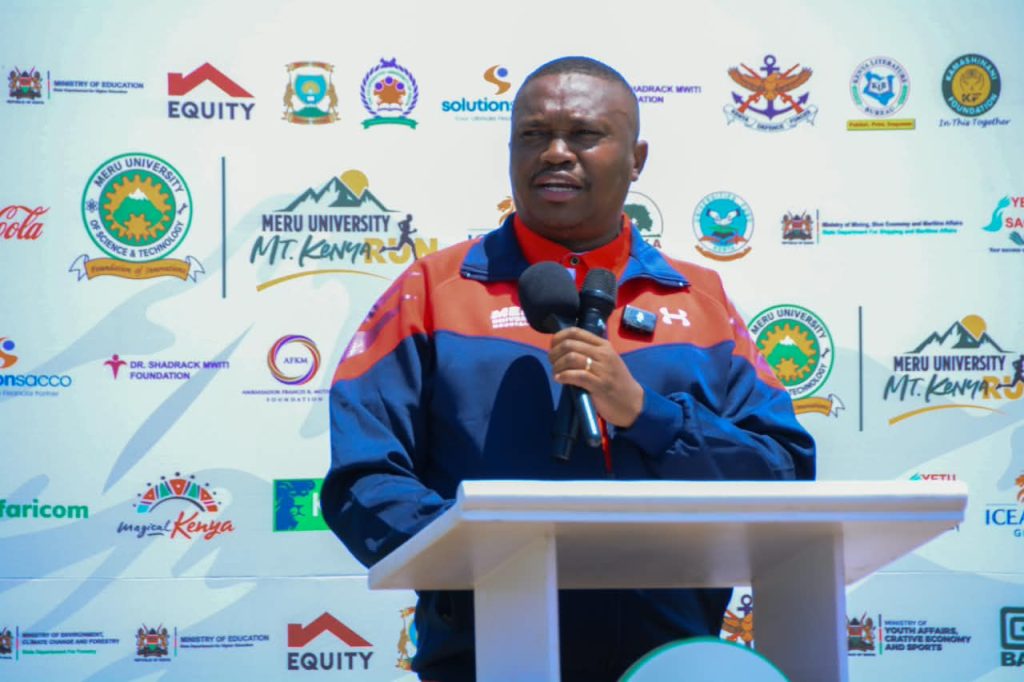
“The money that you spend on this course is money that you can reclaim from the tax that you would have paid to KRA. What you need to do is seek a recommendation from the Cabinet Secretary, and this money will be considered,” Mwangi said.
Meru County Executive Committee Member for Youth Affairs, Sports, Gender and Social Development, Elias Murega, welcomed the university’s focus on cancer research from a county government perspective, confirming that Meru is indeed among counties carrying a high burden of the disease. He said the county, in partnership with the Africa Now Mountain Run Initiative, is also working to connect mountain runs across East Africa as a regional platform for environmental conservation.
“We really appreciate Meru University on matters of cancer because we are among the counties with a high burden of cancer,” Murega said. “That shows Meru University has a thought for us, and even as the county government, we must continue to partner.”
He called on additional partners to join the effort, warning that the economic burden of cancer in Meru was rising and would require collective action involving the university, the county government, and the wider community.
Similar Posts by The Mt Kenya Times:
- Ruto passes the baton as Africa’s trade bloc faces a fragmenting world
- Kenya’s recall law: Parliament sets the threshold — but the real test comes in 2027
- Kenya’s deadliest bridge to be replaced in KSh7.5B project
- Shell V-Power Tanker among seven merchant shipping tankers calling at the port of Mombasa
- KRA’s new import rules: Will mandatory cargo insurance push up the cost of goods?
About the Author