Former world record holder Tegla Loroupe. PHOTO/TEGLA LOROUPE
The former world record holder says success means nothing if it does not reach the communities that shaped you
By Joshua Kimemia
Tegla Loroupe, the former women’s marathon world record holder, yesterday called on Kenya’s sporting elite to invest in their communities and resist the temptation to leave their humble origins behind as their careers and bank balances grow.
Loroupe, 53, who rose from the dusty, conflict-scarred plains of West Pokot to become one of the most celebrated distance runners in Kenyan history, said the lesson she most wants today’s athletes to take from her career has nothing to do with pace, training or technique. It has to do with memory.
“For sure, I think something they can learn from me is that I come from a humble background,” she said. “I believe also even the current athletes — nobody comes from a rich family, they come from a humble background. This is something they should never forget.”
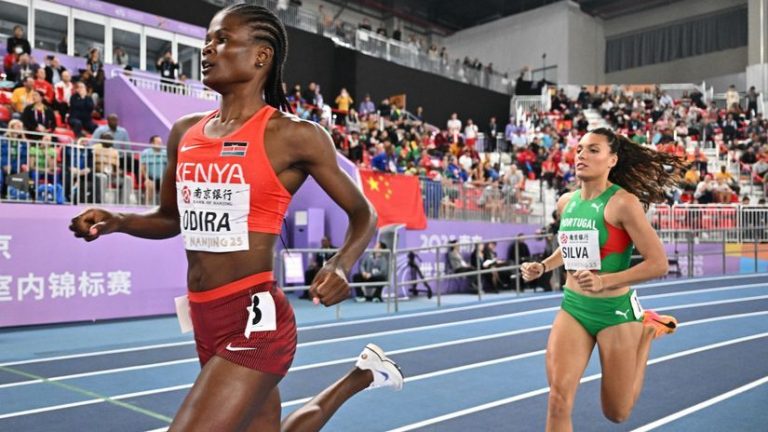
The advice carries the weight of lived experience. Loroupe clocked 2:20:47 to set a world record at the Rotterdam Marathon in April 1998, then lowered it by four seconds at the Berlin Marathon a year later. She went on to claim two New York Marathon titles, three Rotterdam Marathon crowns and three world half-marathon championships — a body of work that made her a global figure in long-distance running at a time when female athletes from rural Kenya faced enormous structural barriers simply to compete.
Those barriers, she said, were not merely logistical. They were cultural.
“Nowadays, they have everything, but during our time, we had a lot of luggage coming from the family,” Loroupe said. “You didn’t have equipment or even money to take you to competitions, but we did not lose hope. We had to fight — while you are still alive, you have to fight.”
She acknowledged that attitudes towards sportswomen have shifted considerably over the decades, with cultural resistance that once discouraged women from competing having largely softened. But she argued that the greater prosperity now available to elite Kenyan athletes makes their obligation to those left behind more urgent, not less.
That conviction has shaped how Loroupe has spent the years since her competitive career wound down. Through the Tegla Loroupe Peace Foundation, she established an annual Peace Run in Kapenguria designed to bring warring communities together — offering sport as a reason to lay down arms and discover shared purpose. The initiative has become one of the more quietly remarkable peace-building efforts in a region where cattle raids and inter-communal violence have long disrupted lives and livelihoods.
The foundation has also focused specifically on girls from marginalised communities and on refugees, populations that Loroupe argues are frequently invisible to the institutions that could help them most. Her own experience of growing up in poverty in a region marked by conflict has given her both the motivation and the credibility to work in spaces that more comfortable advocates sometimes struggle to enter.
Her charitable instincts were on public display recently at the Strathmore Annual Run in Nairobi, where she took part in the 2.5-kilometre race. The event raises funds for scholarships for financially disadvantaged students at Strathmore University, and Loroupe said she did not hesitate when she received the invitation.
“I want to say something that motivated me is the vice chancellor, who stood for charity to support the underprivileged students — that’s something that’s in my heart,” she said. “When I see somebody who has the heart of supporting and is using this energy to bring other people along, that motivates me a lot. I may not give much, but I am happy to contribute.”
Beyond community investment, Loroupe also made the case for running as a public health tool — one that Kenya allowed to slip during the Covid-19 pandemic despite the opportunity the period presented.
“Look at the Covid-19 period — many people embraced running because they were tired of staying in the house,” she said. “I wish we could have continued as a country with the same practice even after the pandemic ended.”
It is a characteristically practical observation from a woman who has spent her post-competitive years converting athletic achievement into social action. For Loroupe, the race was never only about the finish line. It was always about what you do when you get there.
Similar Posts by The Mt Kenya Times:
- Kisumu water project lays foundation for dignified urban growth
- The months ahead offer Kenya a golden opportunity to grow tourism
- Mau Mau groups urged to unite over compensation push
- A comparative insight into Romantic and South Asian Poetic Heritage
- Kenya’s 2027 election is taking shape — and the early signs are troubling
About the Author