President William Ruto
Kenya has vast mineral wealth — but most of the money it generates leaves with the ore. President Ruto says that stops now
By Collins Kibet
Kenya is confronting a fundamental question about the future of its economy: why should a country blessed with valuable natural resources keep exporting them in raw form, only to import finished products at significantly higher prices? The government’s latest position on unprocessed minerals has reopened a debate that goes well beyond mining. It is a debate about jobs, industrialisation, national wealth — and whether Kenya has for too long been exporting its opportunities along with its raw materials.
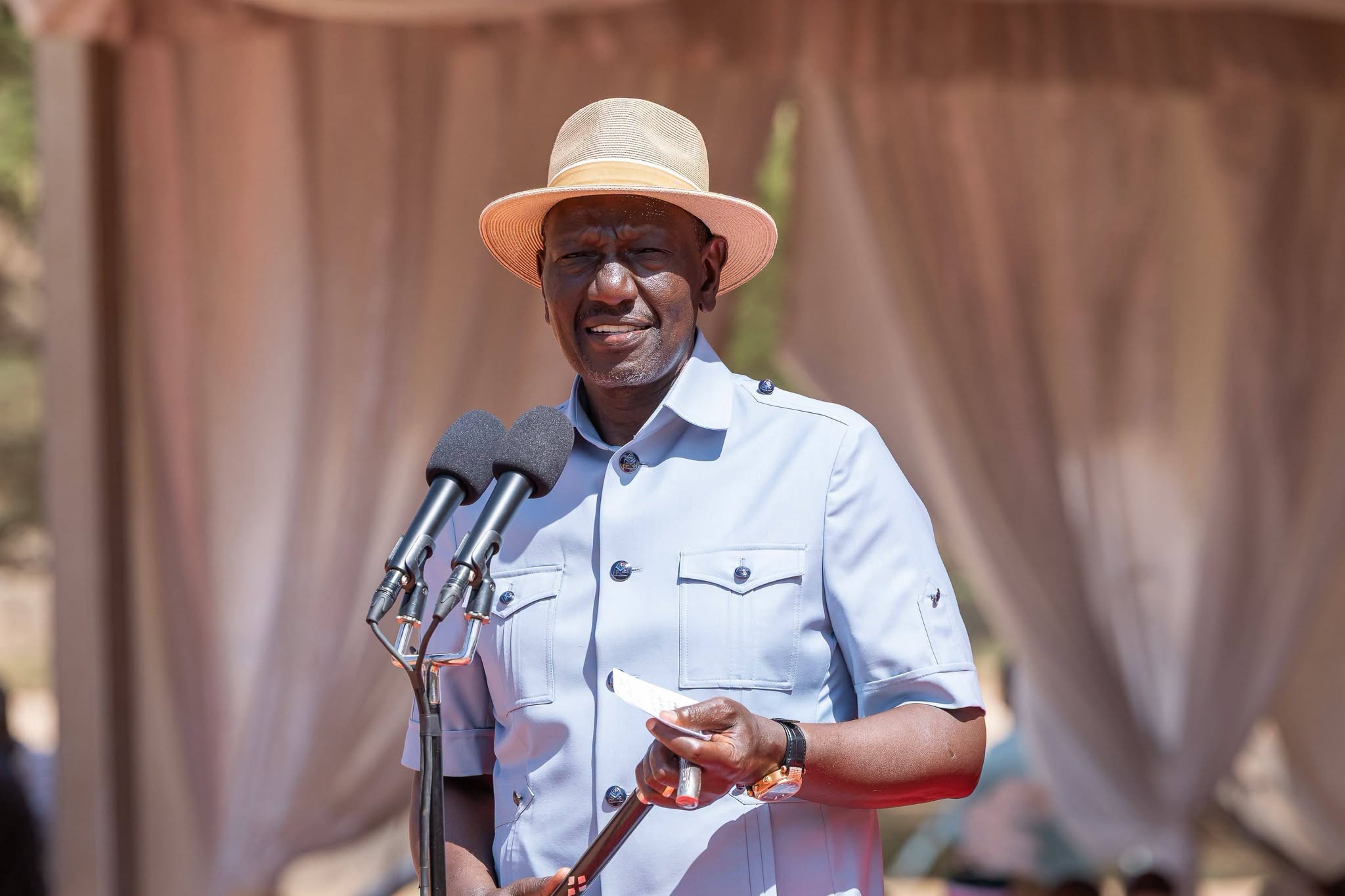
Speaking in South Horr, Samburu County, yesterday, President William Ruto was unambiguous. “It is now the policy of the Government that Kenya will no longer be exporting raw materials,” he declared. The directive covers gold, limestone, iron ore, graphite, titanium, soda ash, lithium, coltan, and rare earth minerals. The argument is economically compelling: a tonne of raw material has limited value, but once refined or transformed into a finished product, its value can multiply many times over — while creating employment and business opportunities within the country.
For years, Kenya’s economic structure has exposed a painful contradiction. The country produces agricultural commodities, minerals, and other raw materials, yet most of the serious value addition happens outside its borders. Kenyan resources leave cheaply and return as expensive finished goods. Somewhere between the mine and the marketplace, enormous economic value is created — but Kenya captures only a fraction of it.
The situation at Lake Magadi illustrates the problem sharply. Kenya exported roughly 254,779 tonnes of soda ash worth US$56.9 million in the year to July 2025 — all in raw form. Tata Chemicals, which has operated at Magadi since 2005 following over a century of extraction dating back to 1911, had its operations suspended by the Ministry of Mining in July 2026 over compliance and licensing issues. Ruto used the moment to make a broader point: rather than simply extracting and shipping the mineral, Kenya should be developing industries producing glass, chemicals, and other downstream products — building an entire industrial ecosystem around the resource. The government is already in talks with Aliko Dangote about a refinery in Lamu to process oil locally.
But there is a difficult reality that no declaration alone can wish away. Kenya cannot announce the end of raw exports and expect factories to appear automatically. Local value addition requires reliable electricity, affordable financing, modern infrastructure, advanced technology, skilled workers, and consistent government policy. Without these foundations, restrictions on raw exports could generate uncertainty for investors rather than the manufacturing base Kenya needs.
The deeper issue, therefore, is not whether Kenya should add value to its resources. It is whether the government is prepared to create conditions that make value addition economically viable. Industrialisation cannot be built on presidential speeches alone. It requires long-term planning, serious investment, transparent contracts, and institutions capable of protecting national interests without creating unnecessary barriers to legitimate business.
There is also the question of who will actually benefit. If Kenya succeeds in processing its resources locally but the resulting industries remain controlled by a handful of powerful companies, ordinary citizens may see little improvement in their lives. Communities where minerals are extracted must receive meaningful benefits. Kenyan entrepreneurs and local manufacturers must have a genuine opportunity to participate in the value chain, not merely watch from the roadside as wealth is redistributed among the already wealthy.
This is where the government’s promise faces its greatest test. Kenya has spoken about industrialisation and value addition before. Kenyans have heard ambitious economic promises many times. What they need now is not another slogan but visible factories, skilled employment, competitive industries, and products bearing the label “Made in Kenya” reaching markets across the world.
The refusal to remain an exporter of raw materials could become one of the most important economic shifts of this administration. But success will ultimately depend on execution. Kenya must move from digging resources out of the ground to building industries around them — from selling potential cheaply to exporting finished products profitably, and from creating wealth elsewhere to retaining more of it at home.
The uncomfortable question is no longer simply why Kenya has exported raw materials for so long. It is why Kenya has allowed so much value generated from its own soil to be created somewhere else. If the government is genuinely serious about changing that, the next chapter of Kenya’s economic story should not be about what leaves the country — but about what Kenya can build from what it already possesses.
Similar Posts by The Mt Kenya Times:
- 89 junior golfers chase glory at NCBA Lisle Shaw Championship
- Scaloni set to stay: Argentina coach to sign 2030 World Cup deal
- Mt Kenya Times ePAPER October 22, 2026
- Ruto heads to Harare for COMESA summit on trade and regional security
- Mudavadi and Wetangula walk out as Sifuna speaks at Nabwera memorial
About the Author