Degrees alone will not build Kenya: Where are the jobs for an educated generation?
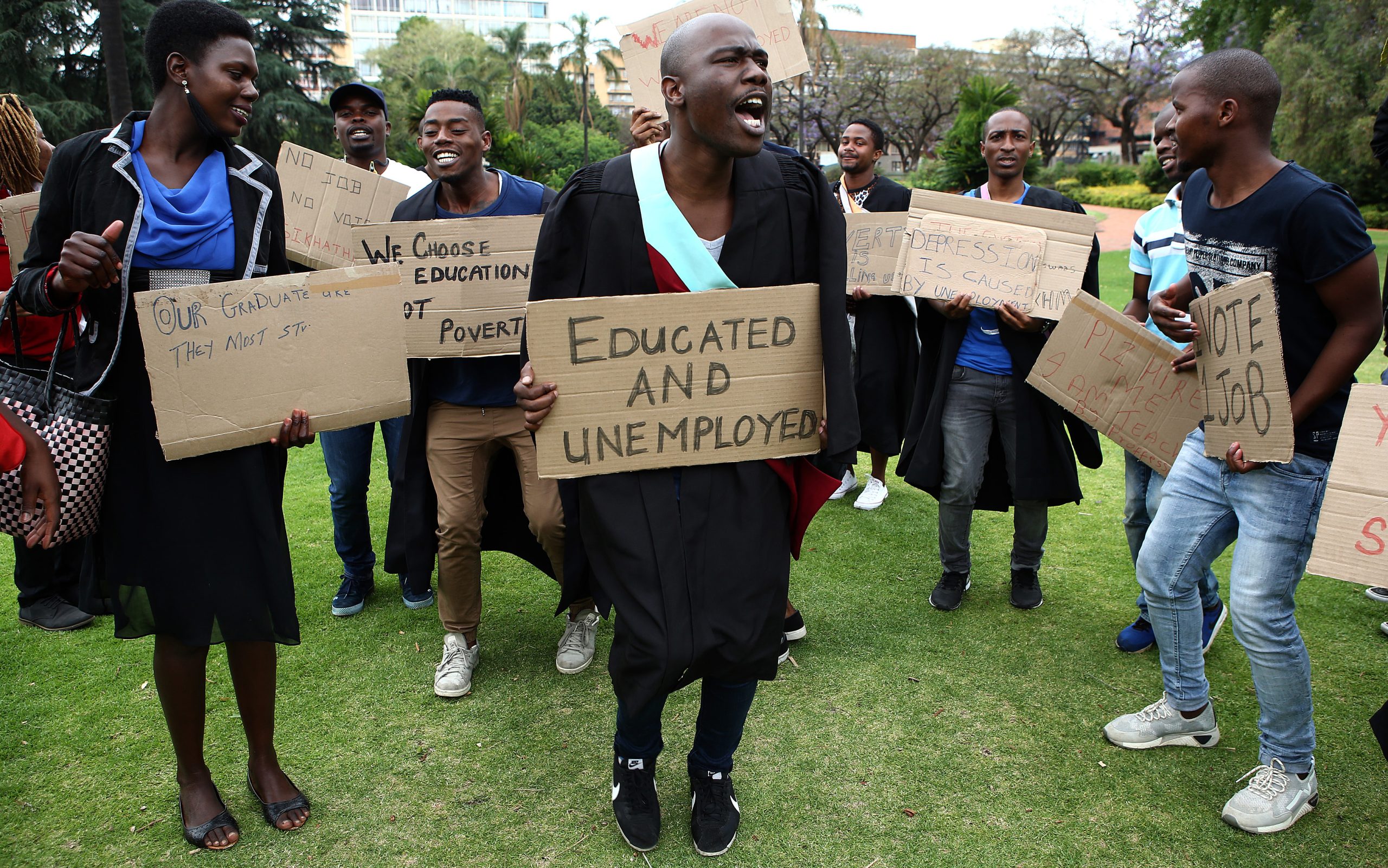
Unemployed graduates
Rising graduation rates mean little if the economy cannot absorb the talent walking out of Kenya’s universities
By Collins Kibet
For decades, education has been presented as the most reliable pathway to a better life. Kenyan parents sacrifice to take their children to school, students spend years pursuing diplomas and degrees, and the country celebrates rising levels of educational attainment. Yet beneath this achievement lies a difficult reality: a degree does not automatically translate into employment, financial independence or economic security. As thousands of young Kenyans graduate every year, one question increasingly demands national attention — what happens when a young person earns a degree but cannot find an opportunity to use it?
Kenya certainly needs an educated population. Universities, colleges and technical institutions play a vital role in producing teachers, engineers, doctors, economists, journalists, entrepreneurs and other professionals who contribute to national development. But education becomes far more meaningful when it is connected to an economy capable of absorbing skills and creating opportunities. A country can produce highly educated citizens while still struggling with unemployment, underemployment and low productivity if the economy is not generating enough productive work.
For many young Kenyans, the transition from classroom to workplace has become particularly difficult. Graduation is widely expected to mark the beginning of independence, yet for many it marks the start of another struggle — sending countless applications, attending interviews and discovering that employers demand years of experience for positions supposedly designed for beginners. Others accept work that has little connection with their qualifications simply because they need an income. The result is a widening gap between what young people are trained to do and what the economy is able to offer them.
This should not be read as a failure of education itself. The problem is broader. Kenya needs to examine how education, industrialisation, investment, technology and employment fit together. If universities produce graduates while industries and businesses fail to expand at a comparable pace, competition for limited opportunities becomes fierce. The answer cannot be to discourage young people from pursuing higher education. It must be to create an economic environment in which education can translate into productivity.
Kenya also needs to give far greater attention to practical and technical skills. Not every successful career requires a traditional university degree, and the economy depends on electricians, mechanics, builders, technicians, farmers, artisans and digital specialists just as much as it depends on graduates. Technical and vocational education can equip young people with abilities that are directly applicable to industry and entrepreneurship. The challenge is to build a culture in which technical skills are genuinely respected and properly rewarded, rather than treated as an inferior alternative to a university education.

At the same time, entrepreneurship should not become a convenient excuse for government and institutions to sidestep the shortage of formal employment. Telling every unemployed graduate to start a business is not a policy. Businesses require access to affordable capital, markets, infrastructure, reliable services and predictable economic conditions. A young person with a good idea cannot build a sustainable enterprise on motivation alone. The wider environment must make it possible for that idea to grow.
Kenya must therefore focus on building an economy that produces more than certificates. It needs industries that manufacture goods, agriculture that creates value beyond the farm gate, technology that generates new enterprises and policies that allow businesses to expand and employ more people. Rather than exporting raw materials and importing finished products, the country can pursue greater value addition so that more economic activity and employment are created locally.
The relationship between universities and industry also deserves serious attention. Students need opportunities to gain practical experience while still studying. Employers, universities and government can work together to identify emerging skills and ensure that training responds to changing economic realities. A graduate who leaves university with both academic knowledge and hands-on experience is better placed to contribute immediately, while employers benefit from a workforce prepared for actual industry demands.
The responsibility does not rest with government alone. Young people have a role to play as well. The modern economy increasingly rewards adaptability, digital literacy, communication, problem-solving and the ability to keep learning. A degree should therefore be viewed as a foundation rather than a final destination. Graduates can supplement academic qualifications with professional certifications, technical skills and practical experience. The changing world of work requires people who continue learning long after they have left the lecture hall.
But the national conversation must remain balanced. It is unfair to tell young Kenyans that they simply need to work harder when opportunities themselves are limited. Personal responsibility matters, but so do economic structures. A graduate cannot individually solve a national shortage of jobs, and a young entrepreneur cannot single-handedly fix expensive credit, limited markets or weak industrial capacity. Kenya’s development challenge requires both individual initiative and effective institutions working in tandem.
Ultimately, the question is not whether degrees are useful. They are. The question is whether Kenya is building an economy capable of making full use of the knowledge and skills it is producing. What is the value of educating a generation if that generation cannot find meaningful avenues through which to apply what it has learned? How much potential does Kenya lose when education becomes a certificate hanging on a wall rather than a tool for creating value?
Kenya’s future will not be built by degrees alone. It will be built when education, skills, enterprise, industry, investment and employment begin working together. The country must move beyond measuring progress by the number of graduates produced and pay greater attention to what those graduates are able to do after leaving the classroom. Education should open doors — but the economy must provide doors worth opening. For Kenya’s educated generation, the challenge is no longer simply how many degrees can be produced, but what kind of economy can be built with the knowledge already in the room.
Similar Posts by The Mt Kenya Times:
- Paper chasing in the shadow of substance: Kenya’s tragicomic obsession with metrics over mastery
- Why we have accents: The hidden story behind the way we speak
- Utumishi girls fire and the search for justice
- Mt Kenya Times ePAPER September 21, 2026
- Gachagua accuses Ruto of using UNGA trip to seal niobium deal in Kwale
About the Author