The Mt Kenya Times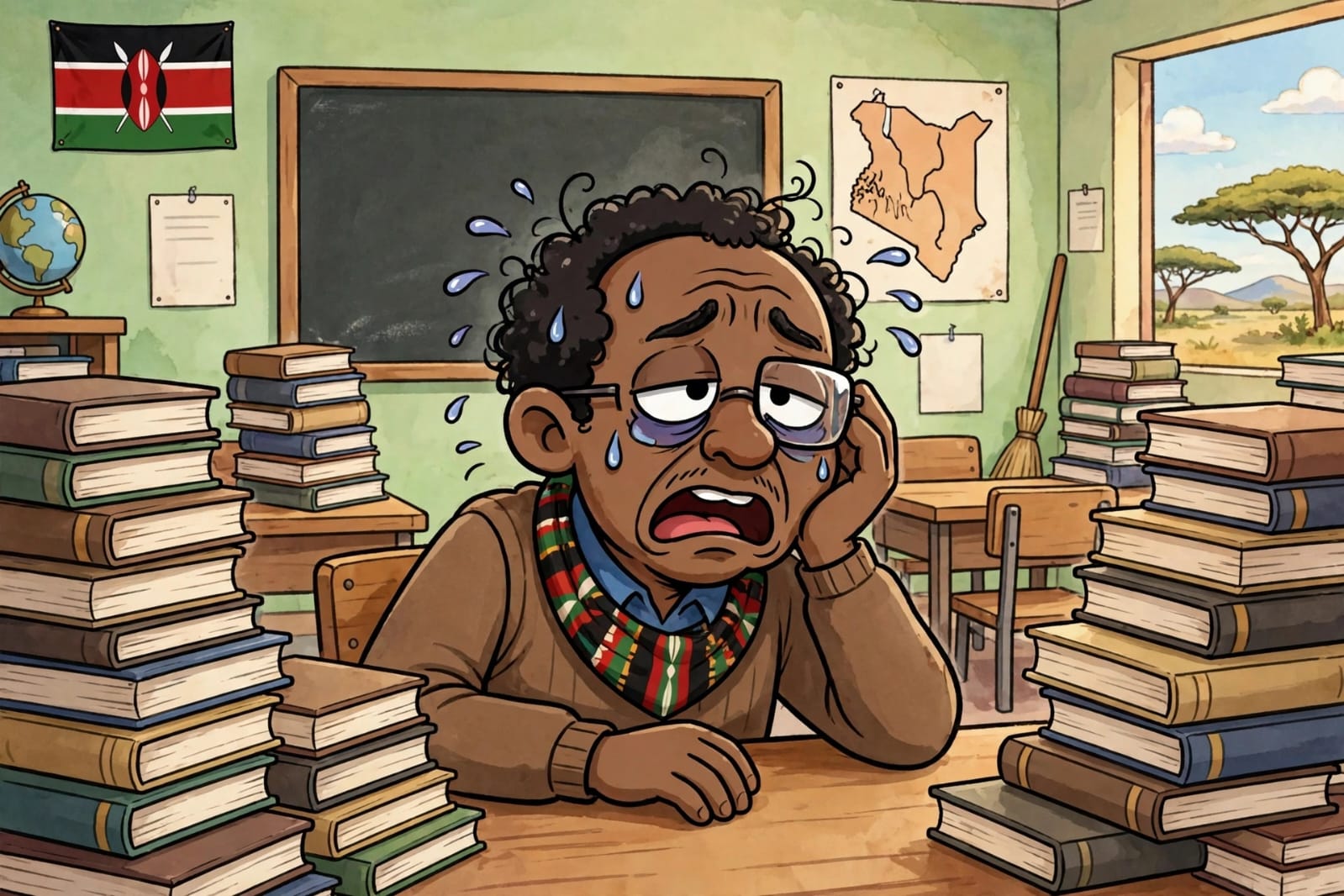
The silent crisis in our classrooms: Why Kenya’s teachers are breaking down and what must be done about it
By Wanjohi Mugambi
Teaching is often described as a noble profession — a calling that shapes the future of a nation. But behind the respect and the chalk dust lies a silent crisis that few people talk about. Today, many teachers are stressed, exhausted and depressed. They stand in front of classrooms smiling and delivering lessons, yet inside they are battling emotional fatigue, financial pressure and a deep sense of being unappreciated. Much attention has been paid to the mental health of learners. The mental health of the teacher entrusted with guiding those learners has been largely ignored. Yet a teacher who is not well cannot make learners well.
The causes of stress and depression among teachers are many and closely linked. Perhaps the heaviest is the weight of the system itself. The introduction of the Competency-Based Curriculum in Kenya, well-intentioned as it is, has dramatically increased the demands on teachers — more paperwork, more complex lesson planning, more assessment. A single teacher is expected to manage classes of more than 50 learners, prepare schemes of work, maintain individual records, assess each child separately and still show up for co-curricular activities. The working day does not end when the bell rings. It stretches deep into the night — marking books, filling out forms on the Teacher Performance Appraisal and Development system. There is little time left for rest, family or personal growth.
Financial strain compounds the problem. Many teachers, particularly those in private schools or employed on Board of Management terms, earn salaries that cannot keep pace with the rising cost of living. Even those employed by the Teachers Service Commission carry heavy loads — loans, school fees for their own children, and the social expectation to maintain a certain standard of living. When a teacher is wondering how to pay rent, settle a loan from the Higher Education Loans Board, or afford medical care, while simultaneously being expected to be a role model, stress is not a possibility — it is a certainty. Frequent transfers and delocalisations make it worse, severing teachers from their families and the support networks that might otherwise sustain them.
Then there is social and professional pressure. Society expects teachers to be perfect — morally upright, academically rigorous, disciplinarians, counsellors and surrogate parents to hundreds of children at once. When learners fail, the teacher is blamed. When there is indiscipline, the teacher is blamed. When learners excel, the credit tends to go elsewhere. This chronic lack of appreciation, layered with difficult relationships with school administrators, increasingly hostile parents and learners exposed to drugs and disorder, breeds helplessness. A teacher who is consistently disrespected cannot remain motivated.
Personal and emotional pressures make the situation worse. Many teachers are carrying private burdens — marital difficulties, health problems, grief — yet they are expected to leave all of that at the school gate. There is rarely space in a staffroom to say, “I am not doing well.” Counselling services for teachers are virtually non-existent. The TSC Wellness Unit exists on paper, but is inaccessible to the average teacher in Bondo, Turkana or the remoter parts of western Kenya. In the absence of support, teachers resort to unhealthy coping mechanisms — excessive alcohol, withdrawal from colleagues, or displacing frustration onto learners through harsh punishment.
The signs are often visible, though frequently overlooked. A stressed teacher is irritable and constantly tired, loses patience over minor incidents and raises their voice in class. Absenteeism increases. Punctuality suffers. The passion that once defined their work fades. Physically, the toll shows up as persistent headaches, high blood pressure, ulcers and insomnia. Emotionally, withdrawal sets in — teachers stop contributing in staff meetings and speak disparagingly about the profession. In severe cases, prolonged depression leads to full burnout, resignation or, quietly and increasingly, thoughts of ending one’s life — a trend that has been growing among civil servants in Kenya.
The consequences reach beyond the individual teacher. A stressed teacher cannot prepare well, cannot be creative in the classroom and cannot give learners the individual attention they need. The classroom becomes tense, and learners absorb that tension. Research shows that children taught by emotionally exhausted teachers perform poorly and develop anxiety of their own. Teacher depression also drives turnover — experienced practitioners leaving the profession for business or other fields — leaving schools in a permanent state of shortage.
Addressing this crisis requires a broad response. The Teachers Service Commission and the Ministry of Education must reduce unnecessary administrative burdens and review teacher-to-learner ratios to bring them within humane limits. Employing more teachers would ease the load on those already in service. Accessible, regular mental health support — not occasional workshops — must be available at sub-county level, where teachers can speak confidentially to professionals without fear of judgment or professional consequences. School heads must build environments where teachers can raise challenges without being seen as weak. Small things count: recognition, adequate rest, and meaningful involvement in decision-making restore dignity and morale.
Teachers themselves have a part to play. They need to understand that it is acceptable not to be well — and to seek help early rather than silently absorbing the damage. Building peer support networks, joining welfare groups, exercising, sleeping enough and creating clear boundaries between work and home life are all practical steps. Learning to decline excessive duties, managing time with intention, and finding joy outside the classroom — through farming, sport or faith — can help restore emotional balance. Communities and parents, too, must play their part by treating teachers as partners rather than adversaries.
The stress and depression affecting Kenya’s teachers is a national issue. It threatens the very foundation of the country’s education system. Quality education cannot be delivered by a person who is broken inside. A teacher is not a production machine measured by exam scores. A teacher is a human being — with emotions, needs and limits. Those who carry the weight of a classroom every day carry more than most people see. If Kenya takes care of its teachers, its teachers will take better care of its children. It is time to check on the teacher.
Similar Posts by The Mt Kenya Times:
- When everyone can speak, who will get heard?
- Fatuma Ibrahim Ali shortlisted for Parliamentary Service Commission seat
- Nairobi National Park: Connecting the world to nature through live conservation
- Ejersa steers KEMSA towards a more resilient and responsive health supply chain
- Paballo Mamabolo — where beauty meets purpose and education
About the Author