Lamu refinery: Development must never outrun the law — or leave anyone behind
 The Mt Kenya Times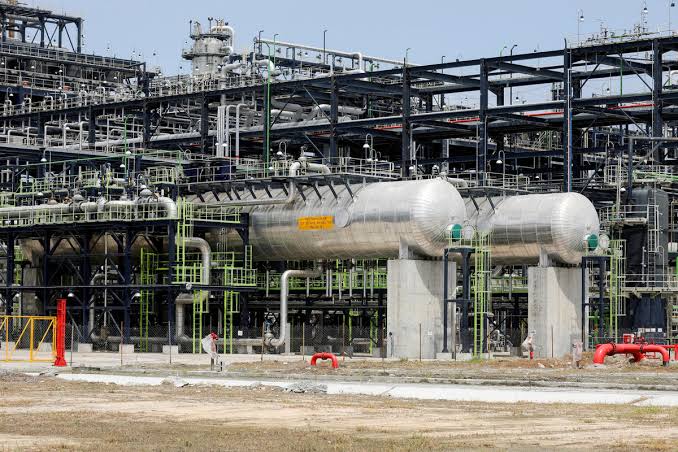
By Mr. Fredrick Kipchumba Chelimo – PWD
Email; fkipchelimo@yahoo.com
“The true measure of development is not how high we build, but how widely the opportunity reaches—and whether the law ensures that no citizen is left standing outside the gates of progress.”
Kenya has every reason to welcome an investment capable of transforming its industrial and energy landscape. The proposed 700,000-barrel-per-day Lamu refinery, estimated at between $15 billion and $17 billion, could create employment, stimulate infrastructure development, attract supporting industries and strengthen Kenya’s position as a regional energy and logistics hub. Reports indicate that groundbreaking is scheduled for September 30, 2026, with the Government projecting more than 60,000 jobs from the wider development. Yet an undertaking of this magnitude cannot be reduced to a groundbreaking ceremony, impressive projections or promises of jobs. Kenya must ask a more fundamental question: will this development be conducted in a manner that is transparent, lawful, inclusive and genuinely beneficial to the people?
The question is not whether Kenya should attract foreign capital. It should. The question is whether foreign investment is entering the country through a process sufficiently transparent, participatory, environmentally responsible and protective of Kenya’s long-term economic interests. That distinction matters.
The project is reportedly being developed by Aliko Dangote’s group within the LAPSSET Special Economic Zone, with Engineers India Limited selected to provide project-management and engineering, procurement and construction-management services. Yet important commercial questions remain. Reuters has raised concerns about crude supply because Kenya currently has no commercial crude production capable of feeding a refinery of this scale, while supporting storage infrastructure at Lamu remains incomplete. These are not necessarily reasons to oppose the project. They are reasons to interrogate it carefully before Kenya commits itself to its long-term consequences.
The Constitution provides the starting point. Article 10 makes public participation, transparency, accountability and sustainable development national values and principles of governance. Article 35 gives citizens the right to access information held by the State and, where necessary to exercise or protect a right, information held by another person. Article 42 guarantees every person the right to a clean and healthy environment, while Article 69 places obligations upon the State concerning sustainable exploitation, utilisation, management and conservation of the environment and natural resources.
These are not decorative constitutional provisions. They have practical consequences for a project capable of reshaping the economic, environmental and social future of an entire region.
The Access to Information Act, 2016 strengthens this position by establishing a right to information and a presumption in favour of disclosure. The 2023 Access to Information Regulations further contemplate disclosure relating to private bodies involved with public resources, public benefits or natural-resource projects, including project details, agreements, licences, environmental reports and other information necessary to protect rights, public health and safety.
Kenyans therefore deserve answers. What exactly has the Government negotiated with investors? What tax incentives, land arrangements, guarantees or infrastructure commitments are involved? Who ultimately owns and controls the investment? What will Kenya receive in taxes, employment, technology and local economic activity? What happens if the refinery becomes commercially unviable? These questions should not be answered through political speeches. They should be answered through accessible documents.
The Petroleum Act, 2019 provides an additional framework for local participation through local-content requirements and responsibilities assigned to the Petroleum Regulatory Authority. Therefore, promises of tens of thousands of jobs must translate into measurable commitments. Kenyans should know how many people will be employed during construction, how many permanent positions will follow, what proportion will be skilled, what training will be provided and which Kenyan companies will participate in the supply chain.
But inclusion must go beyond jobs. A modern national project cannot claim to serve Kenyans while leaving persons with disabilities on the margins. The question must therefore be asked from the beginning: where are persons with disabilities in the Lamu refinery’s employment, procurement, training, entrepreneurship, accessibility and community-development plans?
Persons with disabilities should not be remembered only when a project requires a photograph of inclusion. They should be part of the planning architecture itself. Recruitment facilities, workplaces, public information, transport infrastructure, communication systems and community engagement must be accessible. Training opportunities should deliberately reach persons with disabilities, while procurement and enterprise-development programmes should create genuine opportunities for disability-owned businesses and suppliers.
Inclusion should also extend to the wider communities affected by the project. The people of Lamu have reportedly raised concerns about transparency and participation while making clear that they are not opposed to investment itself. Their concern is that communities should have a meaningful voice in decisions affecting their land, livelihoods and future.
Lamu is not an empty geographical space waiting for capital. It is an historic cultural landscape, a marine ecosystem and home to communities whose livelihoods are closely connected to the coast. Concerns have also been raised about the proximity of the development to Lamu Old Town, a UNESCO World Heritage site, and possible impacts on marine and other sensitive ecosystems. Environmental assessment and meaningful public participation must therefore be treated as substantive safeguards, not administrative formalities.
There is also a public-finance dimension. Article 201 requires openness and accountability in public finance and public participation in financial matters. If public money, guarantees, land, tax expenditures, infrastructure or other public resources are committed to facilitate the refinery, Kenyans have a legitimate interest in knowing what is being committed and what risks the country is assuming.
Public-private investment does not make public accountability disappear. Ownership and beneficial control deserve equal scrutiny. Citizens should be able to establish who ultimately owns and controls the project, who finances it and who stands to benefit from the economic activity it generates. Kenya should publish the ownership and financing architecture in language ordinary citizens can understand.
The opportunity is enormous, but so is the responsibility. Foreign capital can bring financing, technology and expertise while Kenyan capital participates through pension funds, banks, SACCOs, investment companies, contractors and other enterprises. Local communities, young people, women and persons with disabilities should not merely watch wealth being created around them; they should have identifiable pathways into that wealth.
The greatest danger is the resource curse—a situation in which enormous economic potential fails to produce broad prosperity because of weak institutions, corruption, inequality, environmental damage or competition over economic rents. Lamu must not become a place where world-class infrastructure rises while surrounding communities remain economically peripheral.
Before construction proceeds, Kenya should therefore ask five straightforward questions: What exactly has Kenya negotiated? Who owns and controls the project? What does Kenya receive? What risks does Kenya assume? And how will citizens—including persons with disabilities and other historically excluded groups—participate and monitor compliance?
The Government should publish the principal investment agreements, ownership structure, financing model, fiscal incentives, land arrangements, environmental approvals, local-content commitments, employment targets, accessibility and inclusion measures, and public-resource commitments, subject only to narrowly defined lawful confidentiality. Kenya does not have to choose between foreign investment and Kenyan interests. It can have both.
Lamu can become a refinery, an industrial hub and an engine of regional growth. But development must remain subordinate to the Constitution, the law and the public interest. Most importantly, development must not create a new generation of people who live beside opportunity but remain excluded from it.
The first barrel of crude should enter Lamu after Kenyans have had a reasonable opportunity to know who owns the refinery, who finances it, who carries the risks, who receives the rewards and whether every Kenyan—including persons with disabilities—has a fair opportunity to participate in the prosperity it creates.
“A nation does not truly prosper when a few stand at the centre of opportunity while others are left at its edges; prosperity becomes development only when dignity, participation and opportunity reach everyone.”
Similar Posts by The Mt Kenya Times:
- Kenya’s new HIV prevention pill: Can local manufacturing change healthcare?
- Road safety awareness programme
- We must prepare for El Niño’s health fallout
- Ngula takes Harambee Stars pay row to tribunal
- Sometimes I wish KCPE had not been scrapped by competency-based education
About the Author