Gusii innovators call for collective action to advance climate-smart food systems
 The Mt Kenya Times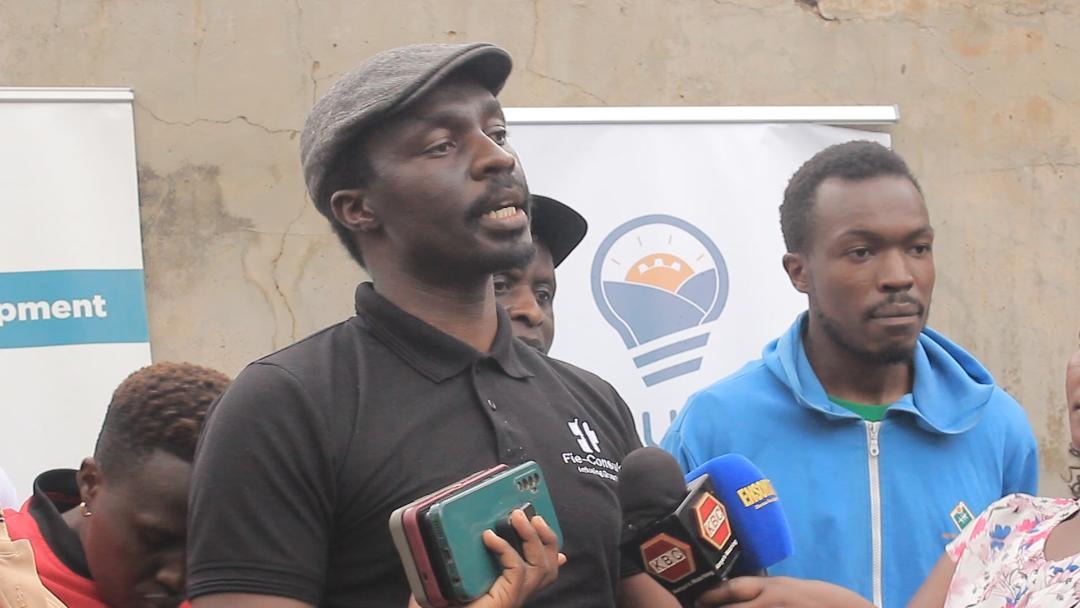
Fie Labs Innovation Hub Manager Jeremy Riro said the programme has deliberately been structured in stages to ensure that innovations are developed from real community needs. PHOTO/Elizabeth Angira
By Elizabeth Angira
In southwestern Kenya, farming remains at the heart of many families’ livelihoods. But the changing climate is increasingly making it harder for farmers to predict what each season will bring.
Prolonged droughts, floods and shrinking land sizes are putting pressure on agricultural production, raising concerns about how communities will continue producing enough food for future generations.
It is against this backdrop that Gusii innovators, farmers and other players in the agricultural sector are calling for collective action to develop climate-smart food systems that can respond to the changing realities on the ground.
The call came during a pre-hackathon problem-mapping meeting organised through Fie Labs Innovation Hub, bringing together farmers, value addition practitioners, logistics providers, innovators and other stakeholders to identify some of the challenges affecting the local food system.
The meeting was not about presenting solutions. Instead, participants were asked to speak about the problems they encounter in their farms, businesses and communities.
The issues identified will form the basis of an upcoming Agritech and Artificial Intelligence hackathon, where young innovators will be challenged to develop practical solutions.
Speaking during the meeting, Fie Labs Innovation Hub Manager Jeremy Riro said the programme has deliberately been structured in stages to ensure that innovations are developed from real community needs.
He said the first stage is problem mapping, where farmers and other stakeholders explain the challenges, they face.
“Today is about problems, nothing about solutions,” Riro said.
The problems gathered from the community will then be taken to the hackathon, scheduled for October 26 and 27, where young innovators will work on possible solutions with mentorship and technical support from the Google Developers Group (GDG) Kisii.
Riro said the organisers will return to the community in November to present the solutions developed during the hackathon and receive feedback from the people who initially identified the problems.
The community will be expected to assess whether the proposed innovations are practical, whether they can work in the region and what needs to be improved.
“Technology is just as good as if it is applicable,” Riro said.
Turning local problems into technological solutions
The initiative comes at a time when technology, particularly artificial intelligence, is increasingly being explored as a tool for addressing challenges in agriculture.
Riro said AI and data could help farmers make better decisions by providing information on weather patterns, markets, storage and post-harvest losses.
For instance, weather data could help farmers understand how changing weather conditions may affect production and guide them on when to plant or harvest.
Market data could also help farmers determine when to take their produce to the market, while data on storage conditions could help identify factors contributing to food spoilage and reduce post-harvest losses.
The hackathon will therefore bring together young people from institutions of higher learning for an intensive problem-solving process.
Over a 48-hour period, the innovators will work on challenges identified by farmers, processors, industry players and other community stakeholders.
Riro said the problems gathered during the mapping exercise will be organised and turned into challenges for the young innovators to work on.
Some of the innovators involved in previous editions of the programme are also returning to participate in this year’s initiative.
The programme is being implemented in collaboration with Kisii University, which is hosting the activities, and GDG Kisii, which is providing technical expertise.
Riro said involving young developers is important because the focus is on finding ways in which AI can be applied to agriculture and food systems to advance climate-smart solutions.
Farmers at the centre of the innovation process

For the organisers, the strength of the programme lies in putting farmers and other practitioners at the centre of the innovation process.
Rather than innovators sitting away from the community and developing solutions based on assumptions, they are meeting farmers directly and listening to their experiences.
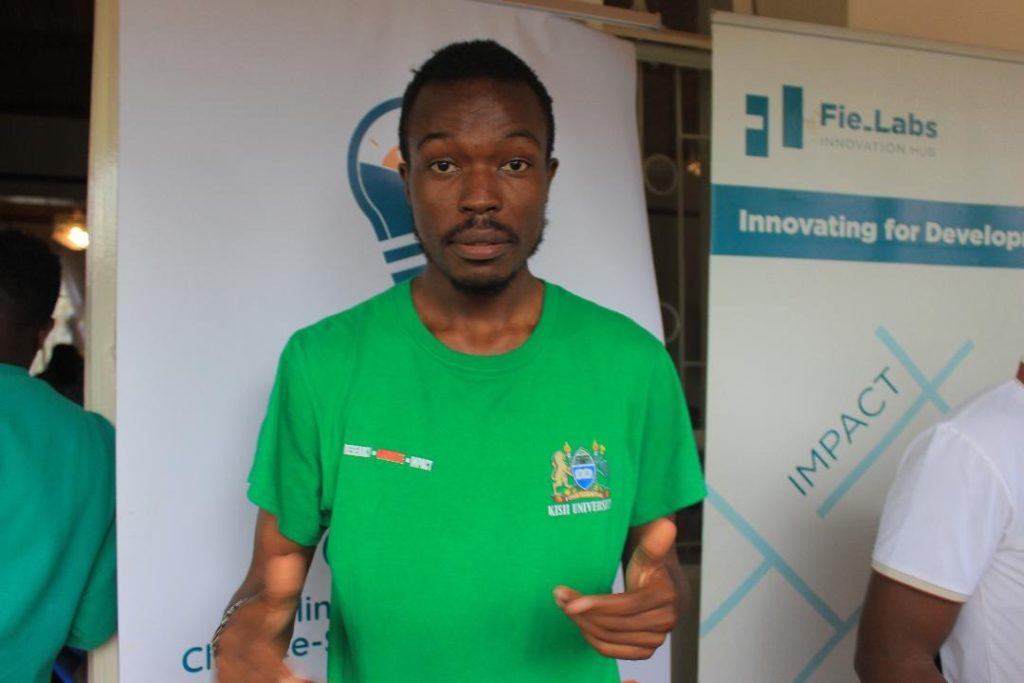
Davies Ogega, a fourth-year student at Kisii University and an innovator, said the team is currently mapping challenges across different stages of the agricultural value chain.
“We are currently handling several problems ranging from production to market access, all the way to value addition,” Ogega said.
He said the exercise is helping innovators understand the specific challenges within the region and identify areas where technology could have an impact.
“We are co-creating with them. We are figuring out the problems that the community is facing, and the practitioners themselves who are in the community are giving us the problems,” he said.
The approach, he said, gives innovators an opportunity to develop solutions based on actual experiences rather than assumptions.
From ideas to viable businesses
Riro said the journey will not end when the hackathon is over.
Solutions that prove practical and have the potential to grow will be taken through an incubation programme at Fie Labs Innovation Hub.
The incubation process will support innovators in turning their ideas into viable businesses, while the acceleration stage will connect them to partners, markets and capital needed to scale.
The aim is to create a pathway that takes an idea from a community problem, through innovation and testing, to a viable start-up.
Riro also called for more financing to reach communities and grassroots innovators dealing directly with climate-related challenges.
He said some interventions can be addressed through government financing, but more resources should also reach farmers, manufacturers and other stakeholders working at the local level.
“These climate challenges are being experienced where we are working directly with the community,” he said, adding that grassroots stakeholders need access to capital closer to where they operate.
He pointed to Fie Labs’ venture studio, Fie Ventures, as one of the mechanisms through which innovators can receive capacity-building support and access to capital to scale their ideas.
Farmers find a platform to speak about their challenges
For farmers who attended the meeting, the problem-mapping exercise provided something they said they have lacked for a long time an opportunity to openly present the challenges affecting them.
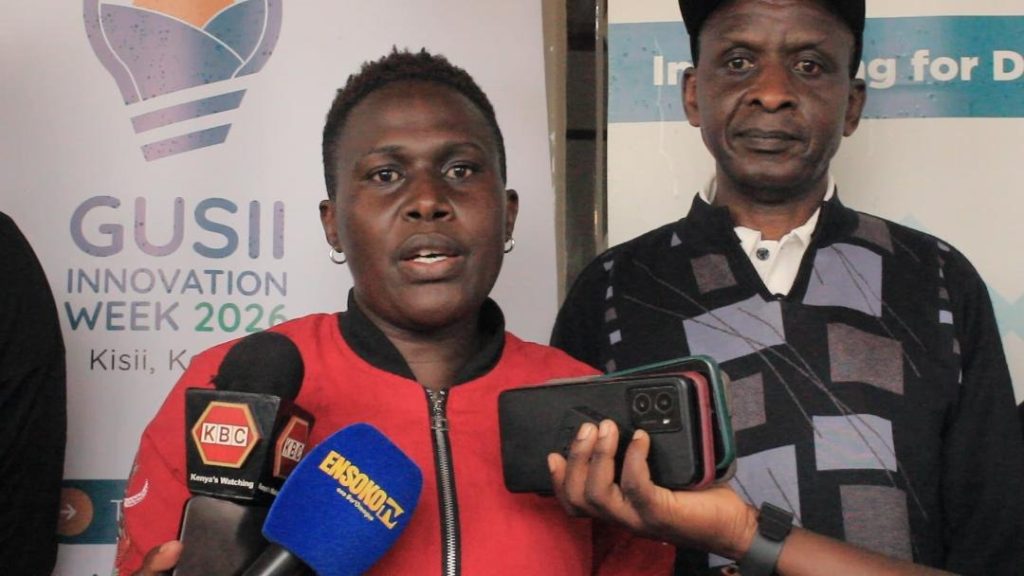
Emily Onkaro, a member of the Kisii Beekeepers Group based in Bonchari, Suneka, said the engagement had helped her and other farmers understand that their challenges could be part of the innovation process.
She operates Bonanga Agencies, working with local farmers involved in beekeeping.
Onkaro said farmers in rural areas often have problems but lack platforms where they can present them to people capable of developing solutions.
“We have our problems in the rural areas that we have never found a place to present. But now that we have been given the opportunity, we have discussed and tabled our problems,” she said.
She expressed hope that the process would lead to practical solutions that farmers could eventually use in their daily work.
“We are really here with a lot of hope that Agritech is going to assist us and bring solutions to the problems that we have,” she said.
Developers listen to farmers
For Gaudencia Omondi, a representative of GDG Kisii, the programme is different because developers are first exposed to the real-life problems facing farmers before they begin developing solutions.
He said GDG Kisii has partnered with Fie Labs for several years and is supporting the Gusii Innovation Week 2026 programme by bringing developers together with farmers and other practitioners.
“What makes Gusii Innovation Week special and different from other hackathons is that we really have the first phase of the hackathon, which is the problem mapping, where developers meet the actual farmers,” Omondi said.
He said participants included people involved in livestock keeping, indigenous crops and horticulture, giving developers an opportunity to hear about challenges across different areas of agriculture.
Omondi said many of the problems raised during the exercise remain largely untapped, creating opportunities for developers to explore new technological solutions.
The second edition of Gusii Innovation Week will be held at Kisii University from October 26 to 30, 2026.
The first four days will focus on the Agritech AI Hackathon and the Food Systems Innovation Summit, while the final day will feature an Innovation Ecosystem Tour showcasing different innovations across the county.
For the organisers, the larger goal goes beyond a week-long event.
It is about creating a stronger connection between farmers who understand the problems on the ground and young innovators with the skills to develop technological solutions.
As climate change continues to affect agricultural production, the organisers believe that solutions developed with communities rather than for communities have a better chance of responding to the realities farmers face.
The challenge now is to turn the problems identified during the mapping exercise into innovations that farmers can actually use, afford and scale.
Similar Posts by The Mt Kenya Times:
- Your certificate has no power of its own: It borrows power from the brand you are killing
- Kinoti Marete backs Samburu security operation, rallies Meru aspirants to PPK
- The blind lady’s dagger: When “social justice” sharpens Kenya’s laws into political blades
- A relational school will always outperform a transactional one
- Kenya’s anti-corruption war needs stronger pointmen at the grassroots
About the Author