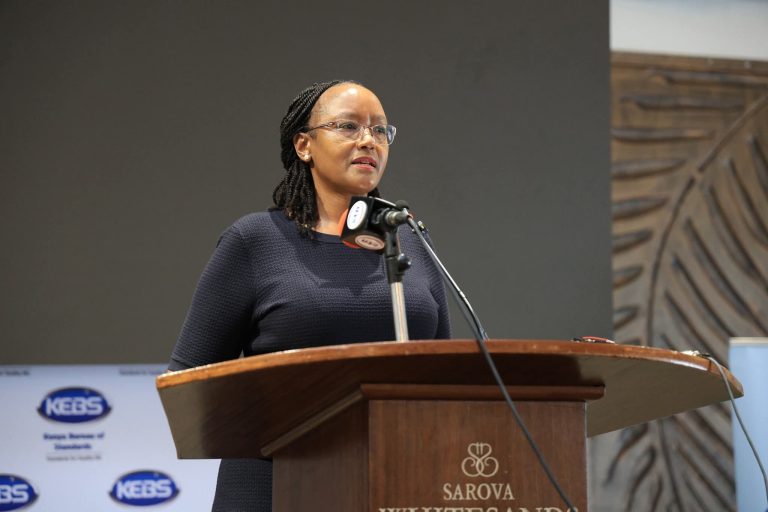
The Silent Builders: Why Engineering Brilliance Needs a Social Megaphone
 The Mt Kenya Times
By David Nyaga
Engineering is the invisible scaffolding of modern civilisation. It is a discipline where precision mathematics and the unforgiving laws of physics give us resilient infrastructure, seamless digital systems, and power grids that keep the lights on. Yet a striking paradox defines today’s professional world: the very people who build it are often its least visible inhabitants.
Brilliant minds capable of solving the most complex physical and digital problems are, almost as a rule, reluctant to talk about what they do. They tend to operate under what might be called the “Build It and They Will Come” fallacy — the deeply held, if quietly mistaken, belief that technical excellence speaks for itself. In a true meritocracy, it would. But in today’s attention-driven economy, the market does not automatically reward the most capable engineer. It rewards the most visible one.
To understand why this happens, it helps to look honestly at the engineer’s instinct to avoid self-promotion. That restraint is rarely born of indifference. More often, it is the product of years of rigorous, evidence-based training. Engineers live in the world of objective reality — a structural beam either holds its load or it doesn’t. In a discipline governed by physical laws, personal marketing can feel unscientific, even vain. There is also what is sometimes called the “curse of knowledge.” Surrounded by colleagues who instinctively understand the complexity of daily work, engineers assume, understandably but wrongly, that everyone else does too — that clients, policymakers, and board members naturally grasp the significance of what has been achieved. So they say nothing, retreat to their models and code repositories, and wait for recognition that never quite arrives.
 That dignified silence carries a real professional cost. When talented structural, civil, or systems engineers stay quietly in the background, they leave a gap in public understanding. And gaps do not stay empty for long. The digital world fills them quickly with voices that may have far less technical depth but far greater comfort with communication. The consequences are concrete: consulting contracts, senior appointments, and industry influence tend to flow towards those who remain front of mind. The wider industry suffers too. When public conversation and policy are shaped by skilled communicators rather than experienced practitioners, critical infrastructure and technology lose the grounded, expert stewardship they genuinely need.
The answer is not for engineers to suddenly become influencers. It is something more purposeful than that — a shift in how professional visibility is understood. Rather than seeing it as self-promotion, engineers should recognise it as public education. Sharing expertise is not so different from writing technical documentation; the audience is simply broader. Engineers do not need to invent compelling stories. Their working lives already contain them. Every time a team finds a way around unexpected soil settlement, or resolves latency in a server architecture, there is a lesson worth sharing — for junior colleagues still learning the craft, for stakeholders who need reassurance, and for an industry that benefits from accumulated real-world knowledge. That is not boasting. That is contribution.
Doing this well requires the same systematic thinking engineers already apply to their work. The most effective approach is straightforward: describe the problem, explain what was done, and show the result in measurable terms. Outcomes speak louder than claims. Beyond individual stories, engineers should also think about their broader digital presence as something worth maintaining deliberately — a live, accurate reflection of their capabilities, supported by concrete evidence: site documentation, published papers, project records. Think of it as the professional equivalent of a digital twin: a faithful, up-to-date representation of the real thing.
The era of quietly doing excellent work and hoping the world will notice is over. The modern engineer needs two toolkits: the technical ability to build the solution, and the communication skills to explain why it matters. Stepping into public professional life is no longer optional or uncomfortable — it is part of the job. The industry’s sharpest minds deserve the recognition, influence, and opportunities their work has earned. The first step is simply deciding to be heard.
Similar Posts by The Mt Kenya Times:
- Your certificate has no power of its own: It borrows power from the brand you are killing
- Kinoti Marete backs Samburu security operation, rallies Meru aspirants to PPK
- Gusii innovators call for collective action to advance climate-smart food systems
- The blind lady’s dagger: When “social justice” sharpens Kenya’s laws into political blades
- A relational school will always outperform a transactional one
About the Author