The blind lady’s dagger: When “social justice” sharpens Kenya’s laws into political blades
 The Mt Kenya Times
By Jerameel Kevins Owuor Odhiambo
In the months following Kenya’s 2024 Finance Bill protests, authorities charged at least seventy-five demonstrators many of them young, leaderless, and previously unknown to the criminal justice system with terrorism-related offences under the Prevention of Terrorism Act. Bail conditions soared. Simultaneously, the Office of the Director of Public Prosecutions withdrew or quietly abandoned corruption cases against several political allies of the executive. Over four hundred and fifty other protesters faced serious criminal counts. Amnesty International Kenya documented at least one hundred and twenty-eight deaths, three thousand arrests, and more than eighty enforced disappearances across the protest wave. These are not isolated statistics; they are the arithmetic of selective justice.
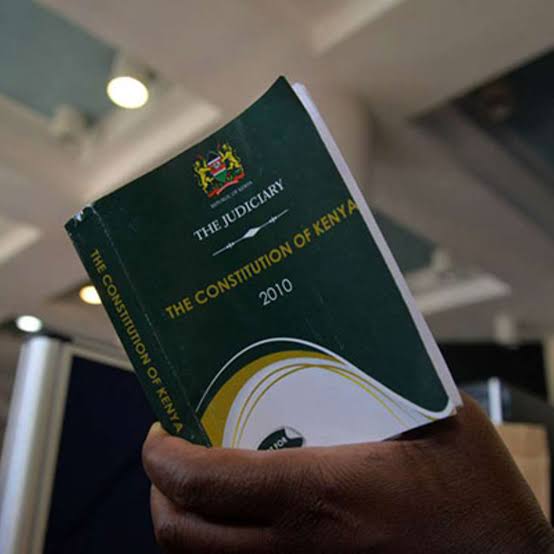
This is the factual starting point of a deeper disease: the deliberate conversion of law into a weapon under the banner of social justice, public order, or national security. The disease does not belong exclusively to any single regime or ideology. It belongs to any power that discovers the law can be made to serve ends other than equal, predictable, and impersonal application. In Kenya the progressive Constitution of 2010, with its explicit commitment to social justice, dignity, and the progressive realisation of socio-economic rights, has become both shield and sword. The same instrument that was meant to constrain arbitrary power is now routinely invoked to legitimize its expansion.
Consider the historical lineage. Colonial authorities wrote vague witchcraft ordinances and sedition statutes precisely because ambiguity is power. An elderly widow on the coast can be branded a witch, murdered, and her land seized with minimal risk of successful prosecution because the law itself validates the community’s superstition. Post-independence regimes refined the technique: detention without trial, Public Order Acts, and later the language of national security. The 2010 Constitution was supposed to break that chain. Instead, new instruments Computer Misuse and Cybercrimes Act provisions, broad terrorism definitions, and the elastic concept of “public participation” have been pressed into the same service. A software developer who builds a tool to help citizens email objections to a Finance Bill is arrested for “unauthorized interference with a computer system.” A prison officer-turned-activist is charged with publishing false information. Film-makers linked to a critical documentary face similar treatment. The offences carry the weight of serious crime; the political message is unmistakable.
The irony is surgical. Social justice, properly understood, demands that the law remain blind to status, tribe, and political usefulness. When the law is weaponised in its name, the opposite occurs. Allies of power receive the soft glove of withdrawn charges and delayed prosecutions. Critics receive the iron fist of terrorism counts, high bail, and prolonged pre-trial detention. The scales of justice do not merely tip; they are deliberately loaded. One side is weighed with the rhetoric of equity and transformation; the other is crushed by the reality of selective enforcement. The result is not justice redistributed but justice redistributed according to political convenience.
This is not abstract theory. It produces measurable corrosion. Public confidence in the justice system remains low; the World Justice Project ranks Kenya poorly on equal treatment and absence of corruption. When ordinary citizens watch high-profile graft cases evaporate while a twenty-year-old protester is held on terrorism charges for allegedly damaging property, they learn a practical lesson: the law is not a common standard but a resource available to those who control the levers of prosecution. The lesson is corrosive. It teaches that rights are contingent, that protest is safer when it serves the powerful, and that the Constitution’s soaring language about human dignity can be recited while the same dignity is stripped from those who inconvenience the state.
Literary devices illuminate the pathology. The law becomes a dagger sheathed in the velvet of social justice rhetoric. The blindfolded Lady Justice is handed a second blade and told that the first was insufficiently progressive. The poison is poured into the well of legal neutrality and then declared pure because the pourer claims noble intent. History supplies the mirror: every authoritarian experiment has claimed to advance some higher justice racial purity, class equality, religious orthodoxy, or developmental urgency. Kenya’s version wraps itself in the language of the 2010 Constitution and the unfinished business of equity. The packaging changes; the mechanism does not.
Deep insight requires facing an uncomfortable correlation. The more expansively “social justice” is defined encompassing not only formal equality before the law but outcomes, historical redress, and the progressive realisation of every socio-economic right the greater the temptation to treat ordinary legal processes as obstacles rather than safeguards. Courts are urged to become engines of transformation. Prosecutors are urged to prioritise certain categories of offender. Legislators are urged to draft vague, aspirational statutes that invite administrative discretion. Each step appears compassionate in isolation. Collectively they produce a legal culture in which the ends justify the means and the means become increasingly arbitrary. The correlation is not accidental: expansive moral claims invite expansive legal power; expansive legal power invites selective application.
The actors who must reverse this trajectory are multiple and specific. The Judiciary must reclaim the discipline of neutrality. Social Transformation through Access to Justice is a worthy administrative goal; it must never become a licence for outcome-driven jurisprudence that privileges favoured litigants or favoured narratives. Judicial officers who treat the Constitution as a political programme rather than a constraining charter erode the very institution they serve. The Office of the Director of Public Prosecutions must be restored to its constitutional independence.
Selective withdrawal of charges against the connected and zealous pursuit of the inconvenient is not prosecutorial discretion; it is prosecutorial capture. Parliament must prune vague, overbroad statutes particularly those governing cybercrime, public order, and terrorism that invite abuse. Ambiguity is not progressive; it is the oxygen of lawfare. Civil society and the legal profession must abandon the selective outrage that condemns state excess only when the victims are ideologically convenient. Consistency is the price of credibility. Citizens must demand equal application of the law even when it disadvantages their preferred political camp. A right that exists only for one’s allies is not a right; it is a privilege.
The weaponisation of law in the name of social justice does not expand justice; it privatizes it. It converts a public good into a private arsenal. Once that conversion is normalized, every subsequent claim of justice becomes suspect because the instrument itself has been compromised. Kenya’s progressive Constitution was not written to be a political cudgel. It was written to bind the powerful and protect the powerless under the same rules. When those rules are bent for any higher purpose however eloquently framed the powerless eventually discover that the purpose was never theirs.
The remedy is not more passionate rhetoric about social justice. The remedy is the cold, unfashionable insistence that the law remain impersonal, predictable, and equally applied. Anything less turns the Constitution into a decorative document and the courtroom into a theatre of selective morality. Kenya has already paid too high a price in blood, trust, and institutional integrity to continue this experiment. The dagger must be returned to its sheath. The scales must be rebalanced. The blindfold must be restored not as a symbol of indifference, but as the only reliable guarantee that justice will not become another name for power.
The writer is a social commentator
Similar Posts by The Mt Kenya Times:
- Kinoti Marete backs Samburu security operation, rallies Meru aspirants to PPK
- Gusii innovators call for collective action to advance climate-smart food systems
- A relational school will always outperform a transactional one
- Kenya’s anti-corruption war needs stronger pointmen at the grassroots
- Raphinha cuts Brazil duty short after muscle scare
About the Author