Kenya’s election countdown: DCP and Gachagua fire the opening shot in 2027 battle
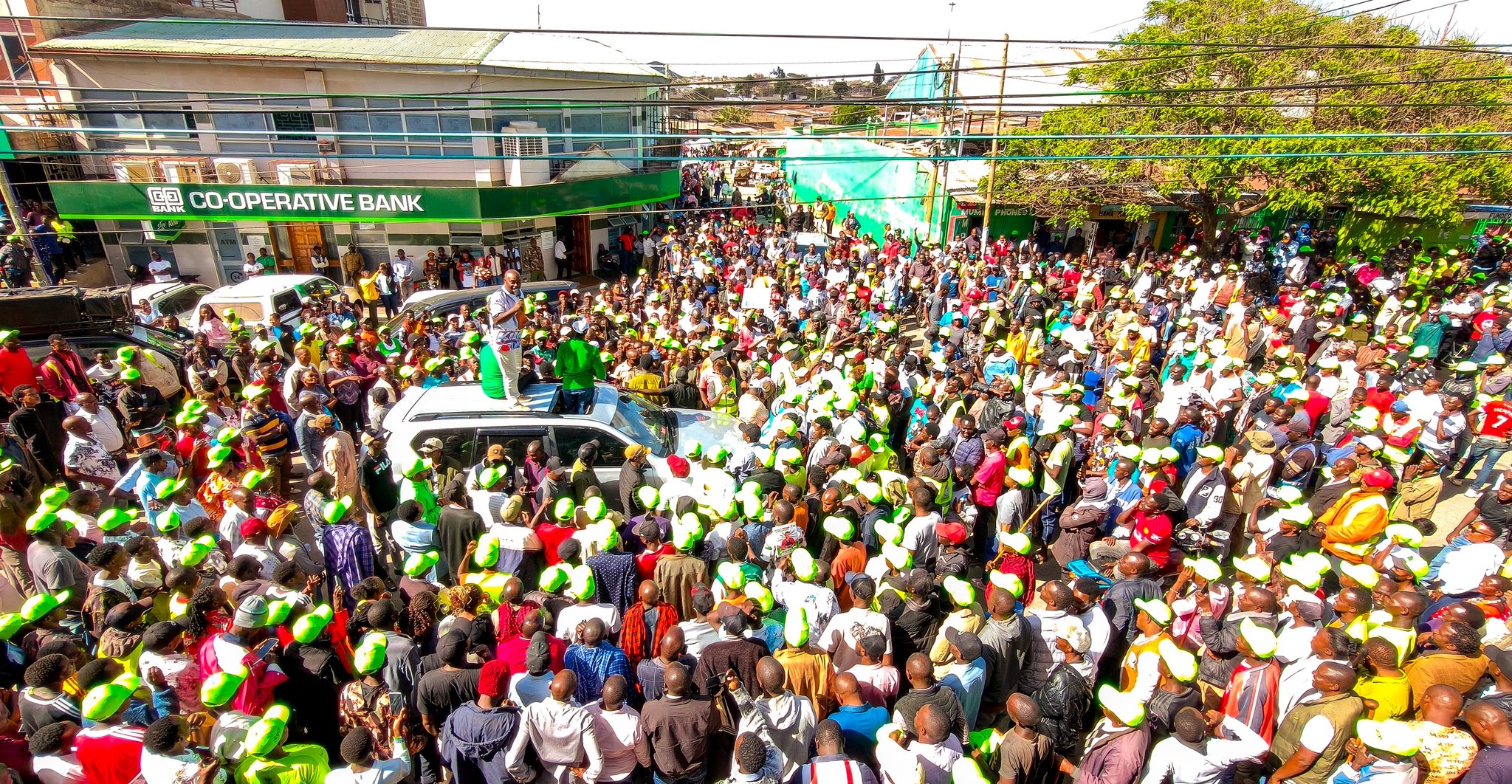
The DCP Party team, led by Senator John Methu, engaged with the great people of Kajiado town.
With Ruto’s coalition fracturing and Gachagua mobilising from abroad, Kenya’s political temperature is rising a full year before voters go to the polls
By James Mwangi
Kenya’s 2027 general election campaign is under way in everything but name, with former Deputy President Rigathi Gachagua engaging the Kenyan diaspora in the United States while simultaneously building an opposition movement that is directly challenging President William Ruto’s administration over economic hardship, governance failures and what critics describe as a widening disconnect between the political class and ordinary citizens.
Writing on social media during his diaspora tour, Gachagua was unsparing. “Misplaced anger, insults, and name-calling will only further diminish this regime’s already deteriorating chances of survival,” he said, framing his Democratic for the Citizens Party not as a personal vehicle but as a broad coalition for citizens frustrated by rising costs and shrinking opportunities. “We will not let you down or forsake you. Let’s stand together and open a new chapter, one led by leaders who are compassionate, listen to the people, and put Kenyans first.”
The remarks landed at a particularly sensitive moment. University lecturers are on strike again, squeezing families already stretched by inflation, while a government suggestion that Kenyans supplement dairy shortages by consuming wildlife products drew widespread ridicule and became an instant symbol of what opponents argue is an administration dangerously out of touch with the realities of everyday life.
Gachagua’s Democratic for the Citizens Party, led on the ground by Senator John Methu, has already begun constituency-level mobilisation. Yesterday’s engagement in Kajiado town signalled that the movement is targeting the vote-rich regions of the Rift Valley and the former Nairobi metropolitan belt — constituencies that will be decisive in any competitive 2027 contest.
The political arithmetic matters. Gachagua was impeached by parliament in October 2024 in circumstances his allies described as politically motivated, a charge the government denied. His removal created a fault line within the Ruto administration’s original coalition, and that fracture has not healed. If anything, it has widened as economic conditions have deteriorated and public patience with the government’s messaging has worn thin.
Kenya goes to the polls in August 2027, and the period between now and then promises to be among the most turbulent in the country’s post-independence political history. The opposition is fragmented but energised. Raila Odinga, now at the African Union, has not formally ruled out another presidential run, and his political machinery remains active at the grassroots. Martha Karua, Kalonzo Musyoka and a constellation of regional figures are all recalibrating their positions, sensing that the ground beneath the ruling coalition is shifting.
For Ruto, the challenge is substantial. His administration came to power on the bottom-up economic transformation agenda, promising to lift ordinary Kenyans out of poverty and dismantle what he called a dynasty-dominated political system. Three years in, the cost of living has remained punishingly high, public debt servicing consumes an ever-larger share of the national budget, and the street protests of mid-2024 — which forced a partial reversal of the finance bill — demonstrated that public anger can translate rapidly into organised political pressure.
The lecturers’ strike is not merely an industrial dispute. In the context of a government struggling to demonstrate competence and compassion, it is another data point in a narrative the opposition is constructing with considerable skill: that this is a regime which prioritises its own survival over the welfare of citizens.
Gachagua’s diaspora engagement has demonstrated that physical distance is not political absence. Social media has compressed geography, and his ability to generate news cycles from Washington while simultaneously rallying Kenyans abroad reflects a sophisticated understanding of modern political communication. His return to Kenya, widely anticipated ahead of the formal campaign period, will represent a significant moment — and a potentially serious threat to the coalition Ruto is working to hold together.
What the next twelve months will reveal is whether Gachagua can convert diaspora enthusiasm, online momentum and grassroots mobilisation into the kind of durable, cross-regional coalition that wins Kenyan presidencies. The country’s electoral history is unforgiving. Regional arithmetic, financial resources, party infrastructure and the ability to negotiate alliances at the eleventh hour have determined every election since multiparty politics returned in 1991. Passion and grievance, without organisation, rarely prevail.
Kenya in the months ahead of August 2027 will be a country in permanent political negotiation — alliances forming and dissolving, defections announced and denied, manifestos promising transformation that previous manifestos also promised. The electorate, meanwhile, will be watching the price of unga, the availability of jobs and the state of public hospitals with far more attention than any campaign rally.
That, ultimately, is the election that matters. Not the one fought on stages and social media, but the one settled quietly in millions of households by citizens who have simply had enough — and who will decide, in August next year, whether to give this government more time or open, as Gachagua puts it, a new chapter entirely.
Similar Posts by The Mt Kenya Times:
- Mt Kenya Times ePAPER October 15, 2026
- One year on: ‘Dad is gone’ — Ida Odinga recalls the moment Kenya lost Raila
- Matiang’i and Nyoro pledge free senior secondary education from 2028
- School feeding in Kenya: Can every child access a meal and an education?
- When students become the community’s hope
About the Author