Acting locally for global impact: greening communities and schools for climate resilience
 The Mt Kenya Times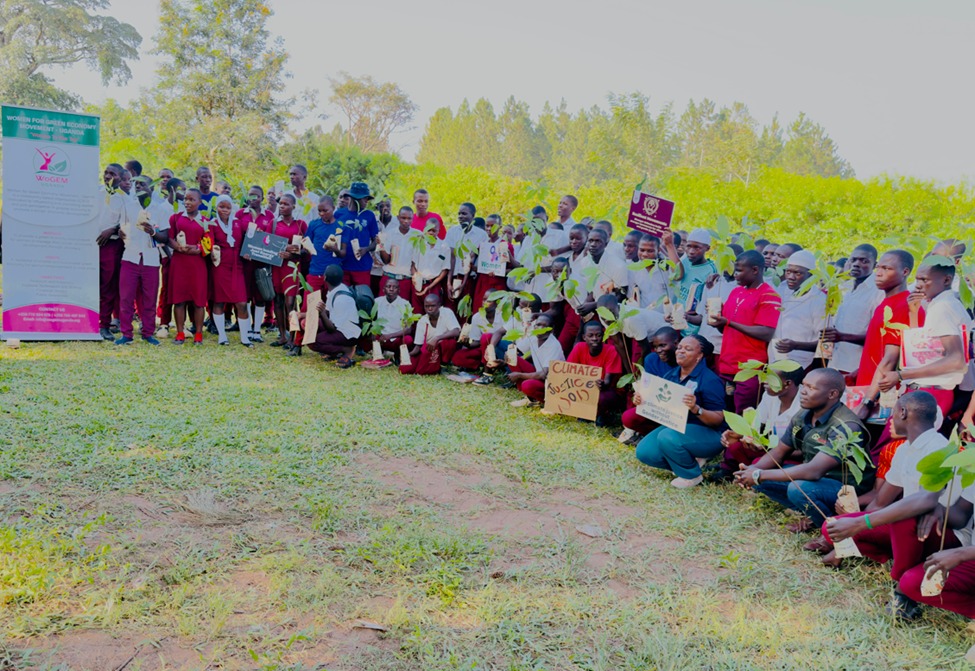
By Ireen Twongirwe
Letter to the Negotiators
As climate negotiations continue in Bonn during SB64, grassroots organisations such as Women for Green Economy Movement Uganda (WoGEM Uganda), Action for Climate and Environmental Justice Uganda (ACEJ Uganda), and Green Walk Engineering Limited are proving that climate action is not confined to conference halls and boardrooms. It is happening on the ground, in the very communities that face the realities of the climate crisis every single day.
On 12 June 2026, WoGEM Uganda planted more than 100 fruit trees at Kyigandalo Secondary School in eastern Uganda. During that engagement, we reached over 1,000 students and teachers, equipping them with climate knowledge and raising awareness about the urgent importance of protecting and conserving our environment. The energy in that schoolyard was something no conference room has ever quite matched.
The students and teachers shared firsthand experiences of climate impacts — rising temperatures, prolonged droughts, devastating floods, and creeping food insecurity. These challenges have disrupted school programmes, affected attendance, and taken a measurable toll on academic performance. While many students were unfamiliar with the technical language of climate change, they understood, deeply and instinctively, the value of trees in sustaining healthy ecosystems and livelihoods. That understanding is not taught from a textbook. It is lived.
This initiative demonstrates something that policymakers would do well to internalise: climate action is not merely discussed at international conferences. It is actively being implemented in communities that are among the most affected by the crisis. By planting fruit trees, we are contributing to carbon sequestration, ecosystem restoration, food security, and community resilience — while directly supporting the goals of the Paris Agreement to limit global warming to 1.5 degrees Celsius.
As global leaders continue to negotiate and follow up on climate finance commitments from Global North countries, grassroots organisations are already moving. We are transferring climate knowledge to future generations, restoring degraded landscapes, and building resilient communities — all of this with limited resources, and without waiting for permission.
During our discussions, students also raised the increasing levels of deforestation in their communities, driven by demand for firewood, charcoal, and timber. These activities continue to worsen the crisis. We explored sustainable alternatives together and emphasised the importance of transitioning towards decentralised renewable energy solutions that are affordable, accessible, inclusive, and genuinely sustainable for all — not just for those with the means to afford them.
What our engagement revealed is an urgent need not only to transfer climate technologies, but to transform mindsets. Schools and communities must become centres of climate education where future generations are equipped with the knowledge and skills to respond to environmental challenges. The classroom and the community are the frontlines. They deserve to be treated as such.
At the event, I spoke about the interconnected nature of climate change, gender equality, health, and wellbeing. Climate change disproportionately affects marginalised women, limiting access to livelihoods, healthcare, and reproductive health services, while deepening stress, trauma, and mental health challenges. Women often carry the heaviest burdens of caregiving and household responsibility, making them especially vulnerable when climate shocks hit. That vulnerability is not incidental. It is structural.
I also emphasised the importance of self-care and collective wellbeing within climate justice movements. The struggle for climate justice did not begin with us, and it will not end with us. That reality calls for solidarity, for the courage to share our stories, to heal from injustices, and to challenge the systems of inequality and patriarchy that continue to marginalise communities — including our own.
It is worth stating plainly: Africa contributes less than four per cent of global greenhouse gas emissions, yet bears some of the most severe consequences of the climate crisis. Climate finance remains essential, but we cannot afford to wait indefinitely for commitments to be fulfilled. The crisis is already here. Communities need solutions today, not at the next conference, and not in the next funding cycle.
Across Uganda, communities are drawing on indigenous knowledge and local innovation to advance climate and gender justice. The trees we planted at Kyigandalo will not only help reduce emissions — they will contribute to household incomes, improve nutrition, and support local economic development. This is climate action that serves both people and planet, rooted in the soil of lived experience.
Real solutions already exist within our communities. What is needed now is greater recognition, direct funding, and sustained investment in grassroots-led adaptation and mitigation efforts. Not filtered through layers of bureaucracy. Not diluted by conditionality. Directly, to the people doing the work.
We say it plainly, as we always have: nothing for us without us.
Ireen Twongirwe is Executive Director of Women for Green Economy Movement Uganda (WoGEM Uganda) and a climate justice advocate.
For God and My Country
Similar Posts by The Mt Kenya Times:
- Mt Kenya Times ePAPER October 1, 2026
- Museveni backs Lamu but keeps Uganda’s money at home
- Sifuna’s party wins its name — and Kenya’s opposition race begins in earnest
- Lamu’s $16B gamble: Africa’s biggest refinery divides the region
- Ruto launches KSh2.2 trillion Lamu refinery in East Africa’s biggest energy bet
About the Author