Advantages And Disadvantages Of Online Education: Lessons From The Pandemic

Turdiyev Abdulfayz Sherali

By: Turdiyev Abdulfayz Sherali
Online education appeared long before the quarantine. Together with the development of the Internet, the online education system began to form in the 1990s. Especially after the 2000s, it developed rapidly with the popularization of digital technologies and internet platforms. For example:
- The first platforms: In the 1990s, universities created the first electronic systems for distance learning.
- MOOCs (Mass Open Online Courses): In the early 2000s, platforms like Coursera, edX, and Udemy became popular and allowed millions of users to learn.
- Corporate Training: Companies are also starting to launch online training and courses for their employees.
And the COVID-19 pandemic has made online education a global imperative. During the quarantine, traditional educational institutions were forced to switch to online systems, which led to the rapid development and penetration of online education. Thus, online education existed even before the pandemic, but the quarantine made it much more popular and encouraged its further development.
In recent years, the development of digital technologies has brought new opportunities to the field of education. But in 2020, the education system faced unprecedented challenges due to the COVID-19 pandemic. Schools, institutions of higher education and other educational institutions were closed, and students and teachers were forced to quickly switch to the online education format. This process accelerated the integration of the educational system with innovative technologies and implemented a number of new approaches.
The advantages of online education include the flexibility of the educational process, the absence of geographical boundaries and saving time. At the same time, the lack of technical infrastructure, differences in access to the Internet, and difficulties related to learning motivation were recognized as its shortcomings. Especially in developing countries, this process has caused many problems. This article focuses on an in-depth analysis of the positive and negative aspects of online education during the pandemic. Also, based on the lessons of the pandemic, the article offers suggestions on how distance education can be organized more effectively in the future. This topic is still relevant today and is of great importance for educational system reforms.
Admittedly, distance learning was critical during the pandemic. Because this form of education is considered the most appropriate way in emergency situations. It is not possible to maintain social distance in traditional education, but you can feel safe at home behind a computer device. The time you spend going to school or university can be spent on reading additional literature, playing sports, and at least getting enough sleep. But…
Disadvantages… Online education has shown to have some advantages as well as some disadvantages.
First, there is the problem of connecting to the Internet, which is essential for distance learning. According to UNICEF, 463 million students worldwide did not have access to distance learning modules in 2020. This is mainly due to internet problem.
Problems related to the Internet were also observed in Uzbekistan during the pandemic. There is no doubt that this had a negative impact on the quality of education. In 2021, our republic took 124th place in terms of internet speed. It is difficult to introduce high-quality distance education at this rate.
Second, distance education lacks control compared to traditional education. For example, according to research conducted in Great Britain, in 2020, students spent only 2.5 hours studying, and the rest of the time they spent playing video games on social networks.
In January 2021, the Ministry of Public Education announced in a special statement that most students spend their time inefficiently during the distance education process. Therefore, starting from the 3rd quarter of the 2020-2021 academic year, classes have been held in a completely traditional form.
In addition, educational institutions are a unique mechanism of social protection. The pandemic proved it once again. For example, before school closures, more than 300 million students around the world took advantage of free lunch. In 2020, 370 million children were deprived of this opportunity, and the risk of hunger in the world increased even more. The distance form cannot be used in all areas of education. For example, quality education in the field of medicine cannot be provided remotely. Or this method is not optimal for fields that are studied directly in laboratories. Traditional education is also preferred for persons with disabilities. First, it provides them with the most needed tool—communication. Secondly, the material and technical base for pupils and students with disabilities to receive quality education is very expensive. A decline in the quality of education can have serious consequences in the future. It also affects the socio-economic development of the country. For example, in August 2020, the World Bank reported that Central Asia could lose $44 billion in the future due to the decline in the quality of education during the pandemic. This requires paying more attention to the field of education than before.
The pandemic and school closures have put children’s health and safety at risk, as well as increased rates of domestic violence and forced labor. Changes in education against the background of the pandemic also affected the quality of children’s education. 50 percent of children under the age of 10 living in low- and middle-income countries were also lagging behind in learning performance. It is estimated that up to 70 percent of children with learning disabilities will be affected by long-term school closures and ineffective distance learning. If insufficient efforts are made to address educational challenges, even after children return to school, their future performance may be at risk.
The main “victims” are children from low-income families, disabled people, and girls who have less access to remote education. This is due to social and gender norms, discrimination factors in societies, as well as problems related to lack of electricity network, gadgets, quality of communication and technologies. Young students were also more affected than adults. Children of preschool age, who are at an important stage of learning, experienced 2 times more losses. Because they were completely left out of the distance education organization plans. As a result, children in these categories are more deprived than others of the good conditions and opportunities that they can achieve throughout their lives through education. In order to compensate for the losses in education, it is necessary to focus on covering more children of this category.
In Uzbekistan, due to the pandemic, educational institutions were closed for quarantine since March 2020. The 2020/2021 academic year began in hybrid (both offline and online) form in general education schools, and in HEIs, from November 16 of the same year, studies were gradually returned to traditional education. In the last quarter of 2020, the quality of distance education in HEIs was evaluated. According to him, due to the lack of skills of professors and students to use the electronic platform, the platforms are not fully enriched from the educational and methodological side, problems such as lack of equipment, conditions and the quality of the Internet, there were shortcomings such as student attendance. Also, pupils and students with disabilities suffered more than their peers during the pandemic. Due to physical disabilities, students have less opportunity to study remotely. According to the Association of the Disabled, the lack of a computer for most of the students with disabilities and the high cost of Internet tariffs have had a negative impact on their studies.
What should be the solution?
According to a report by UNESCO, UNICEF and the World Bank, the international community and decision-makers need to keep school closures as a top priority. The reason is that although almost all countries of the world have been able to introduce distance education, it has not been possible to replace traditional education in terms of quality. Therefore, it is necessary to ensure the safe education of children in the classroom by maintaining social distance, wearing a medical mask and ensuring a good ventilation system. Continuous assessment of learning indicators to identify student needs. Strengthening the role of parents, families and society in supporting children’s learning. To ensure high-quality training of teachers, use of teaching and learning materials. It is necessary to increase the amount of funds allocated from the state budget for education.
The relevance of online education. In today’s digital age, online education remains relevant for the following reasons:
- Lessons from the global pandemic: The pandemic has shown the limitations of face-to-face lessons in education. Therefore, online education has made it possible to conduct classes remotely between students and teachers.
- Development of innovative technologies: Virtual classrooms, artificial intelligence (AI), augmented and virtual reality (VR/AR) technologies are used in online education. For example, AR/VR can make lab training or medical education more interactive.
- Affordable distance education: Many universities in developed countries are making distance education cheaper than traditional education and making this opportunity available to the masses. Reduction of transportation, living and other expenses showed the economic usefulness of this model.
Studying remotely or in traditional classrooms is a question that many applicants struggle with. Often, students are afraid to choose distance education because they are not clear about the pros and cons of this method of education. If you want to learn in this way, you should understand the advantages and disadvantages of distance learning. Advantages and disadvantages of distance education:
- You can work as well as study. In fact, the majority of applicants who choose distance learning are those who do not want to give up their work, but want to learn. With online education, you can study on weekends, even at midnight when you get home from work;
- Your money will be saved. For any program, a distance learning degree (online or otherwise) can be much cheaper than a regular tuition at a training center. Online education is the best way for students who are looking for economical options;
- Save your time! You can save the time you have to wait for transport while going to and from the educational centers. In online education, you get information wherever you want;
If you’re feeling ambitious, the biggest benefit of distance learning is that some classes are taught in groups. In the group, some students understand faster and others slowly. In this respect, distance education method is more effective;
- The possibility of confusion is high. No face-to-face teachers and no classmates constantly reminding you of pending assignments. If a student wants to successfully complete a distance learning course, he must be motivated and focused;
- Losing the network. The biggest enemy of learning online is a slow internet service provider or disconnection. In this situation, the applicant’s desire for education fades or becomes nervous.
Uninteresting classes. According to statistics, 5% of people complete the online courses they started to study. The reason for this is that there is no direct two-way communication between the teacher and the student in the lessons. Usually in online classes, only the teacher talks and you learn. Moreover, it is almost impossible to organize interesting games where students communicate with each other and conduct research in online classes.
Future and prospects. Online education continues to change as technology evolves. Its future will develop based on the following approaches:
- Hybrid education model:
– Many educational institutions are moving to a model that combines online and traditional education. This model allows students to acquire theoretical knowledge through virtual classes and strengthen practical skills in the laboratory or classroom.
- Wide use of artificial intelligence:
– AI analyzes the needs of students in real time and offers them suitable educational programs. This greatly contributes to personalized learning.
- Global educational platforms:
– Global online platforms offer new courses and programs in cooperation with international universities, giving teachers the opportunity to work with international students.
- Diversification of digital means:
– Virtual laboratories, 3D simulations and augmented reality technologies take practical training to a new level.
Is Uzbekistan ready for distance work and online education?
Although Uzbekistan has made some positive changes in terms of online education and remote work readiness, it still faces many challenges. The increased demand for remote work and education during the pandemic has revealed some challenges in this area. First of all, there are certain restrictions on the introduction of internet infrastructure and digital technologies in Uzbekistan. The fact that the price and speed of the Internet still do not meet the demand reduces the effectiveness of the educational process. At the same time, the new technologies and remote systems being developed in this field, especially the expansion of private educational institutions, show positive aspects. In 2023, Uzbekistan launched many initiatives to develop online education, including partnerships with global platforms (for example, with Coursera in the field of IT education). However, in the implementation of a comprehensive online education system, changes and competition in the private and public sectors still require a balance. Also, to increase Uzbekistan’s readiness for remote work, it is necessary to strengthen the digital infrastructure, provide students and teachers with the necessary technological skills. It is also recommended to introduce hybrid education methods (online and traditional). As a result, the possibilities of effective organization of distance education can increase.
Key lessons and experiences. The pandemic has shown how necessary online education is. But during the process, a number of problems were also identified, and new approaches were developed to overcome them:
– The need for technological development: The pandemic has increased the need for digital infrastructure development. Internet quality and access to devices play a crucial role in reducing inequality.
– Advantages of the hybrid model: Through this approach, it has been shown that it is possible to continue online teaching of theoretical subjects and face-to-face practical training. For this reason, many educational institutions are switching to a hybrid model.
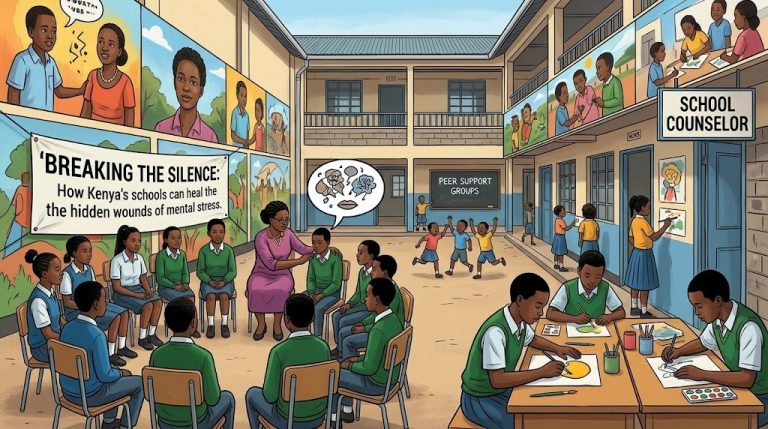
– The importance of psychological support: It was determined that special programs are needed to support the mental state of students and teachers during virtual learning.
As a final conclusion, online education is expected to become a major part of the global education system in the future. Its success depends not only on technological progress, but also on ensuring social and economic equality. Lessons learned during the pandemic served as an important foundation for improving this system and making education more accessible. This has opened the door of opportunities to take the education system to a new level in the future.
To the list of used literature
- Daryo.uz. (2023). How is online education developing in Uzbekistan and the world? River News. Retrieved from https://daryo.uz
- Trend.az. (2023). Development and improvement of distance education in Uzbekistan. Trend.az. Retrieved from https://trend.az
- Online education: disadvantages and advantages https://zamon.uz/detail/online-talim-kamchilik-va-afzalizlar-jamiayat
- How much future money did distance learners lose due to the pandemic? https://kun.uz/news/2022/01/20/pandemia-cause-of-remote-learning-how-much-money-the-students-lost-in-the-future?q=%2Fnews%2F2022%2F01%2F20%2Fpandemia-cause-of-distance -how much-the-educated-people-lost-in-the-future#!
- Advantages and disadvantages of online education – Avlod Media https://avlod.media/uz/online-talimin-avzalik-va-kamchiliklari/
- What are the advantages of the distance education system? https://www.samdu.uz/uz/news/17638
- Online video lessons, courses and tests – PREP.UZ https://prep.uz/news/onlinetalim/masofaviy-ta-limning-afzalizallari-va-kamchiliklari
Similar Posts by The Mt Kenya Times:
- Waititu begs for mercy as Sh588M corruption sentencing looms
- Roads and electricity bring inclusive growth to Masinga as Ruto launches Ukambani development drive
- Meru municipal boss cracks down on illegal PSV stages and addresses market traders’ complaints
- Meru residents demand justice over alleged police killing of teenager
- Can Kenya turn its growing fitness movement into a national wellness revolution?
About the Author