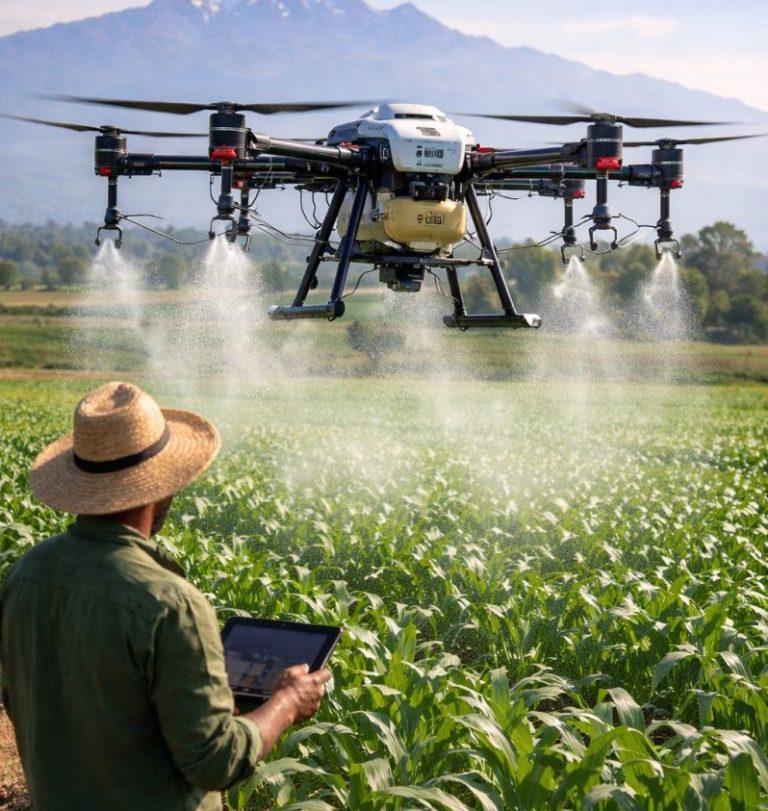
AFA boosts sunflower, cotton and cashew nut farming in Tharaka-Nithi
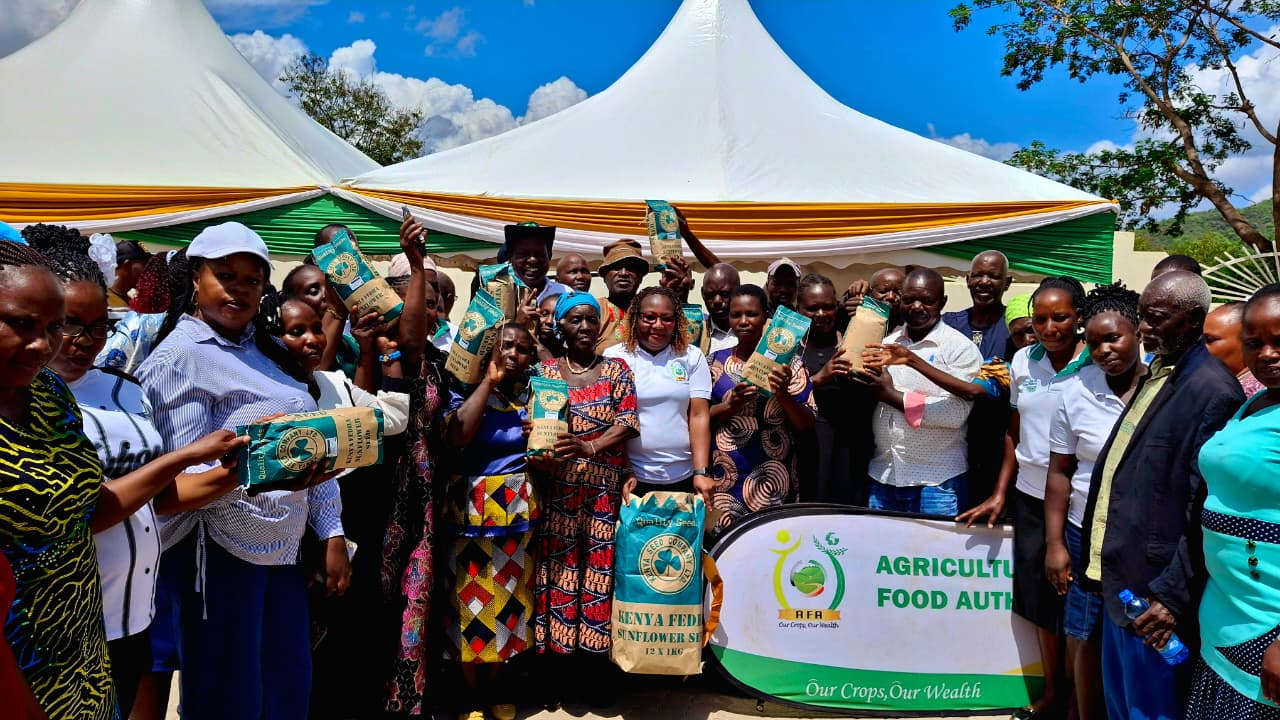
AFA Distributes Seeds, Seedlings to Boost Farming in Tharaka-Nithi at Kathwana/ Blaise Gitonga
The Agriculture and Food Authority steps up crop diversification programmes in semi-arid counties, distributing seeds and machines to help farmers earn more from their land.
By Blaise Gitonga
The Agriculture and Food Authority has intensified programmes targeting food security and poverty reduction in arid and semi-arid lands across Kenya, with farmers in Tharaka-Nithi and Meru counties among the latest to benefit from a government seed distribution and sensitisation drive.
At a farmer outreach event held in Kathwana, Tharaka-Nithi County, on Friday, AFA distributed three metric tonnes of sunflower seeds, 1.6 metric tonnes of cotton seeds and cashew nut seedlings to farmers in the region, as part of a broader push to diversify agricultural activity in semi-arid areas and improve rural incomes.
AFA board member Peterson Muthathai told farmers attending the programme that ASAL counties held significant untapped potential across a range of crops suited to drier climates, including nuts and oil crops, food crops, horticultural produce, miraa, pyrethrum, fibre crops and other industrial crops.
“We thank the government for focusing on farmers at the grassroots through programmes targeting arid and semi-arid areas to diversify their farming activities using crops that do well in those regions,” Muthathai said. “We have advised them to grow different crops that thrive in their areas to maximise profits.”
Beyond seed distribution, AFA used the Kathwana forum to signal its intent to revive Kenya’s struggling textile industry through increased cotton production. Muthathai painted a sobering picture of where the sector currently stands, noting that most ginneries across the country had shut down, leaving cotton farmers with limited processing options and weakened market access.
“The textile industry in Kenya is in a deplorable state,” he said. “We are distributing seeds through societies to increase production as we aim to revive it. Through cooperatives, we will aim for higher production volumes to make it easier for investors to purchase our produce.”
He urged cotton farmers to form and strengthen cooperatives, arguing that higher collective output would attract investors and give smallholder farmers greater bargaining power. Muthathai also called on county governments to invest in value-addition centres and storage warehouses to help farmers preserve their produce and command better market prices.
On cashew nuts, AFA outlined plans to establish community nurseries through farmer groups and societies, with the aim of scaling up production in counties where the crop is viable. John Adhola, acting director of nuts and oil crops at AFA, said the authority was working closely with county governments to train farmers on best practices and improve profitability across the value chain.
Adhola also announced that additional sunflower oil extraction machines would be provided to farmers in Tharaka-Nithi County — a development that drew an enthusiastic response from those present. Sunflower farmer Elena Kathure said the machines would be transformative for growers who currently travel long distances to access processing facilities.
“We are happy that our group will be provided with a sunflower oil extraction machine by AFA,” Kathure said. “Bringing the machines closer to the people will help more farmers venture into sunflower farming.”
Dorothy Nditi, head of food security in the Office of the Deputy President, said the government’s agricultural strategy was designed to address the entire value chain, from production through to distribution, rather than focusing narrowly on farm-level output.
“The programme will bring diversification — it is giving farmers options,” Nditi said. “When one crop does not give good returns, you can get returns from other crops.” She added that Kenya’s farmers were capable producers whose earnings were constrained not by what they could grow but by how effectively produce reached markets. “If we increase production and improve distribution, we will earn more income,” she said.
Kenya has 23 arid and semi-arid counties, covering approximately 88 per cent of the country’s total landmass. These areas are monitored for drought and vulnerability by the National Drought Management Authority. Tharaka-Nithi, the northern and marginal areas of Meru, and Mbeere Sub-County in Embu are among those classified as semi-arid, making them priority targets for programmes designed to build agricultural resilience in the face of erratic rainfall and shifting climate patterns.
Friday’s event marked a practical step in what AFA described as a sustained, long-term commitment to ensuring that farmers in Kenya’s most climatically challenging counties are not left behind by agricultural development programmes that have historically concentrated resources in higher-potential regions.
Similar Posts by The Mt Kenya Times:
- Ronaldo closes in on 1,000 goals with Al-Nassr hat-trick
- Thieves raid Munich air disaster memorial, stealing medals and sculpture
- Mental health and lifestyle: Two sides of the same coin
- Can literary works heal human psychology?
- Ruto secures Russia pledge to halt Kenyan military recruitment
About the Author