How Mount Kenya farmers are navigating the digital farming revolution
Using drones in farming Kenya
From Nyeri to Meru, smallholder farmers are weighing the promise of digital agriculture against the reality of tight margins and unreliable markets
By Purity Benjamin
Before a farmer plants a single seed, several decisions have already determined whether the season will be profitable. Which crop has a reliable market? What will fertiliser and labour cost? Will water be available when needed? Will the selling price cover production expenses? These are not abstract questions. For smallholder farmers across the Mount Kenya region, they are the difference between a viable livelihood and a season of loss.
Jeff Tricks, owner of Jeff Tricks Farm in Kiawara, Nyeri County, understands this reality intimately. Farming, he says, involves decisions that begin long before planting and continue well after the final harvest. Technology could improve those decisions — but only if it genuinely addresses the challenges farmers face on the ground.
Wendy, who supports farmers through the agricultural initiative Grow 254, approaches the challenge from the market side. Her experience working with farmers in Nyeri and Meru has shown her that producing quality crops is only part of the equation. Farmers also need reliable buyers and prices that make their labour worthwhile. Together, their experiences raise a question that is becoming increasingly urgent across Kenya’s farming communities: can digital tools make agriculture across Mount Kenya more productive and profitable, or will adoption costs leave smallholders further behind?
Agriculture remains central to Kenya’s economy, yet increased production does not automatically translate into better earnings. The Kenya National Bureau of Statistics Economic Survey 2026 reported that agriculture, forestry and fishing grew by 3.1 per cent in 2025, while marketed agricultural production increased by 2.3 per cent to approximately KSh706B. National maize and milk production rose, though wheat output declined. These figures reflect a sector with variable outcomes, but they do not reveal whether individual farmers made profits. High input costs and unfavourable market prices can leave farmers struggling even after good harvests — a reality that statistics rarely capture.
This is precisely where digital technology holds genuine promise, through improved access to weather forecasts, irrigation systems, crop-monitoring tools and online marketplaces.
At Jeff Tricks Farm, every season begins with market research. “Before you start, you must first scout the market so you know which crop you are going to plant. You cannot just plant something because you feel like it,” he says. Once a market is identified, the work begins: land preparation, planting, fertilising, weeding, irrigating and monitoring for pests and diseases. Then comes harvesting — and the separate challenge of finding a buyer willing to pay a fair price.
Labour, chemicals, fertiliser, tractor services and fuel are among the major costs Jeff identifies. Specialised machinery, including onion-transplanting equipment, adds further expense for small-scale producers already operating on tight margins. For farmers with limited capital, modern equipment only makes sense if it delivers sufficient returns.
To illustrate the economics, Jeff uses a straightforward example: selling 10,000 kilogrammes of produce at KSh20 per kilogramme generates KSh200,000 in gross revenue. After deducting labour, transport, fertiliser, chemicals and other costs, the actual profit depends entirely on how well those expenses are managed. The example demonstrates why production volume alone does not guarantee financial success. Farmers need competitive markets and reliable price information just as much as they need a good harvest.
Wendy’s work through Grow 254 brings this market-access challenge into sharp focus. She has supported approximately 30 women farmers in Nyeri and currently works with around 120 farmers in Meru, organised into groups. Her efforts have included encouraging organic farming and identifying markets where farmers can obtain better prices than brokers typically offer. Coordinating training and monitoring production across multiple locations proved demanding, eventually leading her to concentrate her efforts on Meru, where she works alongside agronomists who provide technical guidance.
Her central concern is straightforward and worth taking seriously. “We are open to new technology. Now the question is, what value does it translate to in the farmer’s pocket?” she asks. Many smallholder farmers she encounters earn less than KSh5,000 monthly. For those already stretched by production costs, sustaining subscriptions or investing in new technologies without clear financial benefits is simply not feasible.
Research suggests digital agriculture is already reaching some Kenyan farmers, though adoption remains uneven. A study by 60 Decibels and Busara, surveying 1,484 farmers across 38 counties between July 2023 and April 2024, found that 56 per cent had used at least one digital agricultural tool during the farming season and 46 per cent had accessed digital information or advisory services. Yet only 8 per cent of farmers who sold produce reported using digital solutions to complete those sales. Among non-users, just 12 per cent were aware of digital market services and only 10 per cent reported having access to them.
The findings reveal a significant gap between accessing agricultural information and using technology to secure actual sales. Phone ownership alone does not guarantee awareness, connectivity or the practical confidence needed to use digital services effectively.
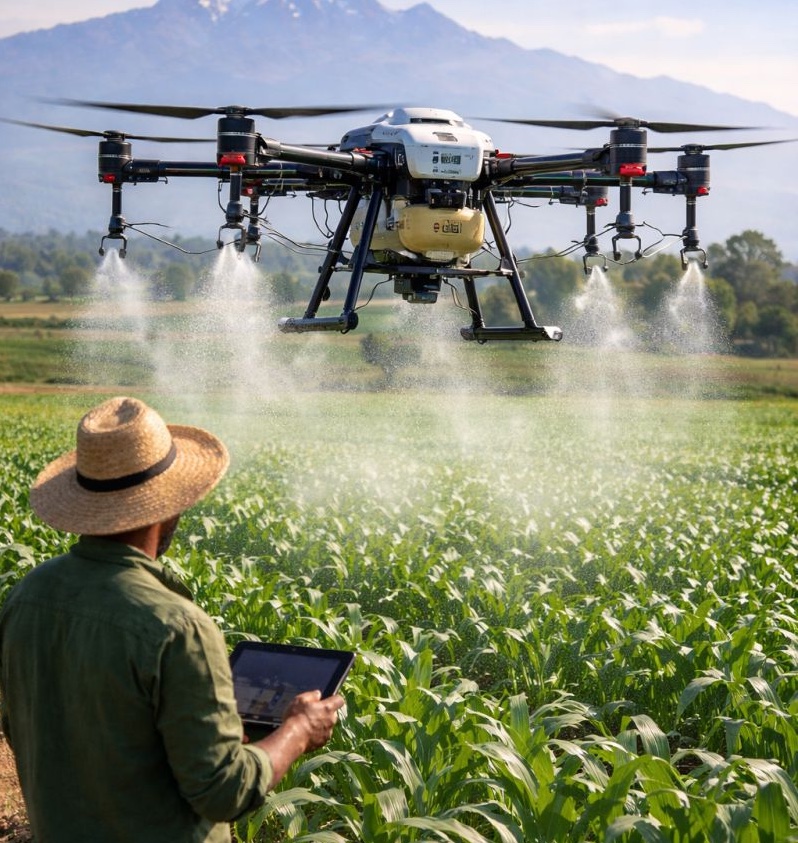
Technology does not always mean expensive machinery or artificial intelligence. Sometimes its greatest value lies in improving a single farming decision. Digital advisory services can help farmers identify pest threats and receive timely guidance — though such tools must provide reliable information and complement, not replace, professional agronomic advice. Automated irrigation systems using timers or soil-moisture sensors can regulate water delivery and reduce manual monitoring when properly installed.
Jeff recognises the potential of automated irrigation but does not currently use sensors on his farm. For many farmers like him, affordability and awareness remain the primary barriers. The Food and Agriculture Organization has highlighted digitalisation and automation as opportunities to strengthen agricultural efficiency and resilience, but warns that high upfront costs, limited digital skills and inadequate support prevent many farmers from benefiting. Purchasing a sensor is only the beginning. Farmers must understand how to install it, interpret its readings, maintain it and respond appropriately. Demonstrations at agricultural shows are useful, but sustained training and after-sales support are equally important.
For digital agriculture to deliver lasting benefits across the Mount Kenya region, solutions must address farmers’ actual needs. Technologies must be affordable and providers must demonstrate clearly how their services reduce costs, improve yields or strengthen market access. Farmers need practical training and continued technical support — not just instruction on how a tool works, but honest guidance on its limitations. Digital marketplaces must connect farmers with credible buyers and provide trustworthy information on prices, demand and quality standards.
Success should ultimately be measured through tangible outcomes: reduced production costs, lower crop losses, improved selling prices and increased net income — not merely application downloads or user registrations.
The experiences of Jeff Tricks and Wendy illuminate two connected sides of agricultural transformation. Farmers must manage production costs, water, labour and pests while simultaneously navigating buyer relationships, price volatility and payment uncertainty. Digital tools can improve both dimensions, but technology alone cannot resolve every challenge.
A smarter farm is not defined by the number of sensors in its soil or applications on a farmer’s phone. It is defined by whether the farmer can produce sustainably, reach a viable market and earn enough to make the next season worthwhile.
Similar Posts by The Mt Kenya Times:
- Mt Kenya Times ePAPER October 28, 2026
- Ruto breaks ground on KSh70B cement plant that will create 3,000 jobs in Kitui
- Ruto orders Magadi soda ash monopoly broken as new investors set to enter
- Ruto heads to Moscow seeking trade deals and investment as Kenya eyes Russia partnership
- Waititu begs for mercy as Sh588M corruption sentencing looms
About the Author