Africa’s silent dairy crisis: How mineral deficiencies are costing billions in lost milk production
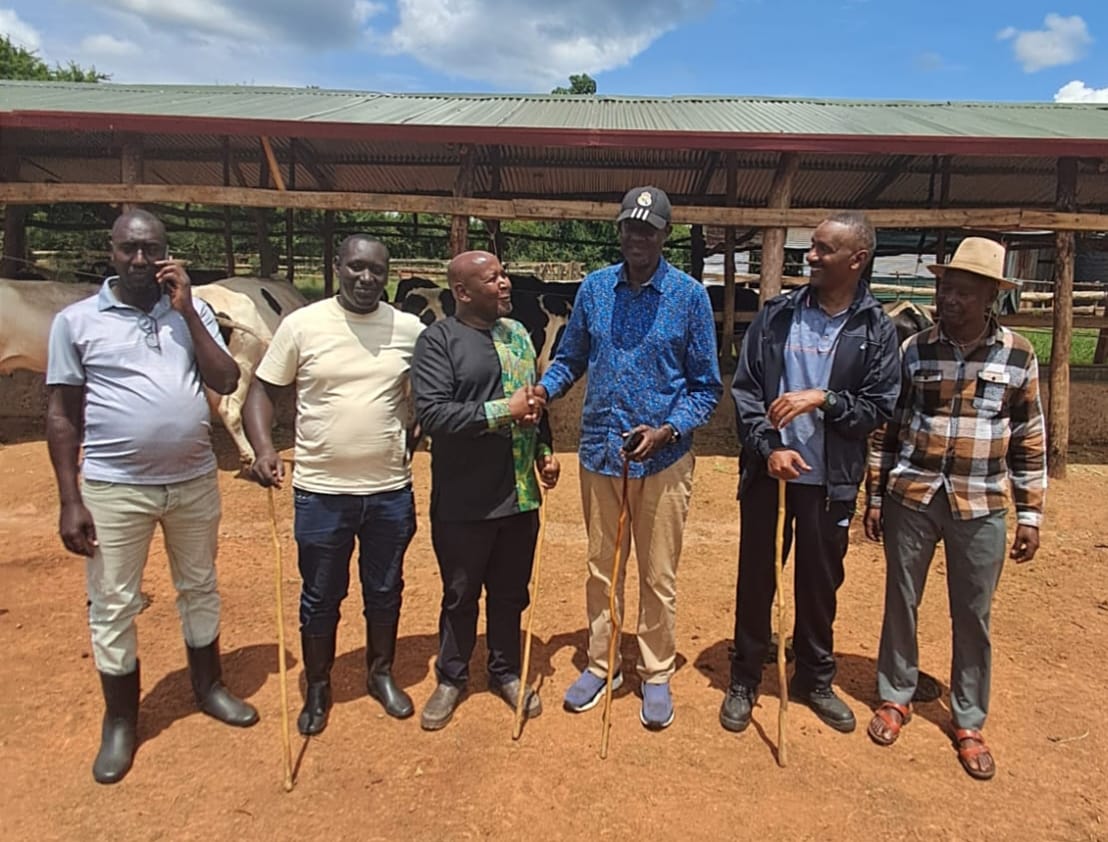
Alex Gathii Gitonga at a dairy farm in Nyagatare in Rwanda.
By Alex Gathii Gitonga
Africa’s dairy sector stands at a critical crossroads.
Despite boasting more than 400 million cattle and one of the fastest-growing dairy markets in the world, the continent continues to grapple with low milk productivity, limiting its ability to meet growing demand for dairy products and improve the livelihoods of millions of smallholder farmers.
While governments and development partners have invested heavily in improved breeds, artificial insemination, disease control and better feeds, livestock nutrition experts are increasingly pointing to an often-overlooked factor silently undermining production; mineral deficiencies.
A new strategic position paper by Tanolope Consultancy Limited argues that precision mineral nutrition could become one of Africa’s most transformative agricultural interventions, describing mineral management as “strategic agricultural infrastructure” rather than simply another livestock feed supplement.
The report, titled Africa’s Livestock Mineral Deficiency Crisis, presents a compelling case for governments, dairy processors, investors and development partners to rethink how they approach dairy productivity across the continent.
According to the report, dairy cattle in many parts of Sub-Saharan Africa receive only between 50 and 80 per cent of their recommended mineral requirements.
The most common deficiencies include phosphorus, copper, zinc, selenium, cobalt and sodium; essential nutrients that influence milk production, fertility, immunity, calf survival and overall animal health.
Unlike infectious diseases that often present visible symptoms and attract immediate attention, mineral deficiencies are described as a “hidden productivity crisis.” Farmers may not easily recognize the problem, yet their cows consistently produce less milk, experience poor reproductive performance, suffer from increased disease incidence and raise weaker calves.
The report notes that these deficiencies quietly erode profitability across the dairy value chain, affecting not only farmers but also milk processors, feed manufacturers and national economies.
Despite the magnitude of the challenge, the report says Africa lacks comprehensive livestock mineral surveillance systems capable of identifying regional deficiencies and guiding targeted interventions.
Most countries, it notes, do not have national mineral databases, comprehensive soil and forage mineral maps or routine programmes for testing livestock feed, water and animal blood samples.
As a result, many farmers continue using generic mineral supplements regardless of local soil conditions or the nutritional composition of available forage.
The consultancy argues that mineral nutrition has remained fragmented across ministries responsible for agriculture, livestock, research institutions, universities, regulatory agencies and private industry, resulting in weak coordination and inconsistent policy implementation.
To address this, the report recommends establishing national livestock mineral coordination platforms that would bring together governments, laboratories, universities, dairy processors and private sector players under a unified framework.
The report adopts internationally recognised strategic management frameworks, including the McKinsey 7S Model and Blue Ocean Strategy, to demonstrate how Africa can reposition mineral nutrition from a neglected technical issue into a major driver of agricultural transformation.
It argues that while existing investments continue to focus on genetics, veterinary medicines and feed brands; markets characterised by intense competition —precision mineral intelligence offers an opportunity to create an entirely new value proposition based on measurable improvements in productivity.
Among the innovations proposed are national livestock mineral atlases, regional diagnostic laboratories, digital mineral surveillance systems, artificial intelligence-powered advisory platforms, country-specific mineral formulations and executive training programmes for government officials and dairy industry leaders.
The report also proposes the development of a SmartAlex Mineral Intelligence Platform capable of analysing soil, forage, water and animal samples to generate precision mineral recommendations for farmers.
Another proposed innovation is a Dairy Mineral Return on Investment Calculator that would enable producers and policymakers to quantify the financial benefits of mineral interventions.
According to the report, inadequate mineral nutrition stems from multiple interconnected factors including poor soil fertility, declining pasture quality, seasonal feed shortages, crop residue feeding, inadequate supplementation and limited farmer awareness.
These are compounded by weak research funding, limited laboratory capacity, poor extension services and inadequate policy coordination.
The cumulative effect, the report says, is reduced milk yields, lower conception rates, extended calving intervals, increased mastitis, higher calf mortality, poor feed efficiency and reduced profitability across dairy enterprises.
While the report does not provide continent-wide monetary estimates, it argues that the resulting economic losses likely amount to billions of dollars annually.

To reverse the trend, the consultancy proposes a five-year continental roadmap beginning with baseline mineral surveys and the development of national mineral deficiency maps.
Subsequent phases would include expanding laboratory partnerships, introducing precision mineral advisory services, training extension officers, publishing an Africa Livestock Mineral Atlas and establishing regional benchmarking systems.
By the fifth year, the report envisions Africa positioning itself as a global leader in precision mineral nutrition for tropical dairy systems.
The report further recommends that boards overseeing dairy organisations receive quarterly reports covering mineral supply chains, laboratory testing coverage, farmer adoption rates, feed quality compliance, regional deficiency trends and productivity improvements.
Key performance indicators should include increased milk yields, improved conception rates, lower mastitis incidence, reduced calf mortality, higher farmer profitability and growth in national milk production.
Ultimately, the report concludes that Africa already possesses the scientific knowledge, livestock population and market potential needed to transform its dairy industry.
What has been lacking, it argues, is coordinated leadership and a strategic appreciation of mineral nutrition as a foundation for sustainable livestock productivity.
Rather than viewing minerals as routine feed additives, the report urges governments and industry leaders to recognise them as a critical investment capable of improving food security, strengthening rural incomes and accelerating agricultural growth.
As Africa seeks innovative solutions to feed its growing population and build resilient agricultural systems, the report suggests that the next dairy revolution may not come from larger farms or more expensive breeds, but from smarter nutrition guided by better science, better data and precision mineral management.
Alex Gathii Gitonga is a dairy cows expert.
Similar Posts by The Mt Kenya Times:
- Mt Kenya Times ePAPER September 17, 2026
- Ruto and Uhuru: The rupture at the heart of Kenya’s 2027 election
- Gakoromone traders and rights group demand closure of sewage discharge
- Retirement is not disenfranchisement: Reclaiming the constitutional rights of Kenya’s former presidents
- Kenya’s 2027 election: Can technology strengthen democracy or manipulate voters?
About the Author