Alliance of opposition titans: Sifuna, Gachagua, Kalonzo and Wamalwa eye 2027 sweep

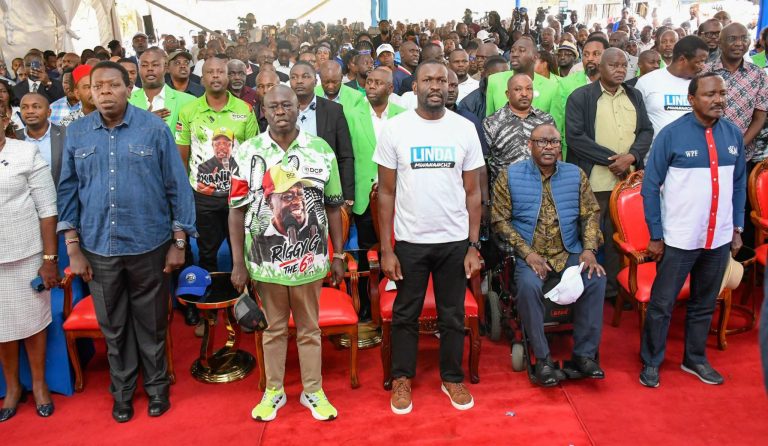
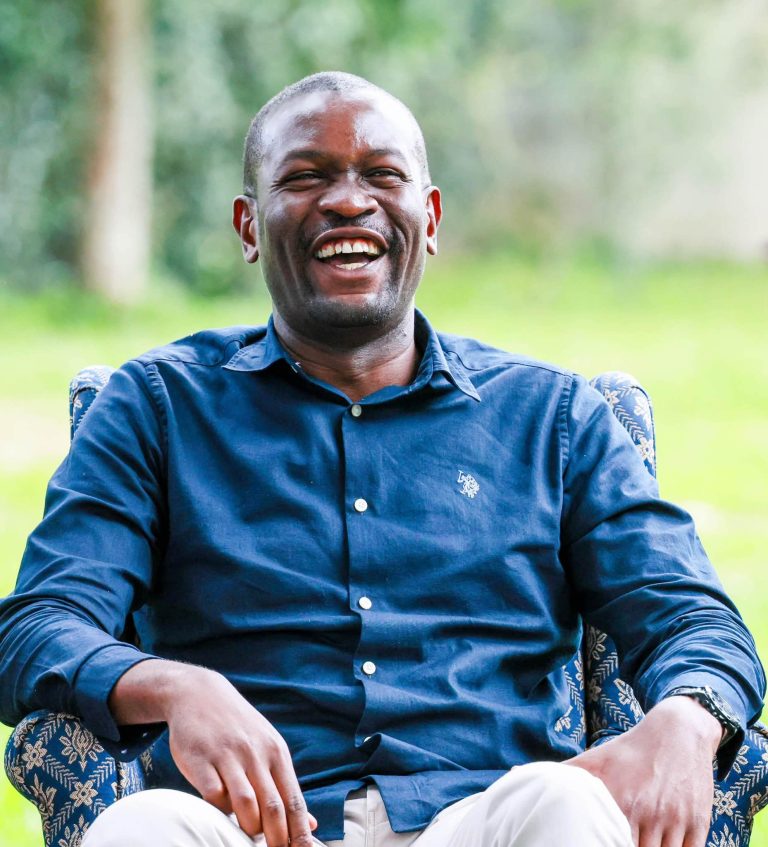
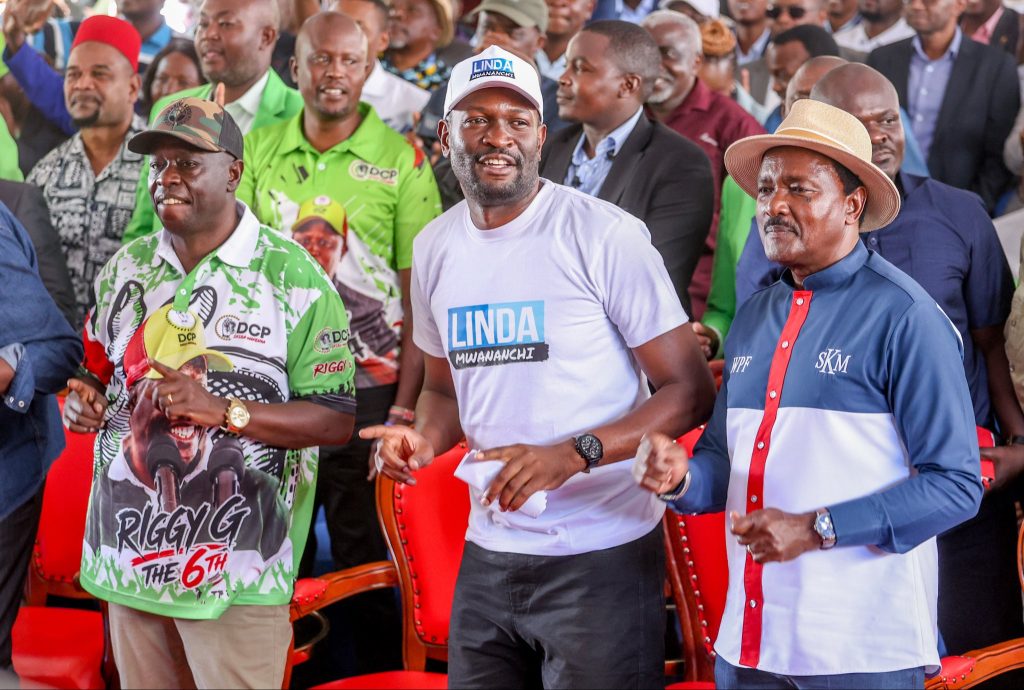
DAP-K leader Eugene Wamalwa, Wiper Patriotic Front's Kalonzo Musyoka, Linda Mwananchi's Edwin Sifuna and DCP's Rigathi Gachagua at the unveiling of Linda Mwananchi's secretariat in Nairobi on Friday, October 30, 2026. /X
Linda Mwananchi Party unveils bold national leadership structure as opposition coalition targets every region from Mount Kenya to the coast
By David Kimani
The Linda Mwananchi Party — rebranded from the Equitable Party — yesterday unveiled a sweeping national leadership structure headlined by Nairobi Senator Edwin Sifuna as proposed party leader, with former Meru Governor Kawira Mwangaza, Mavoko MP Patrick Makau and Nairobi lawyer Faith Odhiambo among four proposed deputy party leaders, as the opposition movement positions itself to challenge the government across every major political bloc ahead of the August 2027 General Election.
The announcement, made as the party established its national headquarters in the Lavington suburb of Nairobi, crystallised what political analysts are now describing as the most structurally ambitious opposition realignment Kenya has seen since the 2002 coalition that ended Daniel arap Moi’s era. The proposed configuration is not merely a party launch — it is the scaffolding of a national electoral machine designed to contest every region simultaneously, and to do so with leaders who carry genuine ground support in their respective territories.
The coalition’s arithmetic is, on paper, formidable. Sifuna’s influence spans Nairobi’s densely populated constituencies and reaches deep into Western Kenya through his networks in the broader Luo Nyanza and Western alliance. Rigathi Gachagua, the former Deputy President who commands loyalty across the Mount Kenya region following his controversial impeachment last year, brings with him the Gikuyu, Embu and Meru vote — the very constituency that has historically determined the presidency. Kalonzo Musyoka, the veteran Wiper Democratic Movement leader, retains a stranglehold on Ukambani in the Eastern region and holds significant sway along the coast. Together, the three principals represent a geographic pincer that, were it to hold, could deny the government meaningful support in Nairobi, Mount Kenya, Western, Eastern and the coast — leaving it clinging to fragments.
“This is not about personalities,” a senior opposition strategist said. “This is about structure. We are building ward by ward, constituency by constituency, and county by county.”
The proposed leadership framework reflects that structural intent. Vihiga Senator Godfrey Osotsi has been proposed as party chairperson, with former Makadara MP Reuben Ndolo serving as deputy. Suba South MP Caroli Omondi is proposed as Secretary General — a role that places him at the operational heart of the party machinery — while Kisii Senator Richard Onyonka takes on the treasurer’s brief. The inclusion of Faith Odhiambo, the former Law Society of Kenya president, as a deputy party leader signals a deliberate effort to project professional credibility alongside political muscle. Trans Nzoia Governor George Natembeya, one of the more combative voices in opposition politics, will head the presidential campaign, with Odhiambo serving as his deputy in that structure.
Kawira Mwangaza’s expected defection to the Linda Mwananchi Party is among the more politically charged elements of the announcement. Her departure from her current party adds a Mount Kenya woman’s voice to the coalition and gives Gachagua’s regional campaign a complementary figure who carries her own independent profile in Meru County. One deputy party leader position and a deputy chairperson slot have been explicitly reserved for the Coast region — a signal to coastal political figures that the coalition is not merely reaching out to them rhetorically but is prepared to institutionalise their representation at the top of the party.
No accounting of Western Kenya’s opposition landscape is complete without Eugene Wamalwa, the Ford Kenya leader whose family name remains the most durable political franchise in the region. The Wamalwas — from the late Vice-President Michael Kijana Wamalwa to Eugene’s brother, the former Cabinet Secretary Justin Muturi ally Musalia Mudavadi, and Eugene himself — have shaped Luhya politics across three decades. Eugene Wamalwa has maintained a steady if understated presence in opposition politics, and his Ford Kenya structures in Bungoma, Trans Nzoia and the broader Luhya belt represent organised grassroots machinery that no Western Kenya coalition can afford to ignore. His alignment with the emerging opposition front would consolidate Sifuna’s Western networks and close one of the few remaining geographic gaps in the coalition’s national map. Conversations between Wamalwa’s camp and the Linda Mwananchi Party’s architects are understood to be ongoing, though no formal announcement had been made by the time of going to press.
The political calendar gives the opposition approximately nine months before campaigns intensify in earnest, and the coalition knows that the window to consolidate is narrow. Kenya’s opposition history is littered with coalitions that announced well and collapsed under the weight of competing ambitions, ethnic arithmetic, and the gravitational pull of government patronage. The 2022 Azimio la Umoja coalition, which came within a percentage point of the presidency, disintegrated within months of the election over disagreements on resource sharing and the direction of engagement with the ruling Kenya Kwanza administration.
What distinguishes the current alignment, its architects argue, is that the principals have each independently crossed a threshold of commitment. Gachagua’s impeachment in October last year removed from him any residual incentive to reconcile with President William Ruto’s administration. Sifuna has consistently declined overtures from the government’s side. Kalonzo, burned by what he has called repeated betrayals by former allies, has anchored himself to the opposition with unusual firmness. That convergence of personal political interest and genuine ideological distance from the ruling coalition is, analysts suggest, what gives the 2027 opposition effort greater structural integrity than its predecessors.
The government, for its part, is not standing still. Kenya Kwanza has moved aggressively to consolidate the administrative machinery, and senior figures close to the presidency have dismissed the opposition realignment as premature theatre. “The country is watching delivery,” one government official said, declining to be named. “Coalitions are built on promises. We are building on roads, hospitals and jobs.”
That argument will be tested on the ground. Inflation, unemployment among the youth, and public discontent over taxation — all of which fuelled the Gen Z protests that shook Nairobi in June last year — remain live political liabilities for the administration. The opposition’s calculation is that by 2027, economic grievance will have matured into electoral fury, and that a united front across five or six regions can translate that fury into votes.
The Linda Mwananchi Party’s Lavington headquarters will now become the operational base for that project. Whether the structure announced yesterday survives contact with the egos, interests and ethnic calculations that define Kenyan coalition politics remains the central question. History counsels scepticism. But the political geography of the proposed alliance — Nairobi, Mount Kenya, Western, Eastern and the coast simultaneously — represents, at minimum, a credible theory of how to win.
Similar Posts by The Mt Kenya Times:
- Shukrani: How Kambua turned grief into a song of faith
- Linda Mwananchi launches headquarters and unveils proposed secretariat
- The cartel’s banquet: How Kenya’s market masters feast on the bones of the poor
- Mt Kenya Times ePAPER October 30, 2026
- Ruto courts Russian investment in Moscow as Kenya seeks KSh5.2 trillion infrastructure push
About the Author