Maina Wahome
The Centre Still Trembles: Kenya’s Unfinished Conversation with Chinua Achebe
Dear Chinua Achebe,
The falcon cannot hear the falconer; things fall apart; the centre cannot hold.
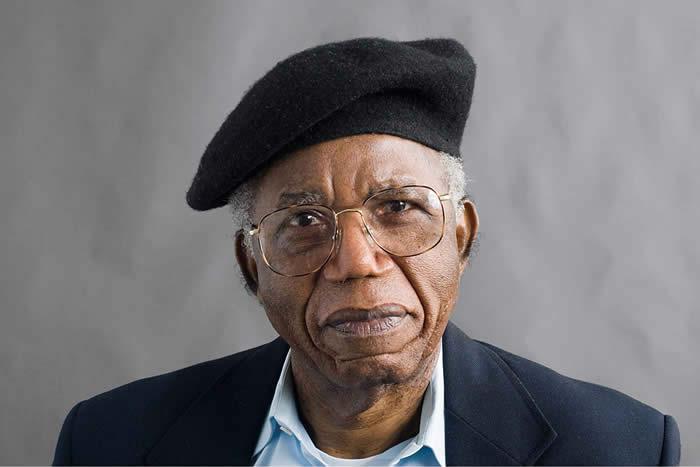
Yeats’ words remain prophetic and immortalized in your novel Things Fall Apart; they have become some of the most quoted in African literature. Yet I often wonder whether, if you were alive today, you would feel that we misunderstood your warning. We memorized the phrase, examined your work in schools, debated Okonkwo’s tragedy in classrooms, and wrote essays about colonialism. But somewhere along the way, we reduced your novel to history rather than prophecy.
You warned us that things fall apart when the centre cannot hold. Decades after you gave Africa Things Fall Apart, I write to tell you that in Kenya, things have not merely fallen apart. They continue to fall apart, often in plain sight, while those entrusted with holding the centre congratulate themselves for maintaining order.
If you were to walk through Kenya today, I suspect you would recognize your characters long before anyone introduced them. You would hear Okonkwo’s voice in our politics, Unoka’s laughter in our forgotten streets, Ikemefuna’s silence in our cemeteries, Nwoye’s questions in our universities, and Obierika’s wisdom in the few who still dare to speak truth without expecting reward.
Our Okonkwos are no longer wrestlers. They wear tailored suits, command political rallies, and measure strength not by character but by the size of their motorcades and the volume of their applause. Like your tragic hero, they mistake power for wisdom and authority for justice. Their greatest fear is not failure but appearing weak, so they rule with intimidation rather than conviction. Every election season they promise unity, yet they return to the oldest script in politics: dividing citizens into tribes, rewarding loyalty over competence, and turning public office into private inheritance. They invoke patriotism while accumulating wealth no honest salary could explain.
Your Okonkwo feared becoming his father; Kenyan “leaders” fear accountability. They fear independent courts, progressive activists, investigative journalists, auditors, and inquisitive citizens. They fear young people armed not with spears but with smartphones and placards. They fear the camera more than conscience.
Unoka, too, survives in Kenya. Our Unokas are everywhere. Some are unemployed graduates carrying degrees that have become expensive certificates of disappointment. He is the graduate sending out endless applications without response. He is the teacher whose salary cannot sustain a family. He is the artist told creativity is not a profession. He is the farmer battered by floods and rising input costs. He is the boda boda rider and mama mboga trader trapped in loans that grow faster than income. Society still laughs at his condition while ignoring the systems that produce it. Perhaps our greatest tragedy is that we have become skilled at blaming the poor for surviving poverty.
Ikemefuna still dies among us. He is the young Kenyan sacrificed to political expediency, ethnic mobilization, unemployment, police brutality, and broken promises. Every election produces another Ikemefuna. Every scandal buries another dream before it reaches adulthood.
Nwoye has multiplied into a generation of restless youth who no longer believe the stories their fathers tell. He is the Kenyan youth questioning why billions vanish while schools lack laboratories. He questions why taxes rise while services decline. He questions why corruption is rewarded while honesty is punished. He is dismissed as impatient or entitled, yet perhaps he is simply refusing to inherit systems that no longer deserve loyalty.
Ekwefi in Kenya is not only a symbolic mother but the woman who rises before dawn and sleeps after midnight, not by choice but necessity. In the public sphere, she is drawn into performance, summoned to political rallies to sing, dance, and ululate at speeches that promise transformation but often recycle disappointment, where her presence becomes aesthetic proof of legitimacy and her voice background decoration for promises that seldom materialize; she is praised in rhetoric and later forgotten in budgeting. At home, there is no performance, only arithmetic. Her endurance is not simply personal strength but structural compensation for institutional absence.
Ezinma is a symbol of quiet excellence shaped under pressure and sustained by resilience rather than privilege. She represents what Kenya repeatedly discovers but does not always institutionalize: potential that exceeds circumstance. She is the learner who excels in examinations despite studying under leaking roofs and inadequate lighting. She is the young person who understands systems more clearly than the systems understand them. She is the innovator building solutions without funding. She is the researcher experimenting without laboratories. She is the entrepreneur creating opportunities where none were designed to exist.
Obierika remains the conscience we lack. He remains among us, asking difficult questions that few leaders wish to answer. He is the lecturer who still insists on thinking as discipline, the investigative journalist threatened into silence, the judge under scrutiny, the academic dismissed as unpatriotic, the activist branded an enemy, and the citizen who refuses to confuse loyalty with obedience.
The District Commissioner never truly left. He merely changed clothes. Sometimes he arrives as the international lender prescribing austerity from distant boardrooms. Sometimes he appears as the multinational corporation extracting wealth while communities remain poor. Sometimes he is our “expert” political elite, ruling citizens with the detached gaze once reserved for colonial subjects. The language has changed, but the hierarchy often remains.
Our missionaries have also multiplied. They no longer carry only Bibles. Some arrive with ideologies that sound convincing but are detached from local reality. Others come through algorithms that shape what we see, think, and desire without our awareness. Consumerism teaches us to measure worth by possession. Disinformation confuses truth until it becomes difficult to tell what is real. Imported ambitions persuade us to value everything except what is already ours. They rarely conquer through force. They conquer by slowly making us forget what we once knew.
The egwugwu still wear masks, though theirs now take the form of constitutional offices, commissions, tenders, and carefully rehearsed press conferences. Justice often arrives masked, delayed, or applied selectively, depending on power and proximity.
Even the Oracle has changed. It now speaks through polling data, public relations strategies, and trending hashtags. It is consulted less for truth and more for political convenience, shaped to fit what is popular rather than what is right.
Yet the centre persists, not because of political leadership alone, but because ordinary people continue to carry it. Farmers, teachers, doctors, writers, entrepreneurs, and young people hold on to the possibility of a better tomorrow despite repeated disappointment. Ordinary citizens still believe that honesty is not foolishness. They are the quiet force preventing complete fragmentation.
Perhaps that is why your novel still matters: it is not only a story of collapse, but also a reminder that what holds a society together is often invisible, uncelebrated, and carried by those who are least acknowledged.
You once told Africa how things fall apart. We are living the sequel. The tragedy is no longer that we failed to read your novel. It is that we read it, admire it, teach it in our schools, quote it in our speeches, and still allow ourselves to become its characters.
Yours sincerely,
Maina Wahome
(A reader in a country still negotiating its centre)
Maina Wahome’s Bio
Maina Wahome is a linguist, a columnist, and a published author. He is also a lecturer in English.
Similar Posts by The Mt Kenya Times:
- Mt Kenya Times ePAPER October 12, 2026
- Gachagua’s party storms Kikuyu from afar as 2027 countdown begins
- Counties caught: The KSh100B payroll scandal Kenya can no longer hide
- CS Ogamba: tree planting could generate carbon credit millions to fund education
- Farouk Kibet calls for unity and development as leaders rally behind Ruto’s 2027 re-election bid
About the Author