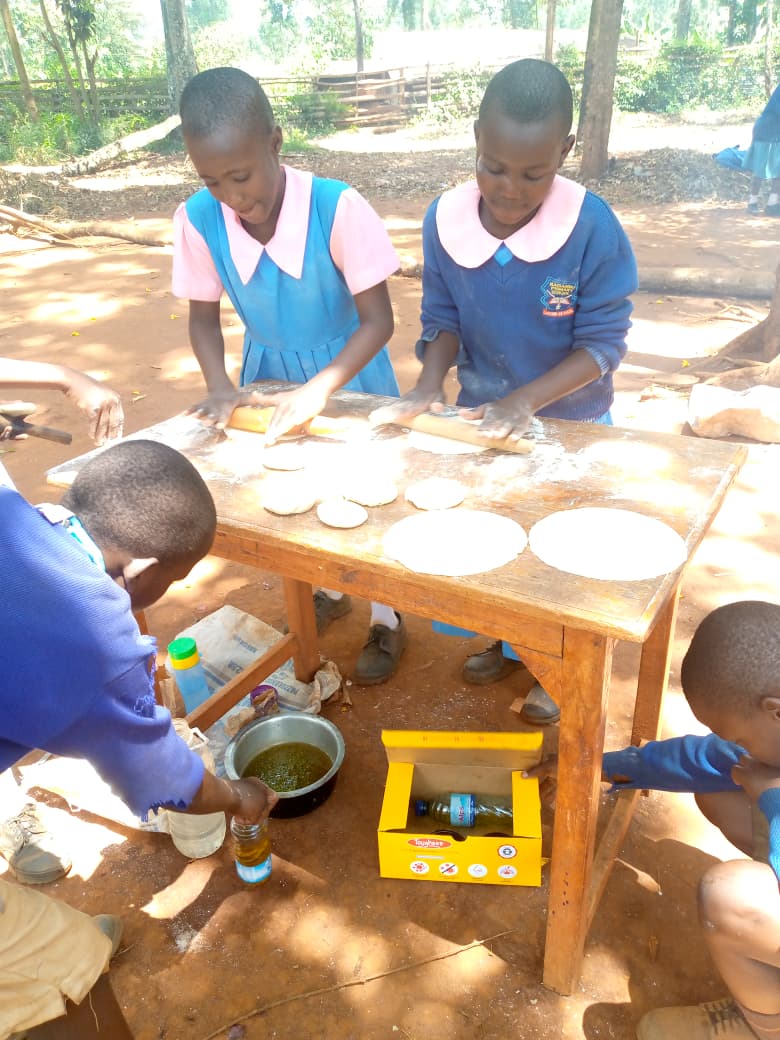
Students practicing a practical skill on chapati making
In Trans Nzoia, a head teacher is proving that education works best when it reaches beyond the classroom
By Daniel Kipchumba
Nestled in the agricultural heartland of Trans Nzoia County, Bikeke Comprehensive School is quietly building a reputation as one of the region’s most forward-thinking institutions — not through examination results alone, but through a deliberate commitment to developing the whole learner.
At the centre of that transformation is Ronald Francis Toili Wamalwa, the school’s head teacher, whose leadership has steadily reshaped what education looks like at Bikeke. Under Wamalwa, the school has placed growing emphasis on academic achievement, agricultural education, infrastructure improvement, and a rich programme of co-curricular activities — all anchored in the principles of Kenya’s Competency-Based Education framework.
Wamalwa’s philosophy is straightforward but quietly radical in a system that has long rewarded rote learning over practical ability. He believes that every learner carries unique potential that must be identified, nurtured, and given room to grow. Discipline, hard work, and commitment to both academic and practical achievement are the values he models and expects — not as abstract ideals, but as daily habits built into the life of the school.
“A school is not simply a place where examinations are taken,” Wamalwa has told staff and parents. “It is a place where young people acquire knowledge, values, skills, and character that prepare them for life beyond the school gate.” For him, practical competence is not an addition to education — it is its very purpose.
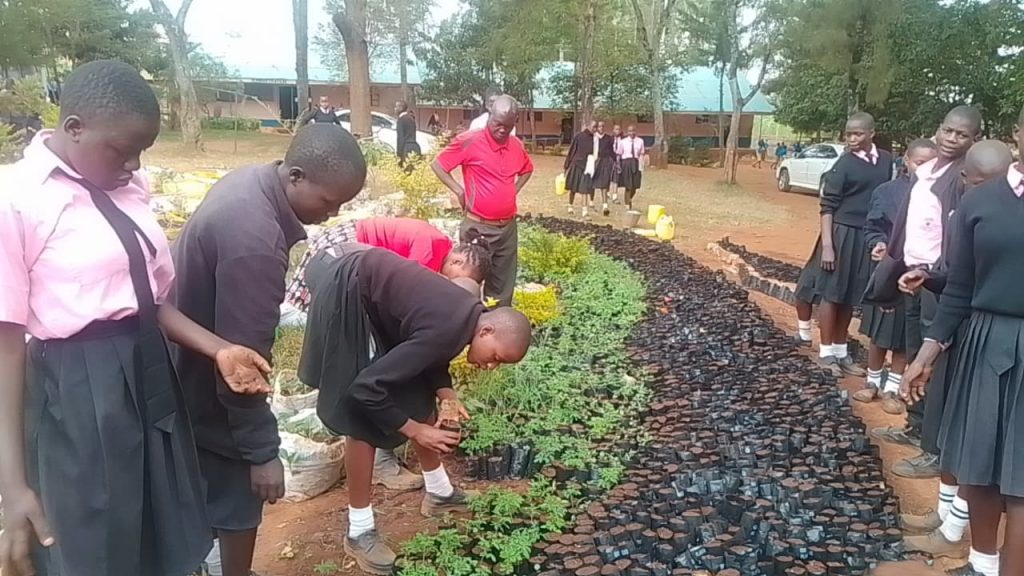
That conviction is visible across the school’s grounds. Bikeke sits in one of Kenya’s most productive farming counties, and Wamalwa has embraced that geography as a teaching resource. Learners tend a variety of food crops and maintain tree-planting programmes that have improved both the school’s environment and its sense of pride. Agricultural activities give students hands-on exposure to farming techniques, environmental responsibility, and an appreciation of the sector’s economic significance — skills directly relevant to the communities most of them will return to.
Beyond agriculture, the school has worked to improve its physical infrastructure and learning environment, with each incremental improvement aimed at giving students the space and resources they need to develop creatively and with confidence.
Co-curricular life is equally central to the Bikeke model. Students participate in sports, music, drama, cooking, and construction-related activities — programmes that build teamwork, leadership, self-expression, and practical skills that carry real value after school. In a world increasingly driven by innovation and adaptability, Wamalwa argues, a student who leaves Bikeke with a trade skill, an agricultural competency, or a creative discipline is far better equipped than one who leaves with theory alone.
The results are becoming visible. Bikeke is earning recognition across Trans Nzoia for the quality and confidence of its students — young people shaped not merely to pass examinations, but to think, build, grow, and contribute. That, by any measure, is education doing what it was always meant to do.
Similar Posts by The Mt Kenya Times:
- Wamuchomba leaves UDA: What her exit means for Ruto and Mt Kenya
- Wamuchomba demands suspension of tea levy as farmer bonuses collapse
- Fatuma Ali joins PSC with pledge to build consensus
- The silent crisis in our classrooms
- Six businesses campus students can start with almost no cash
About the Author