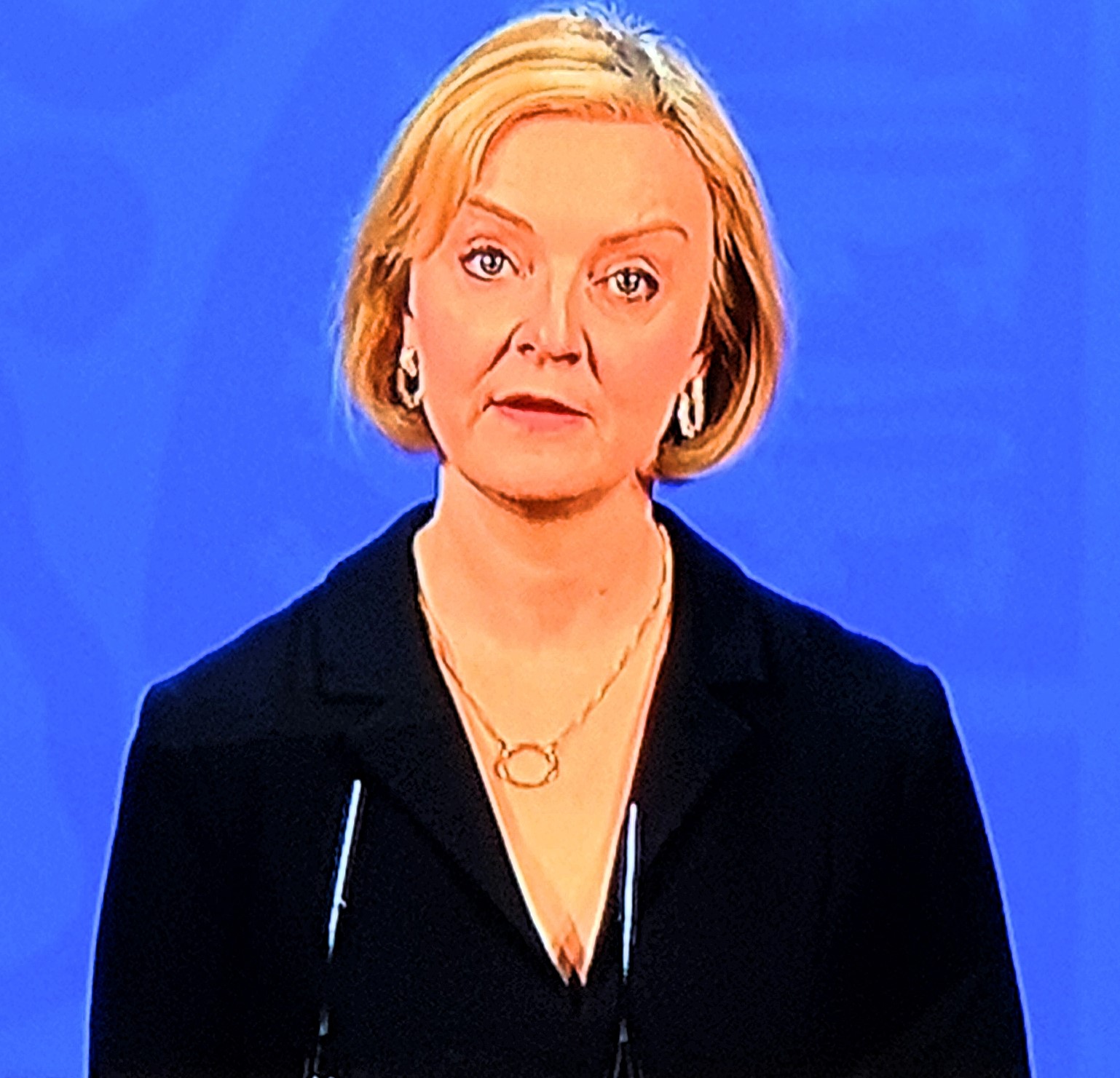
Prime Minister Liz Truss is battling with the consequences of a botched mini-budget which may cost her leadership, but by sacking her Chancellor Kwasi Kwarteng, she may survive just by a whisker if she is lucky. Photo SHAMLAL PURI.
BRITONS PREPARE TO BATTLE OUT BITTER SEASONAL WINTER BLUES AND WOES
By SHAMLAL PURI
Associate Publisher & Senior Editor – UK
shamlalpuri4@gmail.com
Worth Noting:
- Many face the nightmare of missing Christmas festivities as they will be forced to forego the parties and galas and stay home praying for a miracle.
- People are going hungry while disgruntled Britons allege the Government sits back as if nothing had happened.
- I unearthed the poignant and heartbreaking story of a senior British woman in her 80s who survived on boiled water until care staff went to see her randomly.
- They were shocked beyond belief that the British welfare system had turned its back on her. It would have taken bureaucratic delays to get her help, and she may have died of starvation.
- Her plight so moved them that the big-hearted staff members took it upon themselves to dig into their pockets from their meagre salaries to buy tinned food items and fill her kitchen to ensure she could eat.

Twenty Twenty-two promises to be a bruising year not only from the politics and economics angle but also the winter season as Britons prepare to batten down the hatches and the rapidly changing vengeful political scene Tories versus Tories, a party whose party colour is blue.
The blue wall of power in Britain is steadily collapsing as Tories continue to lose popularity among voters and Britons turn to the opposition Labour Party.
Add to this spooky cocktail a scary mixture of economic woes and banking crisis that have hit the country seriously in the last fortnight, and you get a clear picture of the simmering cauldron of the mess in Britain as the year chillingly races to an eerie end, knocking on the doors of 2023.
The woes of the chilly winter await Britons as well as the serious after-effects of the Government’s kamikaze. minibudget manufactured in Downing Street.
This is also when summer has bid goodbye to the country, saying hello to Autumn when leaves start to fall and the trees are barren. Winter follows this season, and cold weather has already begun.
Weather people have already forecast snow in the UK in the coming weeks.
To add sting to the tail, the authorities have announced a series of power cuts in the winter due to nationwide severe energy shortages.
This has sent jitters in the community where the elderly and the vulnerable depend on electricity and heating. Patients depend on electricity to operate their medical apparatus, such as kidney dialysis machines and other machines.
Insulin-dependent diabetics need to store their vital life-saving medicines in refrigerators. People are stocking up on candles to prepare for the worst.
Many face the nightmare of missing Christmas festivities as they will be forced to forego the parties and galas and stay home praying for a miracle.
People are going hungry while disgruntled Britons allege the Government sits back as if nothing had happened.
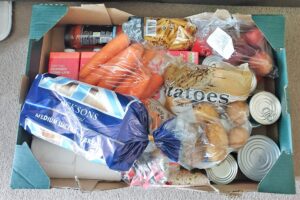
I unearthed the poignant and heartbreaking story of a senior British woman in her 80s who survived on boiled water until care staff went to see her randomly.
They were shocked beyond belief that the British welfare system had turned its back on her. It would have taken bureaucratic delays to get her help, and she may have died of starvation.
Her plight so moved them that the big-hearted staff members took it upon themselves to dig into their pockets from their meagre salaries to buy tinned food items and fill her kitchen to ensure she could eat.
People cannot afford to buy food. The high cost of food is a blow for the below-the-bread-line families with growing children. They are not buying milk and bread, which is also expensive, with a loaf hitting the £2 level. Milk, at £2.05 for four pints and £2.95 for six pints in significant supermarkets, is now more expensive than petrol which has been reduced to £1.58 a litre.
There is an increase in thefts. Hungry people have broken into not banks loaded with money which would be hard to penetrate, but food banks.
An increasing number of people depend on food banks or begging.
Nurses have gone into the sex trade to make ends meet and provide food for their families.
The rising energy cost is forcing many people to cross out their favourite items such as meat, fish, eggs, wines and other alcoholic things to concentrate on only essential items.
One English woman confessed that she takes only soup and bread daily to save money to pay for electricity and gas bills which have hit an unprecedented increase of up to £6,000 per annum, threatening to shoot up to £7,000. The Government says it will intervene.
Britons have stopped turning their lights on and are using gas and electricity frugally.

Many families used to leave their heating on all night because elderly family members now use their heaters sparingly.
Covid-19, do we still remember it? Well, it’s still alive and kicking in the United Kingdom. Those high-ups in the Government who think it’s gone are living in a fairy tale world.
Covid is expected to hit the UK with a vengeance when the country is in the deep of winter in what’s being labelled as the Fourth Wave.
The Government’s arrogance defies belief as people have been told not to bother masking up.
There are bound to be many deaths of patients if they go on strike unless the government buckles in and accepts their demands.
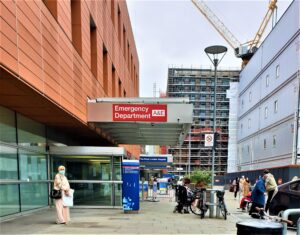
The ambulance service is in shambles, with delays of up to eight hours even to ferry cardiac cases patients to hospitals, drastically reducing their chances of survival.
Reports of delays have come from Portsmouth in southeast England, Isle of Wight.
The ambulance delays problem is nationwide. Just a few months ago, patients had to wait 25 hours for an ambulance in the summer.
In recent weeks when the NHS is expected to prepare itself for the winter and when there was light at the end of the tunnel, ambulance delays have hit long delays.
These days ambulance delays range from four hours to an unacceptable eight hours. Medics say this is a national disgrace.
Accident and Emergency departments are asking non-urgent patients not to come to the hospital.
The number of new Covid-19 cases is increasing in the country.
Official figures show 23.7 million cases in the UK since the pandemic and 208,000 deaths. Of these, 20 million patients are in England with 176,000 deaths and 886,000 in Wales with 10,804 deaths.
Fifty thousand three hundred seventeen people tested positive in England in just one week – up by 21.8%.
Official figures show that 430 people died within 28 days of a positive test in the same period. At the same time, 7,904 patients were admitted to British hospitals – up by 33.3%.
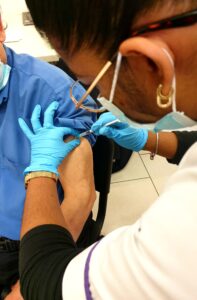
There is no panic, no doubt, as these minuscule figures may turn into a torrent. The Government has rolled out the fifth booster vaccine dose for those over 50.

Medics are bracing for a brutal winter ahead with flu and Covid circulating widely in what is being termed a twindemic. Experts have warned that this could cost tens of thousands of lives this winter.
Britons relaxed when the erstwhile Boris Johnson removed Covid-19 restrictions because it affected people’s liberty. They returned to living as normal and social distancing, using sterilisers and masks, went out of the window. Britons had signed their death warrants.
Even more frightening are the figures that the number of people testing positive in England was 1.1 million – up from 857,400 – this means one in 50 is testing positive.
The National Health Service (NHS) is already mired in its problems of being understaffed and overworked.
The Royal College of Nursing (RCN), the body responsible for the welfare of nurses working in British hospitals, had announced that its members would go on a strike over pay.
The cause of the current season of dissatisfaction partly rests with the Government’s poor handling by Prime Minister Liz Truss and the debacle of the 23 September minibudget.
Chancellor Kwasi Kwarteng’s botched minibudget has caused an economic tsunami and given a relentless pounding to the British Pound against the US Dollar.
The crisis worsened when Kwarteng doubled down on his £45 billion tax cuts, vowing to go further. The markets became very panicky, with the value of £1 slipping to a record low of US$1.03, a rate not seen in 37 years.
The minibudget sent UK government bonds plunging, forcing the Bank of England (BoE) to intervene, the Financial Times reported.
The chaos was leading to chaotic drops in gilts, stinging pension funds and threatening financial stability forcing the Bank of England (BoE) to step in.
The central bank triggered an emergency £65 billion bond-buying programme on 28 September to halt the crisis that Liz Truss and Kwasi Kwarteng had sparked.
The Pound later bounced to 1.13, but earlier this week, it fell again in the volatile currency market to 1.09 against the Dollar as the Bank of England warned that it had placed a deadline of Friday, 14 October, to remove emergency support for the bond market and asking those involved in managing those funds to rebalance. This sent jitters in the market, risking further market chaos.

The bank clarified that its intervention was a short-term measure to ensure financial stability, not monetary policy. The volatility in the market has not been seen in decades.
The Government’s growth plan sparked a severe risk to the entire UK pension funds basket, which faced the threat of insolvency.
The Truss Government’s minibudget caused so much chaos in the Whitehall, the seat of the Government, that even the Tory MPs demanded that Kwarteng be sacked and that the minibudget be reversed.
Behind the scenes, there are moves to oust Liz Truss and her Government and, if insiders are to be believed, replace them with Penny Mordaunt, a former leadership contender and now a Cabinet member in the Truss administration and Rishi Sunak, also a leadership contender. The duo could work with Penny Mordaunt as Prime Minister and Rishi Sunak as the Chancellor of the Exchequer and Deputy Prime Minister, observers believe.
Sunak’s financial expertise makes him fit to return to the Government as the Chancellor with the added icing on the cake of Deputy Prime Minister. Mordaunt may be unsuitable for handling the money side of the economy compared with Sunak.
The Liz Truss Government is still in serious trouble facing an unprecedented crisis that has hit the economy so hard, sending tremors in the domestic financial markets.
All this boils down to Joe Public, or the ordinary person in the street who is on the receiving end of this mess, as the cost-of-living and energy crisis affects everyone in the lower and middle classes, irrespective of age.
The Government offers one-off support of around £400-£600 to vulnerable families to help pay their energy bills. Still, there are fears that many needy families may not receive this grant due to administrative blunders.
This inevitably means that more people will be ill and admitted to hospital.
The overall impact of Kwarteng’s handling of the economy has harmed the Tory party’s credibility. The opposition Labour, whose party colour is red, is receiving increasing popularity indicating that the Blue Party, the Tories, could be routed in the next general election. The previously powerful Tory strongholds are changing their minds about supporting them and turning to the Labour Party in a significant rethink of loyalties.
So now it would be a red versus blue contest.
Labour Party has a 13-point lead in 42 of the Tory Party’s constituencies which says a lot about their dissatisfaction with the Truss Government and the minibudget debacle.
On her part, Liz Truss continued with her damage limitation exercise, offering what is primarily seen as sweeteners to placate Britons,
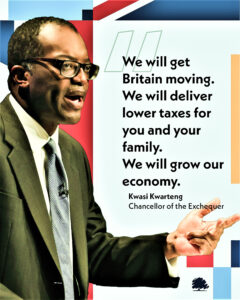
She said, “I promised to get Britain moving, and that’s what my Government’s delivering. MPs have just voted to cut National Insurance -saving 28 million people an average of £330 in 2023/24. That’s more money in your pocket. More money for your family. More money for your priorities.”
She announced that the Government’s “tax cut will also boost job creation by helping brilliant British businesses to hire more people and invest more into our economy.”
She announced, “920,000 companies in the United Kingdom will benefit – with 20,000 small and medium-sized businesses freed from National Insurance entirely.”
She added, “This is all part of our growth plan that is focused on delivering a high-growth, low-tax economy”.
“We have a clear mission to get Britain moving,” she said, charging the Labour Party-led Anti-Growth Coalition “only offer same old answers.”
It will take time for the British voters to absorb Truss’s message and what she will be able to deliver. Others are not willing to take the risk of letting her Government remain in power. They believe she has failed and cost the country billions of Pounds which will take time to be recovered.
Liz Truss and Kwasi Kwarteng may be genuine in their intent to serve Britain, but the example of their failure shows that the writing for their removal is on the wall.
Similar Posts by Shamlal Puri:
- BRITAIN PLEDGES ‘ROCK SOLID’ SUPPORT TO UKRAINE
- KENYAN HOCKEY LEGENDS HONOURED IN LONDON
- Tourism bonanza for the Middle East: FOUR DAYS WHEN THE WORLD CAME UNDER ONE ROOF IN DUBAI
- LONDON PACKAGING WEEK WITH TOP GLOBAL BRANDS ATTRACTS THOUSANDS OF VISITORS
- UK’S NATIONAL HEALTH SERVICE IN BIZARRE COLOUR BAR CRISIS
About the Author