Bridge International Academies Foundation Committed To Ensuring Tutors Are Facilitated For Efficient Teaching
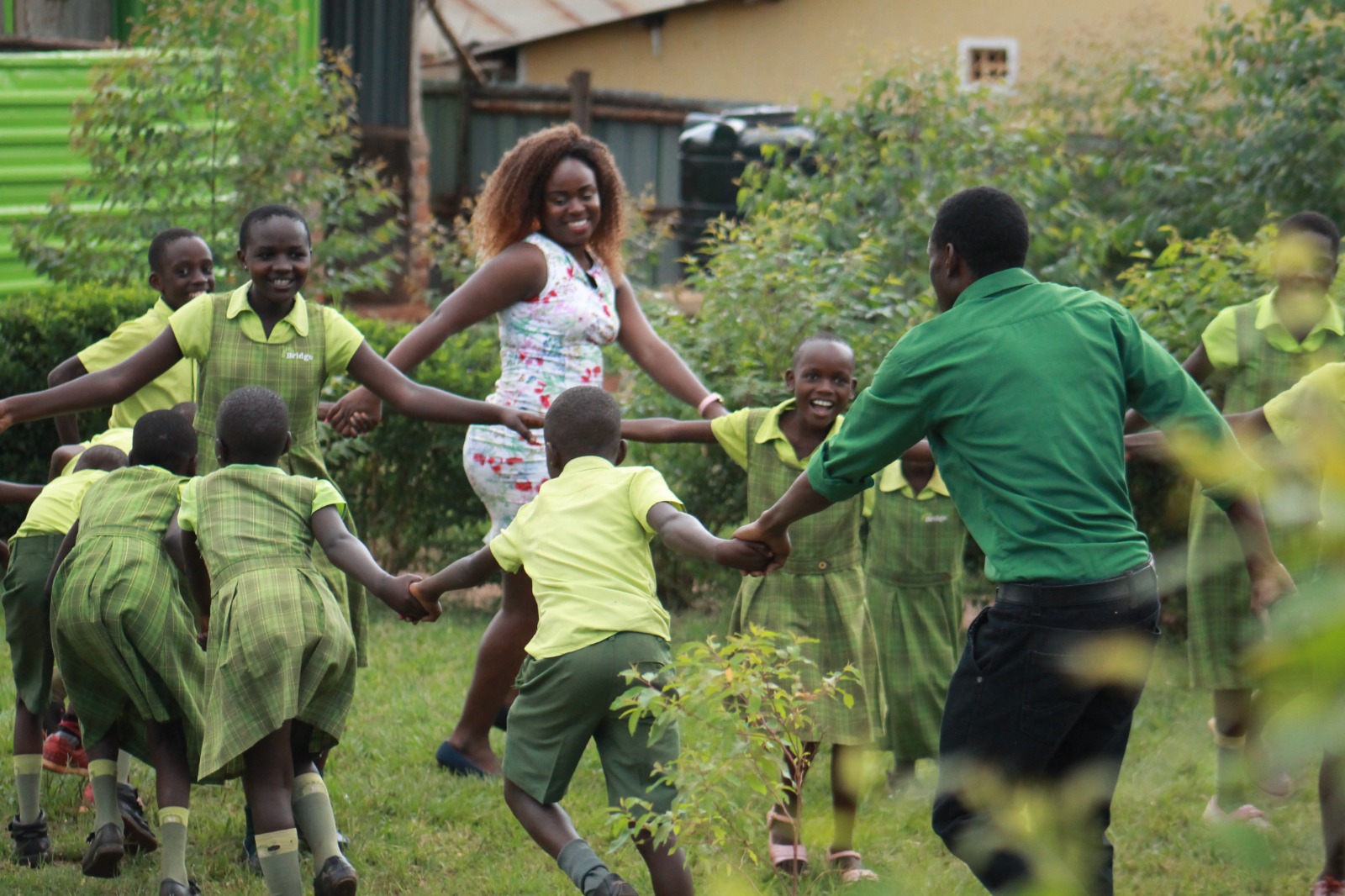
Teachers and pupils in an outdoor activity

By Felix Njenga
Worth Noting:
- According to Juliane Wambui, a teacher at Bridge International academy, Kenya said that before she joined the academy she had taught in other public schools but teaching at Bridge is a bit different as they use technology.
- “When you go to the government’s training institutions, I was taught what to teach. At Bridge I taught better class management, how to connect more with my kids, and that made me a better teacher,”Wambui said.
- In September 2022, global education leaders came together at the United Nations Transforming Education Summit to tackle the urgent challenge of reimagining education to meet Sustainable Development Goal 4 that included inclusive, equitable, and quality education for all.
As teachers around the globe celebrate this year’s World Teachers day which is held annually on 5th October, Bridge International Academies Foundation has committed to ensure that teachers are supported, trained and empowered to enable them to teach effectively and offer material that is designed to help children learn.
The bridge Kenya principles of teaching has had a positive impact on teachers even in the most challenging places and now they can hone new classroom techniques and absorb a new teaching philosophy, known to improve learning.
According to the Bridge, principles of training they specialise teacher training by grade and by subject in order to ensure that all teachers have the most effective training to enable them to succeed in their classrooms.
They follow national and state curriculums. About ten percent of induction training is made up of training specially tailored to the grade level the teacher will be teaching—early childhood education, lower primary, or upper primary. Upper-primary teachers are often further split up according to the subject they will be teaching, so that they can learn the teaching techniques that will be most effective for their work.
During practice time, teachers practice teaching using real teacher guides from the grades and subjects they will be teaching.
According to Juliane Wambui, a teacher at Bridge International academy, Kenya said that before she joined the academy she had taught in other public schools but teaching at Bridge is a bit different as they use technology.
“When you go to the government’s training institutions, I was taught what to teach. At Bridge I taught better class management, how to connect more with my kids, and that made me a better teacher,”Wambui said.
In September 2022, global education leaders came together at the United Nations Transforming Education Summit to tackle the urgent challenge of reimagining education to meet Sustainable Development Goal 4 that included inclusive, equitable, and quality education for all.
The Summit highlighted a double crisis—equity and quality—and called for a bold transformation in how teachers educate.
Wambui said that with a teacher guide she has all her lessons how they have been planned and scheduled and is able to preview the lessons for each day.
“The teacher guide supports my creativity. I have that freedom to add whatever I think will help the pupil more. I have the support I need as a teacher to bring out the best in these children,” she said.
She added that one of her greatest achievements is the results of the kids she has taught seeing the child able to achieve or go to high school and go to the school of their dreams means everything.
“These are kids who never stood a chance of joining high school or even pursuing their careers. Bridge transforms lives and transforms communities and brings hope to the families and the children are able to dream and achieve their goals,” she said.
Teachers at Bridge can practice the topic learned in the form of group discussion, independent work or the active practice of a new skill. At other times, teachers will be practising delivering a lesson from the teacher guide before receiving feedback from their peers and trainers.
Throughout training, the trainer’s model each of the big four teaching skills that teachers are expected to use in their classrooms by integrating them into their own training approach.
They follow a training guide, check on the (teachers’) work, circulate and respond with clear feedback. This training approach mirrors the way teachers are taught to respond to their pupils. Because of this modelling, teachers in training become familiar and comfortable with the big four teaching skills.
During training, trainers give immediate feedback to teachers. They circulate the room whenever teachers are having practice time in order to check on teachers’ work. By immediately responding to their work and moving on, they are able to reach and give feedback to every teacher. Teachers are able to have an immediate and clear idea of how well they understand the content and what they need to work on.
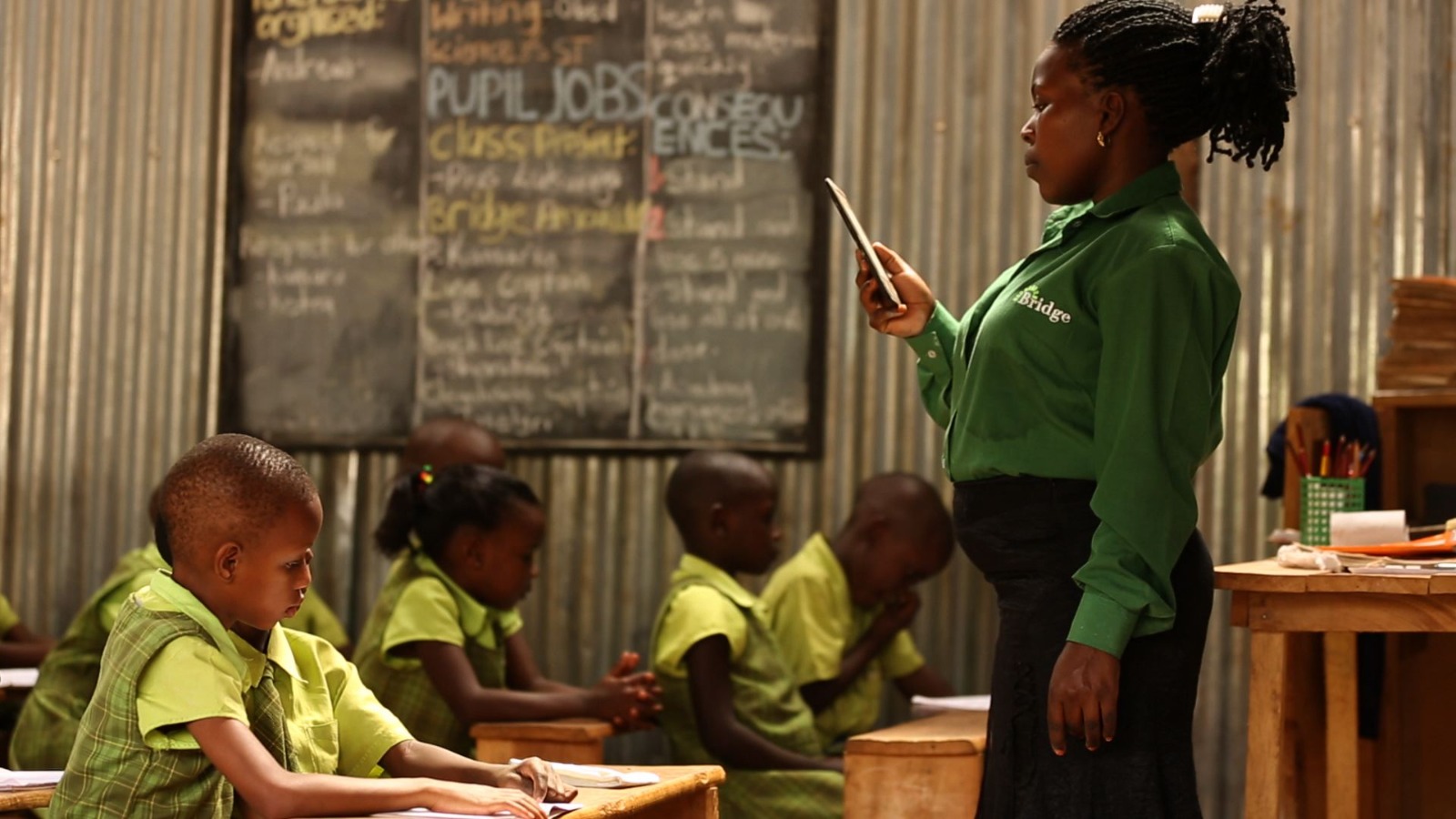
Bridge provide teachers with technology to use in the classroom, not only for accessing and teaching their lessons, but also for keeping track of pupil performance and attendance data. Teachers receive devices “teacher computers” on which to access teacher guides.
The United Nations Educational, Scientific and Cultural Organisation (UNESCO) reports that Sub-Saharan Africa needs 15 million more teachers, while higher-income countries face a retention crisis.
The report further states that globally, 44 million additional teachers are needed urgently to achieve the Universal Primary and Secondary Education target by 2030.
“The shortage of teachers stands as a major challenge as we approach 2030. This scarcity is not just a number: It is a crisis undermining educational systems globally,” says the report.
Similar Posts by The Mt Kenya Times:
- Diaspora Times Global Oct 17 – Oct 23, 2026
- Is social media a blessing or a curse for university students?
- Light at last: How electricity is reshaping Nandi and Uasin Gishu
- The triple squeeze: how EPRA’s fuel price hike is reshaping the survival equation for the common mwananchi
- Zelenskyy accuses Trump of rewarding Putin as Pope pleads for peace from a hospital bed
About the Author