By George Mugo Businesses remained closed yesterday in Limuru town, Kiambu county as traders fear destruction and looting by rioters. Traders said the move saw them counting losses, since they did not sell their stock. A hotelier Hezron Wachira said that they pay their workers daily and the suppliers who supply them with perishable items such as meat and milk. "We have 8 workers who are cooks and waiters. We pay them Sh 300 daily. Today, we won't pay them, you can imagine if they will feed their families" he said. "Some of these items like meat and milk, we order them daily. Can you imagine telling your supplier that you won't pay them today because there was riot?, Slaughter houses operates in the morning and cows are milked daily," Wachira revealed. He called upon the government to invite some of the youth leaders and discuss some issues that affect them. Wachira also asked the government to lower some taxes on items that youths use to do their businesses and some services so as to ease the cost of living. Konza City director Peter Muchendu has condemned the manner in which the protests are being done. He noted that the rioters are mixing with goons who want to loot property from traders and destroy the country's economy. Muchendu said most traders are suffering since they cannot open while customers cannot buy items. "I have seen some contractors who wanted to buy building materials they needed. They didn't have somewhere to buy them since many hardwares were closed. They had to go back home and ask their casuals to go home too without pay" Muchendu decried. The market attendants also had a difficult time, with a few who had opened, chasing with rioters who were dispersed by police and entered in the Limuru market. Lucy Wanjiku, a trader said rioters were running on the items they had displayed. "My onions and bananas were destroyed by rioters who were running away from the police who were whipping them and throwing teargas cannisters to them," she said. Wanjiku added, "I am not alone, some of my colleagues are counting losses of their items being spilled off on the ground. Items such as potatoes, cabbages and carrots were spilled and destroyed." The rioters had joined other protesters to commemorate the Saba Saba of 1990, since it is remembered each year, but without riots. Yesterday's riots are aimed and led by generation known as Gen z, which is chanting One term, demanding president William Ruto to rule for one term only. Unlike in other areas, even as heavily armed anti riot police patrol the town and it's environs, rioters managed to set on borne fires in different areas. They had set fires at Limuru town and at towns which lies along the Nairobi Nakuru highway which includes Kwambira, Ngarariga and Murengeti. Too affected were travellers since public service vehicles were not operating and the major highway was almost empty.
By George Mugo
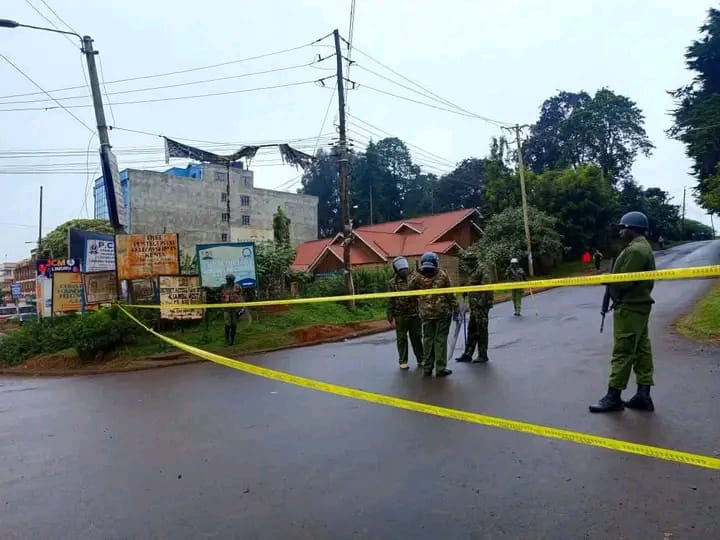
Businesses remained closed yesterday in Limuru town, Kiambu county as traders fear destruction and looting by rioters.
Traders said the move saw them counting losses, since they did not sell their stock.
A hotelier Hezron Wachira said that they pay their workers daily and the suppliers who supply them with perishable items such as meat and milk.
“We have 8 workers who are cooks and waiters. We pay them Sh 300 daily. Today, we won’t pay them, you can imagine if they will feed their families” he said.
“Some of these items like meat and milk, we order them daily. Can you imagine telling your supplier that you won’t pay them today because there was riot?, Slaughter houses operates in the morning and cows are milked daily,” Wachira revealed.
He called upon the government to invite some of the youth leaders and discuss some issues that affect them.
Wachira also asked the government to lower some taxes on items that youths use to do their businesses and some services so as to ease the cost of living.
Konza City director Peter Muchendu has condemned the manner in which the protests are being done.
He noted that the rioters are mixing with goons who want to loot property from traders and destroy the country’s economy.
Muchendu said most traders are suffering since they cannot open while customers cannot buy items.
“I have seen some contractors who wanted to buy building materials they needed. They didn’t have somewhere to buy them since many hardwares were closed. They had to go back home and ask their casuals to go home too without pay” Muchendu decried.
The market attendants also had a difficult time, with a few who had opened, chasing with rioters who were dispersed by police and entered in the Limuru market.
Lucy Wanjiku, a trader said rioters were running on the items they had displayed.
“My onions and bananas were destroyed by rioters who were running away from the police who were whipping them and throwing teargas cannisters to them,” she said.
Wanjiku added, “I am not alone, some of my colleagues are counting losses of their items being spilled off on the ground. Items such as potatoes, cabbages and carrots were spilled and destroyed.”
The rioters had joined other protesters to commemorate the Saba Saba of 1990, since it is remembered each year, but without riots.
Yesterday’s riots are aimed and led by generation known as Gen z, which is chanting One term, demanding president William Ruto to rule for one term only.
Unlike in other areas, even as heavily armed anti riot police patrol the town and it’s environs, rioters managed to set on borne fires in different areas.
They had set fires at Limuru town and at towns which lies along the Nairobi Nakuru highway which includes Kwambira, Ngarariga and Murengeti.
Too affected were travellers since public service vehicles were not operating and the major highway was almost empty.
Similar Posts by The Mt Kenya Times:
- Diaspora Times Global Sep 19 – Sep 25, 2026
- Tibet’s glacial catastrophe: Behind Beijing’s wall of silence, a climate disaster reshapes a region
- Museveni says Uganda overpaid for fuel through Kenyan middlemen as new terminal breaks ground
- Court orders throw KPL season kickoff into doubt
- Can Kenyans abroad become the untapped force that transforms Kenya?
About the Author