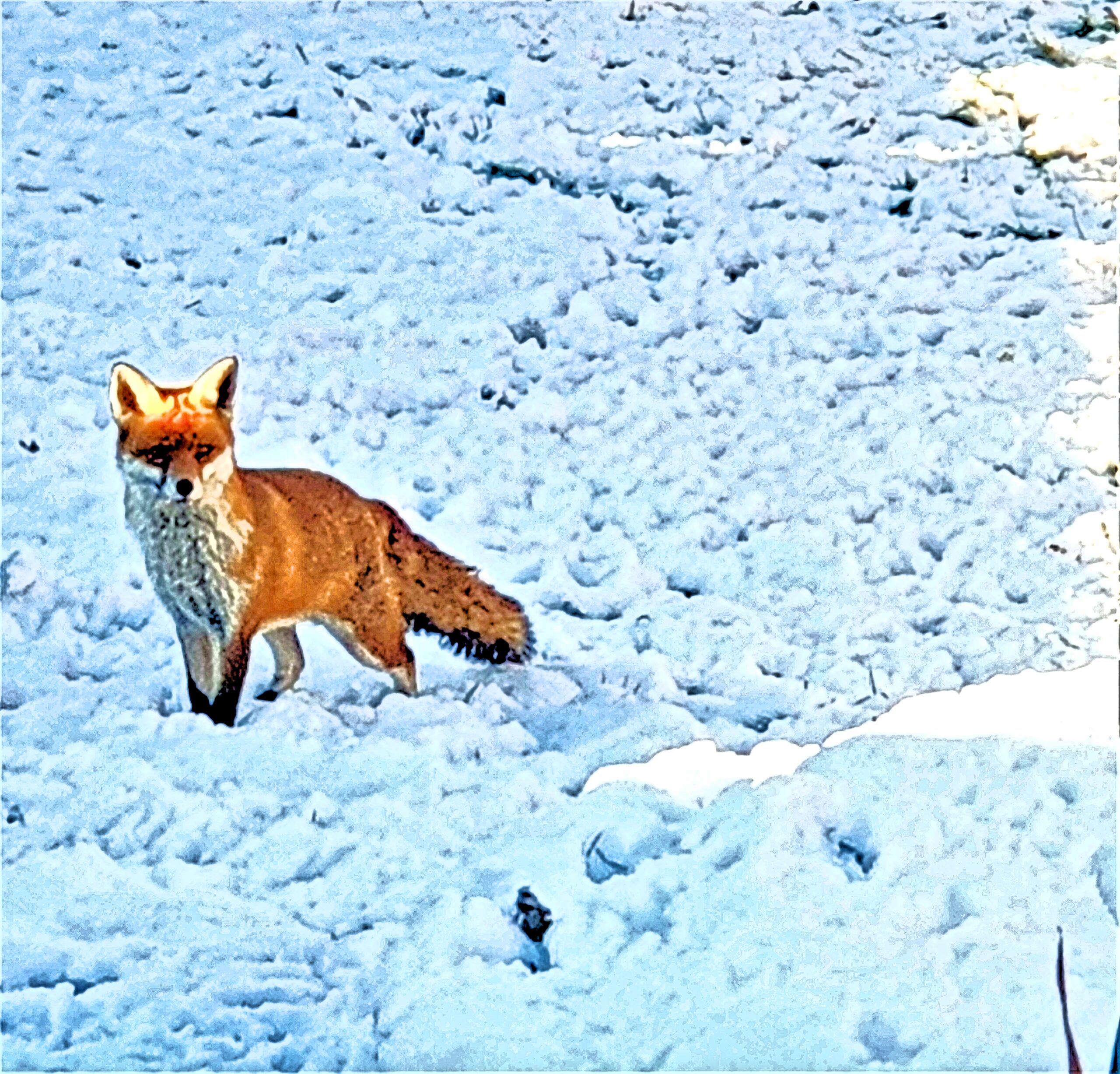
Pssss Oiye! Boss, you are on camera, say cheese... Lone fox enjoys a walk in the snow in London. Copyright Photo SHAMLAL PURI
LONDONERS CAN’T EVEN HANDLE A FEW INCHES OF SNOW…AND OH, THE STRIKES
By SHAMLAL PURI
Associate Publisher & Senior Editor – UK
Worth Noting:
- London got its share of 2.7 inches of snow, and this is where the trouble started for the city’s residents.
- The city’s transport network was paralysed, many office workers stayed at home, unable to get to work, and children were forced to stay home as their schools were shut.
- The management of some of the schools that remained open treated their students’ appallingly, forcing them to have their lunch break out in the freezing cold instead of letting them stay indoors for their safety and health.
- Some parents objected to this, asking just one question – why send the children out when classes were held inside the building?
- Some UK hospitals were so overwhelmed with the number of people coming for treatment that some patients were forced to wait for long hours outside in the snow.
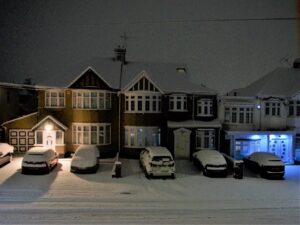
My colleague Malcolm, used to warmer climes and fan of holidaying in sunny Spain, peeped out of our office window and on seeing the sky lighted up at a time when it was supposed to be pitch dark winter night and early light snowflakes falling as we worked in our newsroom during our shift on Monday, December 12, let out a moan of worried man, “Oh! My Gawd snow falling! How will I get home?”
He didn’t have to wait long for a sarcastic response from another colleague, Jim, “For crying out loud, we live in the United Kingdom, and snow is expected to fall in the winter! What did you expect to fall – £50 notes?”
London wasn’t expecting snow, as the city’s last snowfall was 13 years ago! But weirder things have been happening in 2022, and the vagaries of British weather were not surprising for old-timers in London. The blanket of snow was picturesque but only if watched from the windows of your warm home.
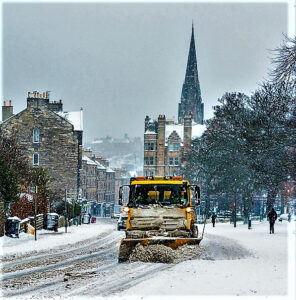
In recent years the amount of pollution and heat generated by industries in the capital have kept the winter weather mild adding to the climate crisis. So, this week’s snowfall was a surprise for many.
The United Kingdom has been experiencing an Arctic blast since Saturday. The barometer went berserk, showing below-freezing temperatures in the country’s north, particularly Scotland, which saw temperatures plummet as low as minus 10 C. London had between minus 1 C to minus 5C. Heavy snow hit the country’s north with snow between 4 and 6 inches.
Frozen Britain plunged thousands of homes into darkness in places like Shetland when they lost electricity for three days.
Luckily London was spared from any power outages, but Londoners were, no doubt, worried about the high costs of electricity and gas needed to keep their homes warm around the clock. Energy costs are constantly going up in the UK,
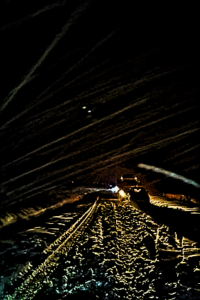
London got its share of 2.7 inches of snow, and this is where the trouble started for the city’s residents.
The city’s transport network was paralysed, many office workers stayed at home, unable to get to work, and children were forced to stay home as their schools were shut.
The management of some of the schools that remained open treated their students appallingly, forcing them to have their lunch break out in the freezing cold instead of letting them stay indoors for their safety and health.
Some parents objected to this, asking just one question – why send the children out when classes were held inside the building?
Some UK hospitals were so overwhelmed with the number of people coming for treatment that some patients were forced to wait for long hours outside in the snow.
Shops and supermarkets tried their best to remain open, but some had to be closed due to a lack of staff and deliveries of essentials as roads were blocked by snow.
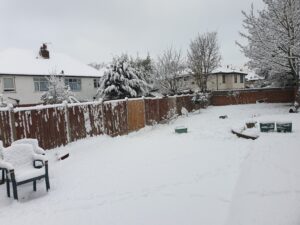
Snow is rare in London, but the weather plays hide and seek. In 1975 Londoners were stunned when it snowed in the middle of summer – on June 2. That hadn’t happened for over a Century!
Old timers also remember the February 1991 snowfall in Britain when 32 centimetres or 13 inches of snow fell just some 23 miles from London.
In 2009 London was buried under heavy snow, causing absolute chaos across the British capital and disrupting travel. Schools were shut. Office workers were forced to stay home due to the extreme weather, which lasted 36 hours. It was branded the worst in 18 years.
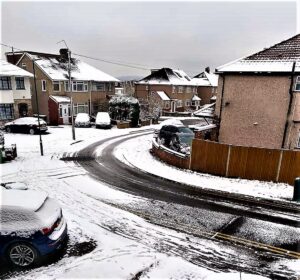
This week there was action replay, but the climate crisis, which the whole world has been talking about so much, has been so hard on the British capital that we had only 2.7 inches of snow, according to the Meteorological Office’s weather bulletins. And this caused chaos almost similar to 2009.
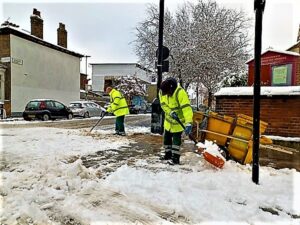
The capital’s transport network came to a standstill on some lines, and the motorists faced treacherous road conditions even though the roads were gritted overnight by local authorities using salt.
After the heavy snow has hit the ground comes the bitter cold snap and frozen slippery surfaces where pedestrians can slip and injure themselves.
To add to the inconvenience for Londoners and the rest of the country, the UK has been hit by a wave of strikes, the threats of which show little or no signs of abating.
Though the country is just a few days away from Christmas for many, the festive season has lost its fizz as most of this month has been hit by strikes threatening to paralyse the country.
The transport network, the National Health Services, the Royal Mail and the Civil Service have taken industrial action in their continuing battle against pay and working conditions.
The strikes started on December 7 when more than 5,000 education staff walked out, warning of further strikes next year.
The London bus network Abellio, members of Unite trade union, went on strike on 9, 10, and 16, with the final scheduled for today, December 17.

The first of the two-day Royal Mail postal workers strike in which 115,000 members of the Communications Workers Union (CWU) downed their tools, disrupting letter and parcel deliveries.
The postal workers’ strike continued on 11, 14 and 15 December and was scheduled for 23 and 24 December.
The first NHS strike , involving over 100,000 nurses, started on 12 and 15 December, with further action on 20, 21 and 28 December. They are members of the powerful Royal College of Nursing, (RCN), that has kept the country at ransom. This is their first major strike in the union’s 106-year history. This is the most debilitating strike action as the NHS system could come to a grinding halt.
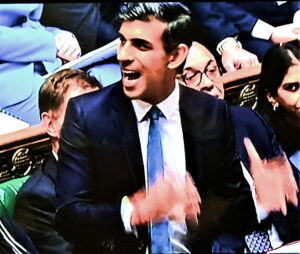
His Tory party members have strongly advised Prime Minister Rishi Sunak to open talks with the nurses, a move that his Health Secretary Steve Barclay has resisted, citing the Government’s inability to find money to pay the nurses.
Sunak says that the nurses’ demands could cost the Government over £10 billion, which it can’t afford to pay.
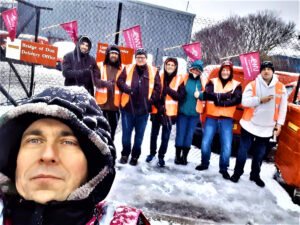
Some 200 members of the General and Municipal Workers Union (GMB) working for the energy company Baker Hughes went on strike for four days between December 12 and 15.
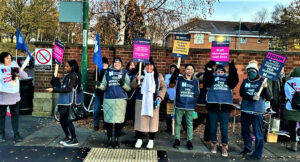
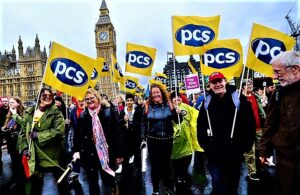
More than 100,000 civil servants, members of the Public and Commercial Services Union (PCS), from various Government departs have taken industrial action from 13 to December 16 with one day’s break resuming their strike from 18 to December 23 and 28 to December 30.
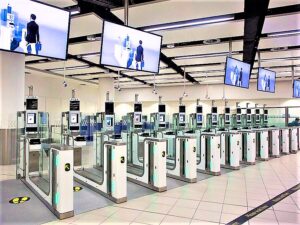
Several airports, including Heathrow, Gatwick and Stansted in and around London, have also been hit with the strike of Border Force immigration officers, members of PCS Union, from 23 to 26 with a day’s break and continue till December 31.
The Government has drafted the army to control immigration points, and recently a group of soldiers were being given crash training in handling immigration matters.
Newly arriving tourists to the UK would have a negative impression of this country, seeing the army handling immigration desks.
The irony of this desperate action is that it is never a good idea to call in the army during peacetime. Britain has frequently used the military even during the Covid lockdowns of the past two years.
As if the strike Border Force official’s action is not enough pain for travellers, ground handlers employed by private contractor Menzies at Heathrow airport, who are members of Unite, are due to start a 72-hour strike.

A previous 72-hour strike due to start on December 16 was cancelled after Menzies made an improved pay offer. Unite will ballot members on the pay offer, and if rejected, they will strike on December 29.
Not only have the airports in and around London been hit, but the strike has also spread as far as Scotland.
Unite union members who work at the Highlands, and Islands airports are also striking. A total of 11 airports are affected: Barra, Benbecula, Campbeltown, Dundee, Inverness, Islay, Kirkwall, Stornoway, Sumburgh, Tiree and Wick.
The entire British Railway network has been paralysed. Thousands of members of the rail union, RMT, working for Network Rail companies are taking action throughout the country.
Stations are deserted, with odd instances of lone passengers hoping they may be lucky to catch a train only to return home disappointed.
Eurostar, the train network connecting Britain with the rest of Europe through Calais in France, has also been hit by the strike. Security staff working for Eurostar and members of the RMT have refused to go to work.
National Highways workers who care for the country’s motorways start their strike in the West Midlands on December 30. The following day they will be joined by strikers from the southwest of England Highways workers.
Industrial action is set to spill into the new year when firefighters, junior doctors, and the London Underground (Metro) public transport network will take industrial action. Even more ominous is that London Transport has declared another six months of intermittent strikes causing chaos between intervals.
There are little signs of the Government accepting the demands of the strikers. On the contrary, Prine Minister Rishi Sunak has challenged those in the private and public sectors that he would introduce new tough laws to control strike actions.
Defiant unions say they will not be intimidated by Sunak’s attacks on trade unions. They say they will challenge any new strike-breaking measures as the unions were financially and industrially strong enough to withstand any Government measures.
Despite calls from the Tory party members urging Rishi Sunak to increase pay offers to the nurses, the Government continues to be defiant.
The nation’s sympathy lies with the striking workers who have families at home waiting to celebrate Christmas but are on the picket lines.
Many Britons with a heart of gold have stepped out to offer hot drinks to the striking nurses in this inclement weather.
This year is bleak for the United Kingdom. The Government’s insistence on not settling the demands of the strikers has added to the agony of hundreds of thousands of Britons struggling for survival in a country where the cost-of-living crisis, rising energy costs and hunger are taking a heavy toll.
The intransigence of the Rishi Sunak Government and its obstinacy in meeting the strikers to find a middle ground of payment settlement and its helplessness to fund the pay rises are bound to add to the Tory Government’s failure at the next general election slated for December 2024.
Does Rishi Sunak stand any chance of surviving as Prime Minister in such a scenario? The pessimists say no, but the optimists say some chance is still there to salvage the UK’s future and international reputation under his Tory leadership.
As for the current Tory Government, it is already suffering from a popularity crisis with the opposition Labour winning local elections.
Sunak is undeterred. He said in October when taking office that he has work to do and will try his best to deliver the results to the nation.
Crisis, crisis, crisis, but die-hard Tories are asking – what crisis?
On the other end of the scale, do Britons groaning under the weight of the current crisis have the patience to wait for Sunak to deliver?
As of now, the weather outlook is likely to turn warm in the coming days once the snow has thawed.
As I write this report, the weak winter sun is peeping from the skies over the white snow still on the ground. It is still freezing in London. The cold snap is here to stay at least for the next few days.
My colleague, moaning Malcolm has gone AWOL (away without leave in the Army jargon).All of us, his colleagues, are waiting for him to return to duty. We’d be jealous if he has left us here shivering in the cold to enjoy a sunning holiday on the palm-fringed beaches of the Seychelles!
Knowing my bosses, if Malcolm returns sporting a suntan he will be fired from his job as the editorial rewrite expert or wordsmith turning boring reports into readable copy.
Political outlook? In the United Kingdom, the political outlook only looks promising if the Government makes a U-turn on settling the strikes. The poser is – Is Rishi Sunak ready for turning?
One wonders.
Similar Posts by Shamlal Puri:
- BRITAIN PLEDGES ‘ROCK SOLID’ SUPPORT TO UKRAINE
- KENYAN HOCKEY LEGENDS HONOURED IN LONDON
- Tourism bonanza for the Middle East: FOUR DAYS WHEN THE WORLD CAME UNDER ONE ROOF IN DUBAI
- LONDON PACKAGING WEEK WITH TOP GLOBAL BRANDS ATTRACTS THOUSANDS OF VISITORS
- UK’S NATIONAL HEALTH SERVICE IN BIZARRE COLOUR BAR CRISIS
About the Author