CS Migos Ogamba Urges Universities To Embrace Data-Driven Research For National Growth
 The Mt Kenya Times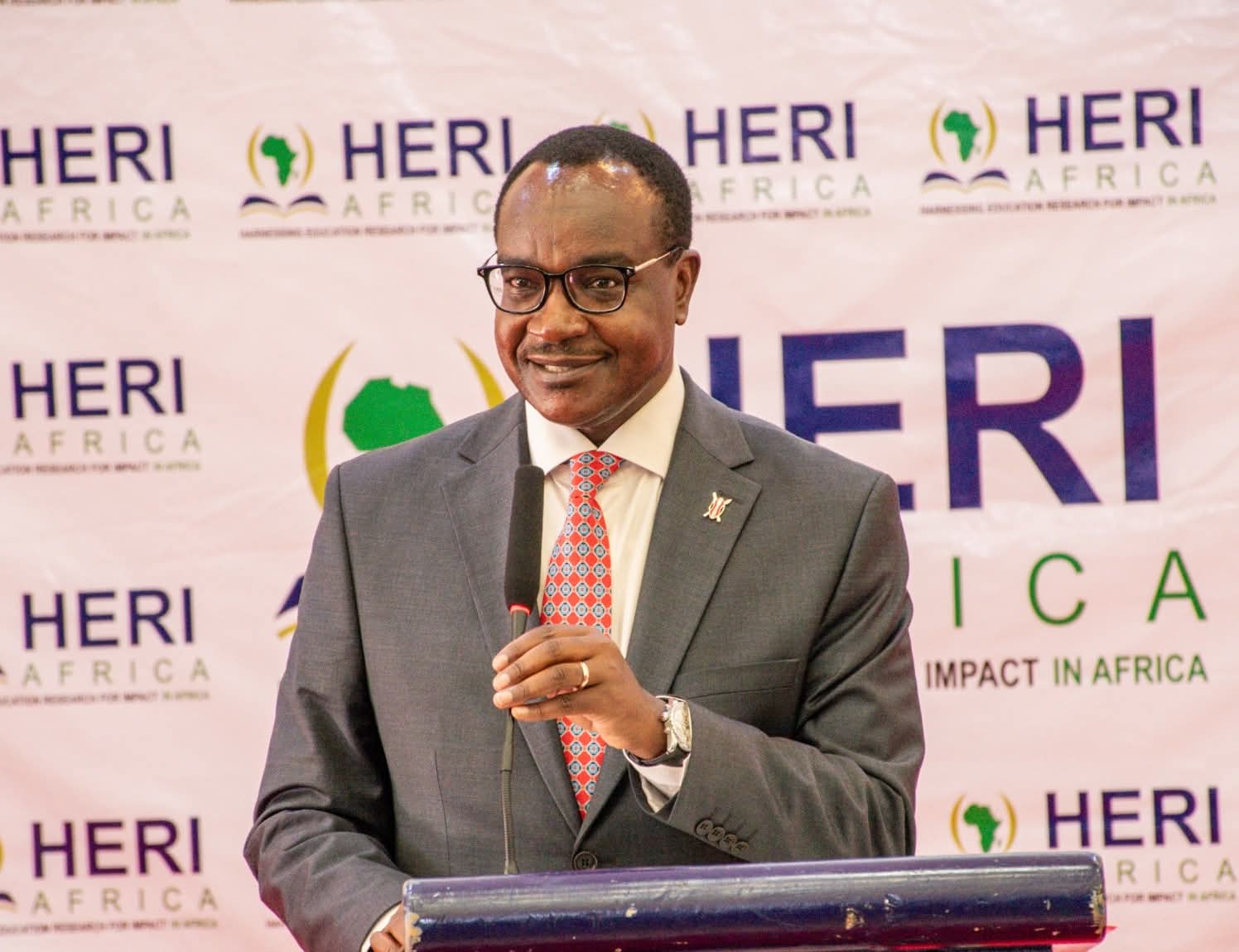
Education Cabinet Secretary Migos Ogamba speaking at Kisii University during the official launch of the Harnessing of Education Research for Impact initiative (HERI) has urged universities to embrace data-driven research for national growth
By Elizabeth Angira
Education Cabinet Secretary Migos Ogamba has challenged universities to reawaken to their core mandate of research and innovation, urging institutions to embrace data-driven studies to strengthen policymaking and national development.
Speaking at Kisii University during the official launch of the Harnessing of Education Research for Impact initiative (HERI) , Ogamba said that although Kenya has made notable progress in scaling up research, more investment and coordination are needed to improve the country’s research output.
He emphasized that Africa must intentionally invest in research if it is to meaningfully participate in global knowledge production.
“Research is a very important and critical aspect of our education system,” Ogamba said. “As a government, we want to ensure that the decisions we make in terms of policy are underpinned by data and evidence arising from research undertaken by our institutions.”
The new initiative brings together a consortium of partners and institutions that have mobilized resources to advance education research across key disciplines. The programme will initially establish three research chairs, with plans to expand to five in the coming years.
Under the arrangement, Kisii University will host the Chair in Language Studies; Mount Kenya University will oversee the Chair in Mathematics, while Kenyatta University will lead research in Community and Social Services.
An initial Sh60 million has been allocated to the programme to support its rollout.
Ogamba noted that research output from African scholars currently accounts for only three per cent of global research production a figure he described as too low for a continent with vast intellectual potential.
“Our ambition is to raise that to 30 per cent in the next 20 to 25 years, up to 2050,” he said.

To strengthen coordination, the CS pointed to the establishment of an independent research department domiciled at the Office of the Prime Cabinet Secretary. The department will serve as a central repository for research conducted across the country, helping institutions collaborate more effectively and avoid duplication.
“This department will harness all research in the country so that we have a one-stop shop and a depository of all research being undertaken. That way, we can collaborate better and fully benefit from the knowledge generated,” Ogamba explained.
In a major boost to the sector, the government has increased funding for research and development from 0.8 per cent of GDP to two per cent a move the CS described as a clear indication of the priority attached to research.
“Without research, we cannot progress beyond the knowledge we currently have. This increase demonstrates how seriously the government is taking the sector,” he said.
Beyond government funding, partners have already committed more than Sh100 million to the initiative. Projections indicate that the investment could grow to $100 million by 2050.
Ogamba reiterated that evidence-based decision-making is central to ongoing education reforms. He cited the recent transition from Grade 9 to Grade 10 under the Competency-Based Curriculum as an example of how data informs policy adjustments.
Referring to the recent Grade 10 selection process, the CS observed that some schools were not chosen by students and may therefore not have learners.

“In the recent selection process, some schools were not chosen by students, meaning they may not have learners. We must make decisions based on such data on what to do with those schools,” he said. “Every decision we make must be aligned with research findings and the realities on the ground.”
He added that aligning research output with government policies and the national development agenda would enhance efficiency and ensure that resources are directed where they are most needed.
“This is about making our systems more effective and efficient. If we put resources where they are required, guided by research and evidence, we will achieve far greater impact,” Ogamba said.
Kisii University Vice Chancellor Prof Nathan Ogechi noted that universities play a critical role in generating knowledge, developing solutions to societal challenges and shaping policy through evidence-based research. Revitalising research culture within universities, he said, will not only strengthen academic excellence but also contribute to economic growth and social transformation.
The Heri Collaborative Research Initiative, also launched at the institution, seeks to foster partnerships among researchers, institutions and industry players. The programme aims to enhance innovation, promote interdisciplinary collaboration and address pressing local and national challenges through joint research efforts.
University Chancellor Dr Sara Ruto urged stakeholders to work collectively to build a vibrant research ecosystem, stressing that the country’s future depends on knowledge-driven solutions developed within its universities.
Professors, researchers, students and invited guests who attended the launch welcomed the government’s renewed commitment to supporting research and innovation in higher education.
Similar Posts by The Mt Kenya Times:
- Mt Kenya Times ePAPER September 19-20, 2026
- Kenya joins US and UK to put citizens on the terrorism frontline
- Kenya’s parliament races to tame the AI frontier
- Kalonzo calls Ruto to order over Uhuru attacks
- Gachagua takes his 2027 campaign to America
About the Author