By Florence Munyao
Protests have broken out across Kenya in the recent past largely led by Gen Z youth who say they are fed up with being ignored.
More than 30 people lost their lives, and over 100 others injured, in the latest protests and the situation doesn’t seem to improve any soon.
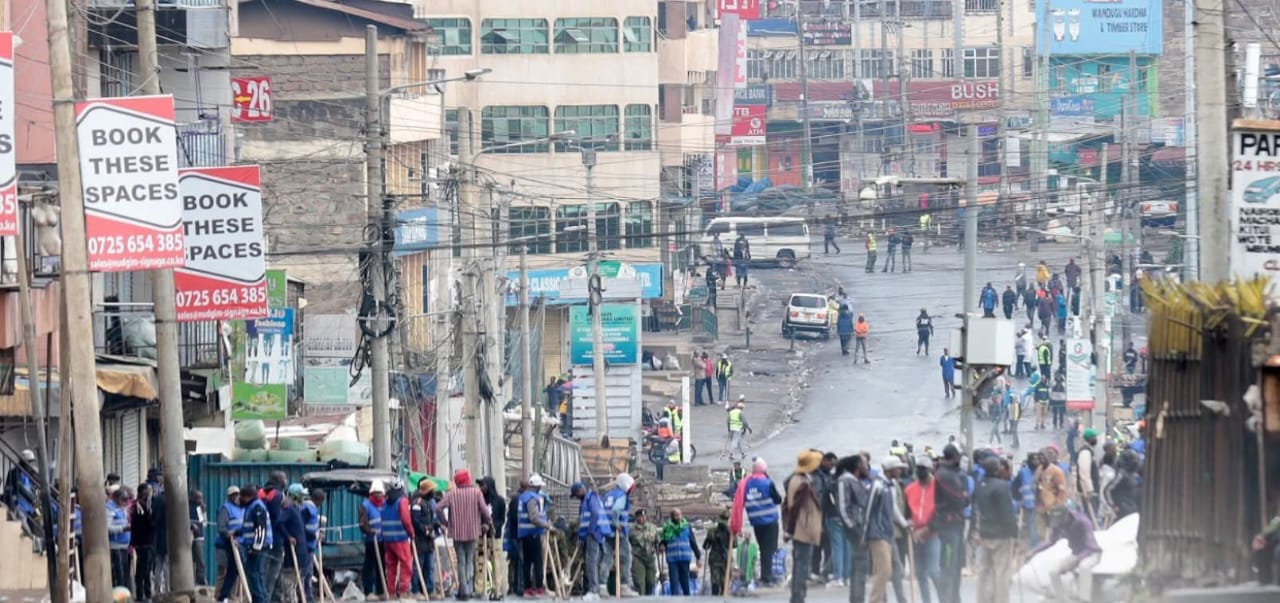
On Monday, during Saba Saba, protests started with peaceful marches and public gatherings. Protesters took to the streets demanding better leadership, lower the cost of living and an end to police brutality but chaos spread to major towns and cities including Nairobi, Nakuru, and many parts of Mt. Kenya, with reports of roadblocks, injuries, and violent confrontations between police and protestors.
In Kangemi, Nairobi, police fired tear gas as they tried to disperse crowds. Several residents were caught in the crossfire while going about their daily routines. In one particularly tragic incident, Brigit Njoki, a 12-year-old girl in Kiambu, was killed by a stray bullet while inside her home. Her death has sparked national outrage and renewed protests in her hometown.
Speaking to a local television, former MP Njeru Kathangu said the protests are about more than politics — they are about survival. “They have been economically denied,” he said, citing issues such as high youth unemployment, rising inflation, and lack of opportunities.
A significant part of the movement has been organized and amplified through social media. Hashtags like #OccupyParliament and #RutoMustGo have trended for days.
What began online has now transformed into a nationwide uprising, with thousands — mostly students, graduates, and jobseekers in their early 20s — taking to the streets to demand accountability.
Prominent Kenyan influencers and content creators, including Wanjiku Stephens, Crazy Kennar, and Shorn Arwa, have thrown their support behind the movement. They’ve used their platforms to spread protest messages, share safety tips, and call for civic engagement — further uniting a digital-savvy generation seeking change.
However, not all demonstrations have remained peaceful. In Kitengela and Embakasi, some hospitals were reportedly looted by criminal elements hiding among peaceful demonstrators, raising safety concerns.
The Kenya Medical Practitioners and Dentists Union (KMPDU) has since warned that it may call a strike if healthcare workers are not protected from further violence.
In Parliament, some lawmakers have walked out of sessions, demanding accountability for the police response. Interior Cabinet Secretary Kipchumba Murkomen defended the police, saying they were overwhelmed by rogue elements, but assured the public that investigations into the killings would be conducted.
In a surprise move, former Cabinet Secretary Moses Kuria resigned from his advisory role, accusing the government of ignoring citizens — particularly the youth — at a time when listening is crucial.
As of now, the government has not outlined a clear way forward. Tension remains high across the country.
Businesses in affected towns remain shuttered, transport has been disrupted, and families continue to mourn. Youth-led groups are now calling for meaningful dialogue and long-term reforms to avoid further bloodshed.
Similar Posts by The Mt Kenya Times:
- Nigeria Starts Making Its Own Next-Generation Malaria Nets
- Diaspora Times Global Oct 3 – Oct 9, 2026
- Kwale’s electricity push moves from grid to growth
- Linguistic Features Of Chromatonyms In English And Uzbek
- A Poem, a Universe: A poetry book gaze at Jumaniyoz Jabborov’s “Ko‘zgudagi sanam”
About the Author