Did Claims By President Ruto’s Critics That He Was Being Held Hostage By IMF Holds Any Water?
 The Mt Kenya Times
President William Ruto addressing the new cabinet secretaries.
By: Joseph Mutua Ndonga
Worth Noting:
- Gen-Z and their sponsors would want Kenyans to buy a lie that this is the first time that the IMF is imposing the conditions.
- I disagree. Allow me to first make one thing clear. Britton Wood institutions do not invite themselves into a country. But once invited, each was at liberty to come up with terms of engagement.
- Failure to live up to the terms of agreement is the main reason why many African countries have been grappling with the conditionalities.
- During their respective tenures, Presidents Daniel Arap Moi, Mwai Kibaki and Uhuru Kenyatta faced public back-rashes.
- For President Ruto, he has been assuring Kenyans that his main goal was to safe guard their economic interests.
Occasionally, the critics of President William Ruto were dragging the name of International Monetary Fund (IMF) in trying to justify their claims that he was taking the country in the wrong direction.
This is in regard to fiscal and monetary policies that had been put in place by his administration.
They would aver these policies had been imposed by IMF and term them as punitive and a bitter pill to swallow.
During the campaigns, President Ruto promised Kenyans that he would revive and turn around our economy.
His interventions are not bearing the fruits. This is because he had succumbed to blackmail and other machinations of IMF, they would further allege.
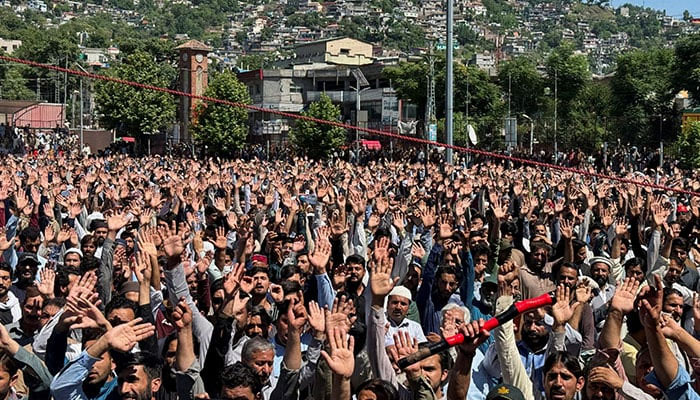
The claims resurfaced and took a center stage during the Generation-Z protests.
The chants that President Ruto had sold the country to Britton Wood institutions would rent the air.
In trying to justify the claims, GenZ would cite Finance Bill 2024 claiming that it had drafted by IMF.
Gen-Z and their sponsors would want Kenyans to buy a lie that this is the first time that the IMF is imposing the conditions.
I disagree. Allow me to first make one thing clear. Britton Wood institutions do not invite themselves into a country. But once invited, each was at liberty to come up with terms of engagement.
Failure to live up to the terms of agreement is the main reason why many African countries have been grappling with the conditionalities.
During their respective tenures, Presidents Daniel Arap Moi, Mwai Kibaki and Uhuru Kenyatta faced public back-rashes.
For President Ruto, he has been assuring Kenyans that his main goal was to safe guard their economic interests.
Therefore, we are not going to embrace these conditionalities blindly.
We will only implement what is good for our country in terms of uplifting the living standards of our people.
Being a global financial institution, IMF engages both the developing countries and developed/industrialized nations.
For me, GenZ protests were a blessing in disguise for President William Ruto.
The writing was already on wall that the President was uncomfortable with several things that were happening in the country.
To avoid a political back rash, he knew that he needed to undertake some of these reforms with caution.
A case in point is the push to remove Agriculture Cabinet Secretary Mithika Linturi.
Despite his name being adversely mentioned in procurement and supply of the fake fertilizer, he survived bid to oust him through impeachment.
This is because the MPs from Mount Kenya region blindly rallied behind him.
For them, the issue of integrity and other qualities of a good leader will not matter.
Hon Linturi is one of our own. So we cannot abandon him in this hour of need.
This is the reasoning even in other parts of the country.
You would hear elected leaders defending top government officials who hails from their tribe and region.
So, the Gen-Z protests were timely trigger. Going by his latest pronouncements, President Ruto is committed to address this recurring problem.
In the initial stages the protests were peaceful. The President was happy to see young people coming out in big numbers to speak their mind. He in particular admired these protests because they were tribe less and party less.
Their message is clear. Kenya belongs to all of us. As your President, I have been reiterating this. So, when he dissolved the entire cabinet, he minced no word in stating.
The new-look cabinet will be broad based, all-inclusive and one that will help him to fulfill a raft of pre-election promises. He has lived to his word.
Unlike his predecessors, President Ruto is running the country in the era of advanced digital technology. This explains why the mobilization of Gen-Z protesters happened very fast. As President Ruto noted, the issue of youth bulge also came into play.
On IMF prescriptions, there was no doubt that he was opposed to some of them.
His decision to reject the Finance Bill 2024 was a bold move.
On reconstitution of his cabinet, the President had earlier read several riot acts to his cabinet secretaries (CSs).
In the eyes of the public, your performance is below expectation.
Some of you are totally clueless about what you are supposed to do.
I even know more than you regarding the mandate of your respective ministries.
So, I don’t see the point of having you in my cabinet.
With this, the President had drawn the line and it was only a matter of time before the he cracked the whip and sent them home.
As per the constitution, the prerogative to hire and fire members of the cabinet lies squarely with the President. The role bestowed on them is delegated. The President is the CEO of Kenya and he hires them to help him discharge the constitutional mandate of his office.
Since he assumed office, the President curves a niche of being a strong believer in the tenet of democracy and rule of law.
President Ruto followed the footsteps of former President Mwai Kibaki.
In the aftermath of 2007/2008 post election violence, Kibaki caved in to pressure and agreed to form a unity government with ODM leader Raila Odinga.
The only difference at the time was that the pressure came from the international community.
For President Ruto, he has so far managed to use his wisdom to contain pockets of violence and prevent Kenya from sliding into a full blown anarchy.
The other key demand raised by Generation-Z and millennials touched on reconstitution of the Independent Electoral and Boundaries Commission (IEBC).
A few days ago, the President signed the IEBC Bill into law paving the way for the recruitment of the commissioners.
The Bill emanated from the talks held at the Bomas of Kenya.
The 10-member national dialogue committee (NADCO) was co-chaired by national assembly majority leader Kimani Ichungwah and Wiper leader Kalonzo Musyoka.
The President was flanked opposition leaders led by Raila Odinga during the signing ceremony held at KICC.
The new law to reform the IEBC is a product of the views and memoranda presented by the people of Kenya during the public hearings.
So, we have no reason to doubt that this process will lead to formation of a truly independent commission.
We want to assure Kenyans that the commissioners will conduct a free, fair and credible polls in 2027, the opposition leaders reiterated.
I have heard some members of Gen-Z expressing reservations to the steps that President Ruto has so far made.
A friend of mine told me. Those were extremists who had coined a Hastag of ‘RutoandGachaguaMustGoNow’.
We know their ultimate goal was to attempt to overthrow President Ruto through popular uprisings.
So, they won’t see anything good that the President was doing.
Why their bid won’t see the light of day? Majority of Kenyans abhor use of unconstitutional means to remove a democratically government from power.
Joseph Mutua Ndonga is a Writer and Political Analyst based in Nairobi
Similar Posts by The Mt Kenya Times:
- Mt Kenya Times ePAPER September 28, 2026
- Kalonzo turns 40-year jibe into rule of law defence
- Roseline Njogu emerges as leading voice in Kenya’s diaspora and labour mobility agenda
- Ruto: Expansion of Mzima Springs water project to begin this year
- Linda Mwananchi settles on Sifuna as 2027 presidential flagbearer
About the Author