Dissent And Disillusionment: Mapping The Decline Of Ruto’s Popular Support In Kenya
 The Mt Kenya Times
President William Ruto
By Jerameel Kevins Owuor Odhiambo
‘No one can deny that Chief the Honourable M.A. Nanga, M.P., was the most approachable politician in the country. Whether you asked in the city or in his home village, Anata, they would tell you he was a man of the people. I have to admit that I was somewhat distant from the people myself at that time, and more disposed to bring down a minister than to sing his praises.'”
In a striking parallel to Chinua Achebe’s satirical portrayal of political leadership in “A Man of the People,” Kenya’s President William Ruto finds himself at the center of a growing storm of public discontent. The initial euphoria that accompanied his ascension to power has rapidly dissipated, replaced by a palpable sense of disillusionment among the Kenyan populace. This shift in public sentiment is not merely a reflection of unfulfilled campaign promises, but rather a complex tapestry of governance issues, human rights concerns, and a perceived disconnect between the administration and the everyday realities of Kenyan citizens. As we examine deeper into the multifaceted reasons behind Ruto’s waning popularity, it becomes evident that the very foundations of democratic governance in Kenya are being tested in unprecedented ways.
The cornerstone of any democratic society is the protection of fundamental human rights and freedoms, including the right to dissent and peacefully oppose governmental policies. However, under President Ruto’s administration, there have been alarming reports of a systematic crackdown on opposition voices. This suppression of dissent has manifested in various forms, ranging from the arbitrary arrest and detention of activists to more sinister allegations of forced disappearances and extrajudicial killings. Such actions, if substantiated, represent a grave violation of the principles enshrined in Kenya’s constitution and international human rights treaties to which the country is a signatory. The chilling effect of these measures on civil society and political discourse cannot be overstated, as it erodes the very fabric of democratic participation and accountability.
Moreover, the Ruto administration’s approach to governance has been characterized by what critics describe as a selective adherence to constitutional principles, a phenomenon often referred to as “constitutional cherry-picking.” This is exemplified by recent controversies surrounding executive appointments, such as the establishment of a taskforce to appoint the Attorney General, a move that was subsequently struck down by the courts as unconstitutional. Such actions not only undermine the separation of powers doctrine but also raise serious questions about the administration’s commitment to the rule of law. The repeated judicial rebukes of executive decisions paint a picture of a government more interested in consolidating power than in upholding the constitutional order it swore to protect.
The psychological profile of leadership plays a crucial role in shaping governance outcomes, and in this context, concerns have been raised about President Ruto’s leadership style and decision-making processes. Critics have employed terms such as “narcissism” and “psychopathy” to describe what they perceive as a detachment from the realities facing ordinary Kenyans. While such characterizations should be approached with caution, they reflect a growing public perception of a leader increasingly isolated from the electorate and surrounded by sycophants unwilling or unable to provide critical feedback. This echo chamber effect is particularly dangerous in a diverse and complex society like Kenya, where nuanced and inclusive decision-making is essential for addressing multifaceted challenges.

The recent public outcry over the Finance Bill and its aftermath serves as a poignant illustration of the growing disconnect between the Ruto administration and the Kenyan public. The initial push to pass the bill, despite widespread concerns about its potential negative impact on the cost of living, demonstrated a lack of sensitivity to the economic pressures facing many Kenyans. It took the tragic loss of over 40 lives during protests across 35 of Kenya’s 47 counties, including Ruto’s home county, to prompt a reconsideration of the bill. This sequence of events not only highlights the administration’s initial failure to gauge public sentiment but also raises questions about the government’s responsiveness to citizen concerns and its willingness to engage in meaningful dialogue with diverse stakeholders.
The concentration of power within the executive branch and its apparent influence over the legislative arm of government has further exacerbated concerns about the erosion of democratic checks and balances. With a significant majority in the National Assembly, there are fears that the Ruto administration has been using its numerical advantage to push through legislation that serves narrow political interests rather than the broader public good. This consolidation of power challenges the principle of separation of powers and risks turning parliament into a rubber stamp for executive decisions, rather than a forum for robust debate and representation of diverse constituent interests. The long-term implications of this power dynamic for Kenya’s democratic development are potentially severe, as it may set precedents that future administrations could exploit to further centralize authority.
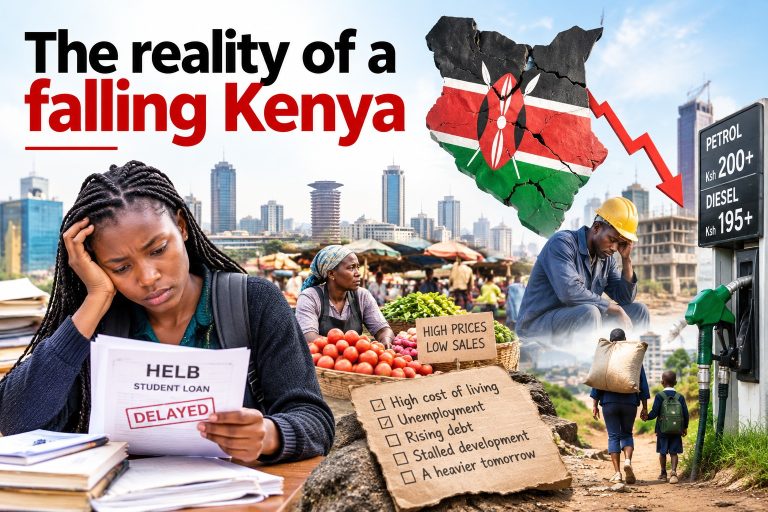
The stark contrast between Ruto’s populist campaign rhetoric and the realities of his governance has contributed significantly to his declining popularity. During the election campaign, Ruto positioned himself as a champion of the “hustler nation,” promising economic empowerment and opportunities for the marginalized segments of society. However, the implementation of policies that are perceived as favoring the elite and placing additional burdens on the working class has led to accusations of betrayal and hypocrisy. This dissonance between campaign promises and governance actions has eroded public trust and fueled a sense of cynicism about political leadership, potentially undermining the legitimacy of democratic processes in the eyes of the electorate.
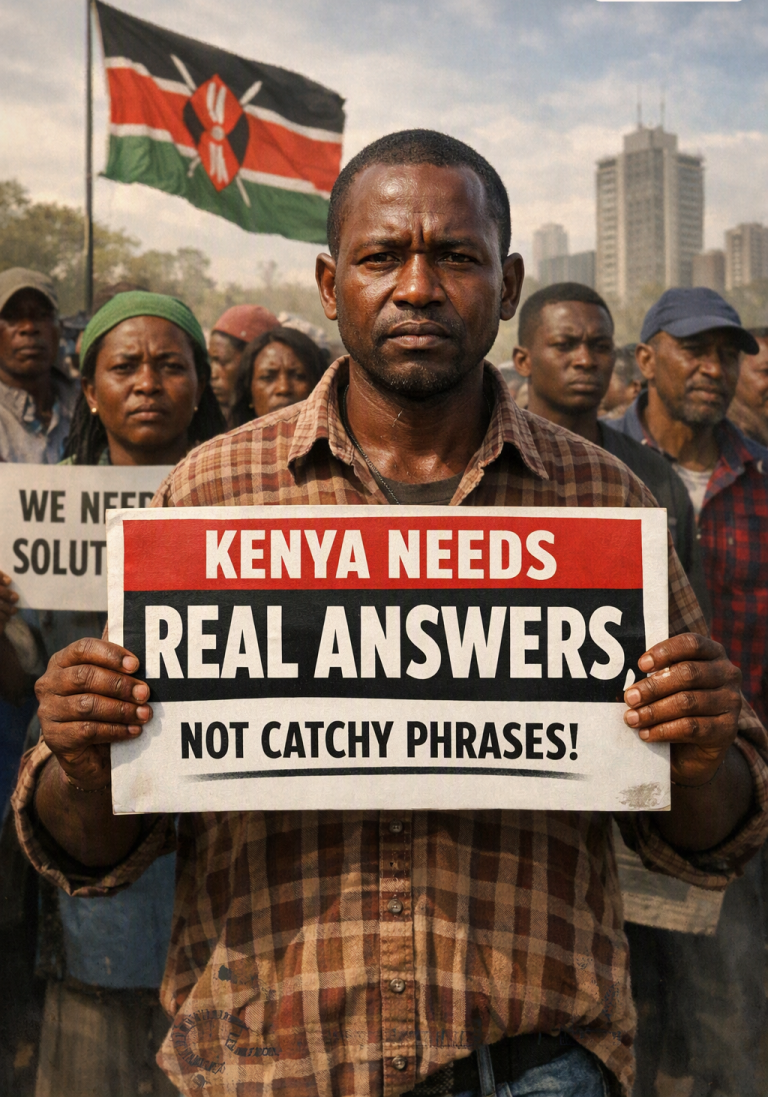
The handling of public protests and dissent has been a particularly contentious aspect of Ruto’s presidency, with accusations of disproportionate use of force by law enforcement agencies. The tragic loss of life during recent demonstrations has not only resulted in immediate public outrage but has also raised serious questions about the government’s commitment to protecting citizens’ rights to peaceful assembly and expression. The failure to hold security forces accountable for alleged excesses further perpetuates a culture of impunity that undermines the rule of law and erodes public confidence in state institutions. This heavy-handed approach to managing public dissent risks further polarizing Kenyan society and entrenching political divisions, making it increasingly difficult to build national consensus on critical issues.
The apparent disregard for expert advice, as evidenced by the reported dismissal of the chief legal advisor, points to a troubling pattern of governance that prioritizes political expediency over sound policy-making. In complex modern societies, effective leadership requires the ability to synthesize diverse perspectives and expert opinions to craft nuanced solutions to multifaceted challenges. The rejection of professional counsel, particularly in legal matters, not only increases the risk of flawed decision-making but also sends a discouraging message to the civil service and policy experts whose input is crucial for effective governance. This approach may lead to a brain drain within government institutions, further compromising the quality of public administration and policy implementation.

The perceived opulence and extravagance of the Ruto administration, set against the backdrop of economic hardship faced by many Kenyans, has further fueled public discontent. In a country grappling with high levels of poverty and inequality, displays of wealth and lavish spending by political elites are not merely a matter of poor optics but are seen as a moral failing. This disconnect between the lived experiences of ordinary citizens and the perceived lifestyle of the political class undermines the social contract between the government and the governed. It feeds into a narrative of a leadership out of touch with the daily struggles of the populace, potentially exacerbating social tensions and eroding the legitimacy of democratic institutions.
The cumulative effect of these governance issues has been a rapid erosion of President Ruto’s political capital and popular support. The widespread nature of recent protests, encompassing a majority of Kenya’s counties, including areas traditionally considered strongholds of the ruling party, indicates a broad-based dissatisfaction with the current administration. This loss of popularity is not merely a political setback but poses significant challenges for effective governance and the implementation of crucial reforms. As public trust wanes, the ability of the government to build consensus and mobilize popular support for necessary but potentially difficult policy measures becomes increasingly constrained, potentially leading to policy paralysis and further economic stagnation.
In conclusion, the declining popularity of President Ruto’s government is a multifaceted phenomenon rooted in a complex interplay of governance failures, human rights concerns, and a perceived disconnection from the realities facing ordinary Kenyans. The challenges facing the administration are not insurmountable, but addressing them will require a fundamental recalibration of governance approaches, a renewed commitment to constitutional principles, and a genuine effort to bridge the growing divide between the leadership and the citizenry. The future trajectory of Kenya’s democracy may well hinge on the ability of the current administration to heed the voices of dissent, embrace inclusive governance, and recommit to the principles of transparency, accountability, and respect for the rule of law. Failure to do so risks not only further erosion of public trust but potentially more severe consequences for the stability and democratic development of the nation.
The writer is a legal scrivener and researcher.
Similar Posts by The Mt Kenya Times:
- Mt Kenya Times ePAPER October 17-18, 2026
- Ruto bets billions on Kerio Valley — with one eye on 2027
- Ruto’s health ministry kills Murang’a’s digital hospitals
- Kenya bets on Mount Kenya to drive a billion-shilling tourism revival
- Do you have a wealth vision? Or are you just working until you die?
About the Author