The Mt Kenya Times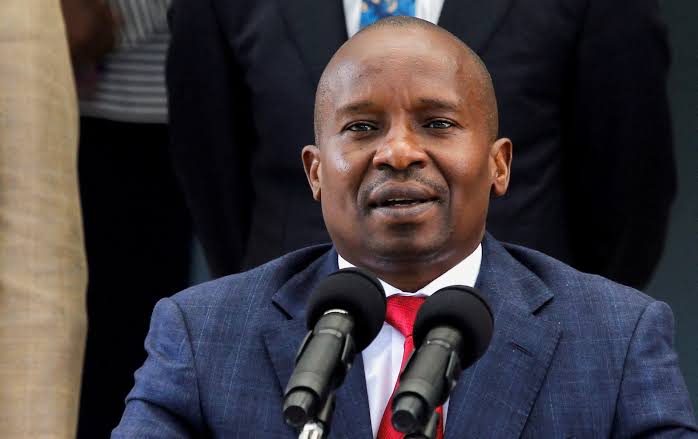
Deputy President Kithure Kindiki
By Prof. Gitile Naituli
As Kenya’s political realignments gather pace ahead of 2027, a disturbing narrative has begun to gain currency in parts of Mt. Kenya East. Some politicians from Meru, Embu and Tharaka Nithi who support Deputy President Prof. Kithure Kindiki appear convinced that the path to his presidency lies in portraying the Kikuyu community as the historical oppressor of the rest of Mt. Kenya. It is a dangerous proposition. It is historically questionable. And it is politically self-defeating.
Every election season produces convenient villains. When leaders cannot sufficiently distinguish themselves through ideas or performance, some resort to manufacturing historical grievances. Communities become scapegoats while the failures of individual leaders quietly disappear from public discussion.
This is one of those moments. The claim that the Kikuyu community systematically oppressed the people of Meru, Embu and Tharaka Nithi simply does not fit comfortably with Kenya’s political history.
Consider the record. At Independence, President Jomo Kenyatta appointed Jackson Angaine from Meru to head the powerful Ministry of Lands and Settlement. At the time, no ministry carried greater influence over economic transformation. Land represented wealth, security and opportunity. If that immense opportunity did not translate into the level of development many Meru people desired, intellectual honesty requires us to ask difficult questions of the leaders who held that office rather than condemn an entire community.
The same pattern repeated itself under President Mwai Kibaki. Meru leaders occupied some of the most influential offices in government. Cabinet positions, Permanent Secretaries and senior appointments gave the region unprecedented access to national decision-making. Many observers at the time remarked that Meru enjoyed exceptional influence within Kibaki’s administration.
Again, if those entrusted with public office failed to maximise those opportunities for the benefit of ordinary citizens, responsibility rests first with leadership, not with millions of ordinary Kikuyu men and women who neither made those decisions nor exercised those powers. President Uhuru Kenyatta maintained the tradition by appointing Meru leaders to senior Cabinet positions and other important national offices.
These facts do not suggest exclusion. They suggest inclusion. This is not to argue that every community in Mt. Kenya has enjoyed equal development or that legitimate grievances do not exist. They do. Every region has concerns about roads, markets, agriculture, education, water and public investment. Those are real debates deserving serious policy discussion. But there is an enormous difference between criticising governments and demonising entire communities. The first strengthens democracy. The second weakens the nation.
More puzzling still is the political strategy behind this emerging rhetoric. If these politicians sincerely believe Prof. Kindiki should become President of Kenya, why would they spend valuable political capital alienating one of the largest voting blocs within the broader Mt. Kenya region? Presidential politics is not arithmetic alone; it is coalition-building. Nobody becomes President by shrinking the circle of friends. Nobody enters State House by persuading potential allies that they are historical enemies. Successful presidential candidates spend years building bridges across regions, communities and political traditions. They understand that elections are won through persuasion, trust and shared purpose, not by cultivating resentment.
The irony is impossible to ignore. Those claiming to defend Prof. Kindiki’s presidential ambitions may inadvertently be making those ambitions more difficult to realise. A divided Mt. Kenya has less national influence than a united one. History has demonstrated this repeatedly. Whenever the region has spoken with relative unity, it has exercised considerable influence on national affairs. Whenever internal rivalries have overwhelmed common purpose, that influence has diminished.
Kenya’s future will not be built by encouraging Meru to distrust Kikuyu, Kikuyu to distrust Embu, or Embu to distrust Tharaka. Such politics may generate applause at partisan rallies, but it rarely produces lasting leadership. The questions citizens should be asking are far more demanding.
What have our leaders accomplished with the offices they have held?
How effectively have they improved schools, hospitals, roads and agricultural productivity?
How many jobs have they helped create?
How have they used the immense public trust placed in them?
Those are the questions that separate democratic accountability from ethnic mobilisation.
Communities do not govern Kenya. Individuals do. They should therefore be judged individually. Blaming entire communities for the shortcomings of political leaders is intellectually weak because it replaces evidence with emotion. It also diverts attention from the central obligation of every public servant: to account for the authority entrusted to them.
Kenya has travelled a long road in reducing the politics of ethnic suspicion. We should not reverse that progress simply because another election is approaching. Prof. Kindiki, like every Kenyan with presidential ambitions, will require support far beyond his home region. He will need allies from every county, every community and every generation. That journey cannot begin by encouraging unnecessary hostility toward people whose support he may one day seek.
Statesmanship unites. Tribal entrepreneurship divides. The leaders who will shape Kenya’s future are not those who manufacture historical enemies. They are those who persuade diverse communities that they have a common destiny. That is the politics worthy of a modern democracy. And it is the only politics capable of building a truly national presidency.
The writer is a former Commissioner with NCIC who comments on various topical issues
Similar Posts by The Mt Kenya Times:
- Kroos eyes the dugout as new career plans take shape
- Sancho searches for a way back
- Kenya’s anti-corruption war is losing ground where it matters most: Fund the citizens who can protect public money
- When justice fails: Men who faced unjust trials but won history
- Keeping your pet healthy: What every owner needs to know
About the Author