DPP Renson Ingonga Urges Prosecutors To Uphold Integrity During Training On Decision To Charge Guidelines
 The Mt Kenya Times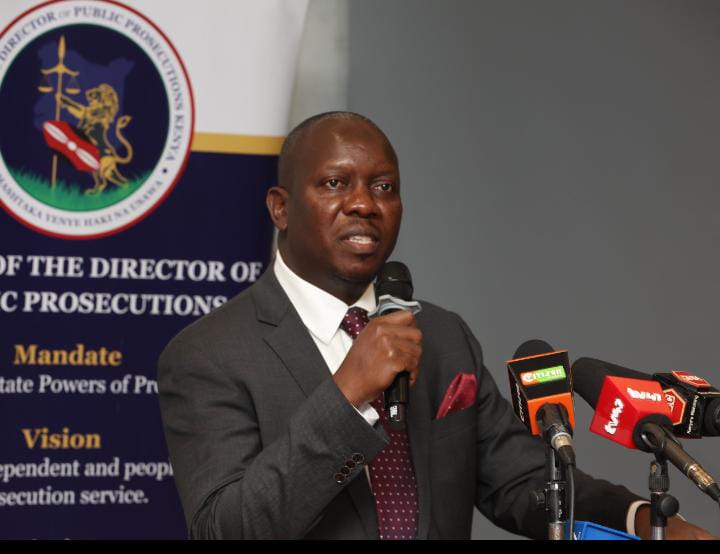
Director of Public Prosecutions Renson Ingonga delivered remarks during the opening session of a prosecutor training workshop on the Decision to Charge Guidelines, held at a Nairobi hotel. The training is supported by the International Justice Mission (IJM).
By Cynthia Masibo
Director of Public Prosecutions (DPP) Mr. Renson M. Ingonga has reaffirmed the Office of the Director of Public Prosecutions’ (ODPP) commitment to justice, fairness, and institutional integrity during a two-day training on the “Decision to Charge Guidelines” held at the Novotel Hotel, Westlands.
Addressing prosecution counsel from the Nairobi Region on the opening day of the training, Mr. Ingonga emphasized the constitutional responsibility of prosecutors and the critical role they play in upholding public confidence in Kenya’s criminal justice system.
“This mandate carries immense power, and with it, an equally immense responsibility,” the DPP stated, referencing Article 157 of the Constitution which grants the ODPP authority to institute and undertake criminal proceedings independently and without external influence.
He lauded the partnership between the ODPP and the International Justice Mission (IJM), particularly acknowledging IJM Kenya Country Director, Mr. Vincent Chahale, for his consistent support in strengthening prosecutorial capacity across the country.
“This training would not have been possible without the immense partnership offered to us by the ever-supportive IJM. Thank you, Bwana Vincent, for the continued collaboration,” Mr. Ingonga said.
The Decision to Charge Guidelines, first adopted in 2019, serve as a vital operational and ethical framework for prosecutors. Ingonga noted that the guidelines are not just technical documents but a compass that ensures justice is dispensed impartially, transparently, and with due care.
“These guidelines emphasize an evidence-based, victim-sensitive, and rights-oriented approach anchored on the Two-Stage Test: the evidential test and the public interest test,” he explained, underscoring the importance of making prosecutorial decisions that are both fair and legally sound.
The DPP also aligned the importance of the training with the ODPP’s 2023–2027 Strategic Plan, which focuses on creating a modern prosecution service through continuous professional development, adoption of digital tools, and incorporation of alternatives to prosecution such as Plea Bargaining and Diversion.
“As prosecutors, we are not just technicians of the law, we are guardians of public confidence. We must resist pressure, fear or favour and always act in the broader interests of justice,” he emphasized, quoting former U.S. Chief Justice William H. Rehnquist: “In the long run, there is no substitute for a justice system that both is and appears to be fair.”
Mr. Ingonga concluded by encouraging the participants to engage actively with the content of the training and recommit themselves to upholding the rule of law. He stressed that the effective application of the guidelines would significantly enhance public trust in the ODPP and Kenya’s wider justice system.
The training is expected to equip prosecutors with sharper tools for effective, independent, and fair decision-making in line with the ODPP’s core values: independence, professionalism, integrity, fairness, accountability, and responsiveness.
Similar Posts by The Mt Kenya Times:
- Mt Kenya Times ePAPER October 17-18, 2026
- Ruto bets billions on Kerio Valley — with one eye on 2027
- Ruto’s health ministry kills Murang’a’s digital hospitals
- Kenya bets on Mount Kenya to drive a billion-shilling tourism revival
- Do you have a wealth vision? Or are you just working until you die?
About the Author