Education Committee Inspects KICD Head Office, Calls For Equitable Supply Of Books
By MKT Correspondent
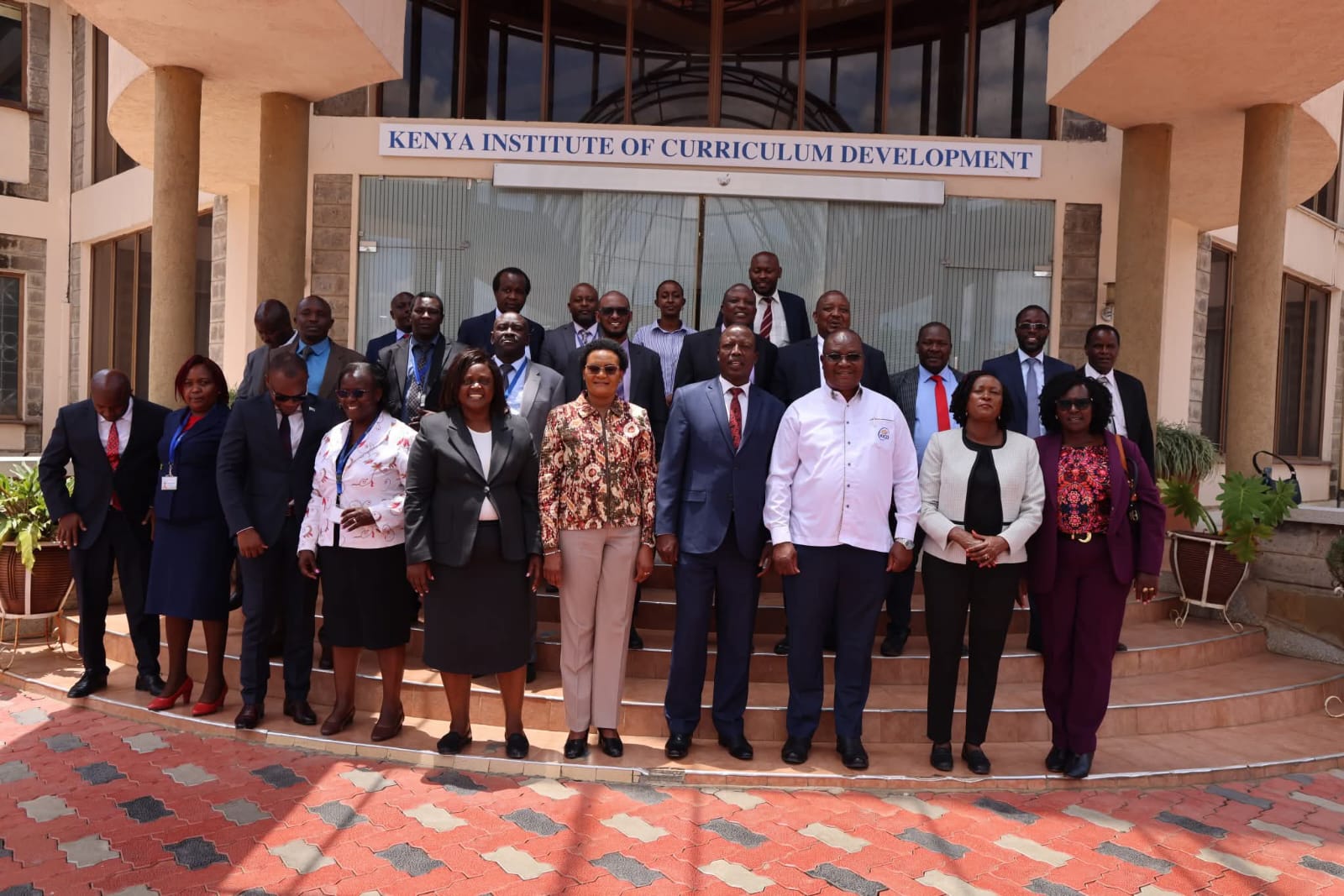
Members of the National Assembly Committee on Education have raised concerns over inconsistencies in the distribution of textbooks and learning materials across public schools during an inspection visit to the Kenya Institute of Curriculum Development (KICD).
In a meeting chaired by Julius Melly, the Committee engaged KICD CEO, Prof. Charles Ochieng Ong’ondo, on the Institute’s performance, digital learning initiatives, and utilization of its KSh1.18 billion budget for the 2024/2025 financial year.
Melly called for the institution to conduct an audit of the KSh11.6 billion pending bill. He directed management to submit details on the pending bill and to work with the Ministry to resolve it.
“This KSh11.6 billion should be audited afresh. Some schools have an oversupply of books while others have none. We need the details on the correct numbers of students and books required,” said Melly.
Prof. Ong’ondo explained that the supply and distribution of books is based on data from NEMIS, which sometimes contains inaccuracies due to unregistered students.
 “We supply based on NEMIS data. However, some schools without NEMIS codes miss out on supplies, while others receive excess books. The Ministry is verifying the pending bills, and all deliveries are accompanied by signed receipts from school heads,” said Prof. Ong’ondo.
On the inclusion of APBET schools in distribution plans, the Committee Chair asked, ” there was a time APBET schools in informal areas of the country were recieving learning materials, but that programme was stopped. These schools support hundreds of students on areas where public schools are few. What are you doing to reintegrate APBET schools and supper them?”
Members of the Committee inspected the construction of a training center which had stalled for several years due to lack of funds to complete the project.
Abdul Haro and Julius Taitumu asked about equity in supplying books to hard-to-reach areas, “What are tour plans for the hard-to-reach areas such as the North East part of Kenya? of collecting feedback from learners and teachers. The learning materials should be supplied equally to all schools.”
Joshua Makilap sought to know what measures were in place to curb book piracy and address the influence of Artificial Intelligence (AI) in the publishing sector.
“In this digital era, where books can easily be copied or sold illegally, what are you doing to curb piracy?” asked Makilap.
The KICD CEO said the Institute has been working with publishers and law enforcement agencies to curb the circulation of fake and substandard learning materials.
“Every year, we encounter poor-quality and pirated books. We have arrested several offenders and are partnering with publishers to maintain standards,” he said.
Speaking on the curriculum for indigenous and foreign languages, Mary Emaase urged the Institute to expand the teaching of international languages such as French and German to prepare Kenyan learners for global opportunities.
Prof. Ong’ondo said the Institute is developing more curriculum support materials for foreign and local languages. “We are promoting both international and local languages to empower learners and preserve Kenya’s linguistic diversity,” he noted.
The KICD CEO further highlighted that KICD faces staff shortages, with a need to recruit at least 100 additional personnel to bridge the human resource gap and support ongoing curriculum reforms.
According to the Institute’s financial report, KICD utilized 95.3% of its KSh1.18 billion budget in the 2024/2025 financial year, with the 2025/2026 budget set at KSh1.19 billion. The Institute also requested additional funding to complete the stalled Education Resource Centre, develop Grade 11 and 12 curriculum materials, and expand public engagement through county-level dialogues.
“We play a strategic role in curriculum reform and digital content development. Enhanced funding will enable us to complete key projects and strengthen education delivery,” Prof. Ong’ondo said.
The Committee pledged to support measures that promote equitable learning resource distribution, improved teacher training, and full digital integration in schools.
Similar Posts by The Mt Kenya Times:
- Sengwer youth: When will Kenya stop treating a minority like an afterthought?
- When young lives become disposable
- The day death refused to be scammed
- Statement win at the Gtech: Brentford outclass Chelsea to claim all three points
- When disability funds become a frontier for accountability: Kenya’s PWDs refuse to be invisible
About the Author