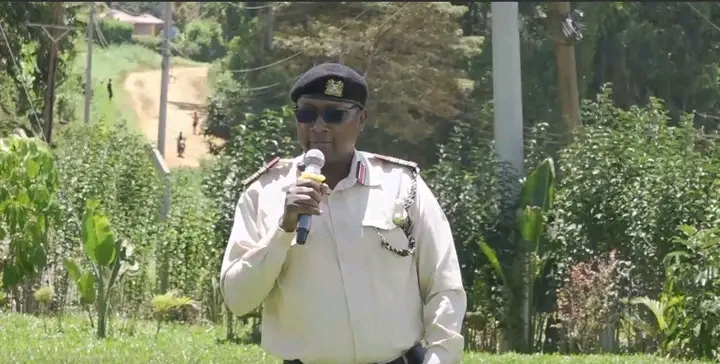
Andrew Ireri, Chairman of the the Embu Council of Elders, Nyagi ya Ndiriri.
A disputed gathering at Nembure Stadium has cracked open a deeper question: who speaks for Mount Kenya ahead of 2027?
By Ndwiga Jacobs
The Embu Council of Elders, Nyagi ya Ndiriri, yesterday publicly disowned a meeting held at Nembure Stadium in which a group of elders drawn from Embu, Meru, Tharaka Nithi and Isiolo reportedly endorsed Deputy President Kithure Kindiki as the Mount Kenya region’s political spokesman ahead of the 2027 General Election.
The council’s chairman, Andrew Ireri, was unsparing in his assessment. He said the elders who attended the Nembure gathering were not recognised members of Nyagi ya Ndiriri and therefore carried no authority to issue declarations on behalf of the wider elders’ fraternity. In his view, the meeting was not a legitimate endorsement — it was a stage-managed political exercise dressed in community clothing. “We come here to oppose and say that the meeting at Nembure had traitors. People gathered to grab money — money that comes from our taxes. We hear some were given KSh2,000 and others KSh5,000. They were deceiving people,” Ireri said, alleging that financial inducements had been used to mobilise attendance while the funds never reached all those expected to participate.
The accusations of payment and selective mobilisation strike at the credibility of the Nembure gathering and raise uncomfortable questions about the increasingly transactional nature of political endorsements in the Mount Kenya region. Ireri went further, questioning the choice of venue itself, describing Nembure Stadium as a sacred ground whose dignity should not be compromised by politically choreographed gatherings masquerading as community consensus.
The backdrop to this dispute is the intensifying competition within Mount Kenya over political leadership as the 2027 election approaches. The region, historically a decisive bloc in Kenya’s presidential arithmetic, is currently fractured between competing figures and formations. Gachagua’s Democracy for the Citizens Party is aggressively claiming the mantle of the mountain’s authentic political voice. Kindiki, elevated to the deputy presidency following Gachagua’s impeachment, has been projected by Kenya Kwanza allies as the region’s new anchor within the ruling establishment. Into that contest, the Nembure meeting was clearly designed to provide Kindiki with an elder-endorsed legitimacy that would strengthen his standing in the region.
Nyagi ya Ndiriri’s rejection dismantles that narrative directly. Ireri was equally firm in dismissing discussions around dividing Mount Kenya into East and West blocs, describing such proposals as needlessly divisive and a distraction from the genuine concerns facing communities across Embu, Meru, Tharaka Nithi and Isiolo. The warning carries weight. Any attempt to fragment the region along sub-regional lines risks weakening its collective bargaining power in national political negotiations — a lesson drawn from decades of electoral history.
The dispute now places a fundamental question squarely before the region: who has the legitimate authority to speak for Mount Kenya’s elders? As 2027 draws closer, that question will only grow louder.
Similar Posts by The Mt Kenya Times:
- Mt Kenya Times ePAPER October 7, 2026
- Ruto signs KSh389B electric vehicle deal at State House
- Kenya mobilises KSh70B to fight Ebola as US and World Bank step in
- High Court freezes law school admissions over disputed entry rules
- Grade 11 textbooks head to schools as CBC transition gathers pace
About the Author