DCP leader Rigathi Gachagua
As the election clock ticks, DCP turns a hate-speech summons into a political rally — and Mount Kenya’s battle for supremacy grows fiercer by the day
By James Mwangi
The Democracy for the Citizens Party yesterday dismissed National Cohesion and Integration Commission summons against its leader Rigathi Gachagua over alleged inflammatory remarks, with senior party figures publicly daring the commission to travel to Gachagua’s Wamunyoro home rather than expect him to present himself in Nairobi.
The defiance was loud, calculated and choreographed. As the NCIC’s summons — dated August 18 and directing Gachagua to appear at Britam Towers, Upper Hill, on Thursday, August 27 — circulated in the public domain, DCP leaders were already on the ground in Murang’a town turning the commission’s legal process into a political spectacle. The message was unmistakable: this party does not come when called. It calls others to come to it.
“Rigathi Gachagua cannot go to the NCIC. NCIC, we are the ones inviting you — come to Wamunyoro on Tuesday and see Gachagua,” Kiambu Senator Karungo Thang’wa declared, to visible approval from supporters gathered in Murang’a. The statement, blunt and deliberately provocative, encapsulated the posture DCP has adopted since Gachagua’s impeachment from the deputy presidency in late 2024: confrontational, unyielding and contemptuous of what the party characterises as selective enforcement of the law against opposition figures.
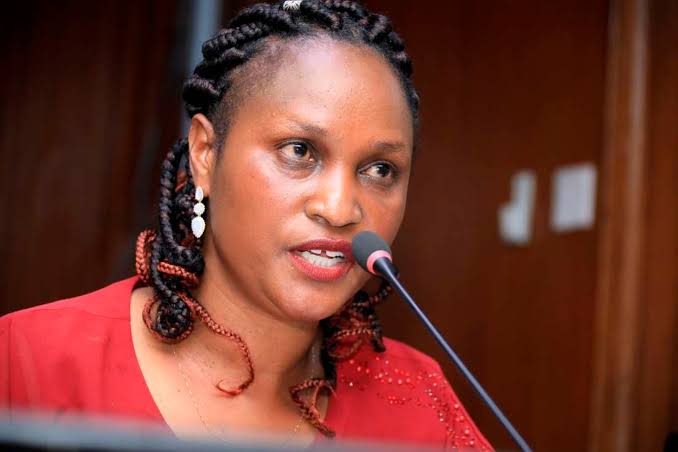
The NCIC said its investigations relate to various utterances allegedly made by Gachagua at public forums across the country on different dates — a broad formulation that gives investigators wide scope but also invites precisely the kind of double-standards accusation that DCP leaders were quick to deploy. Kirinyaga Woman Representative Njeri Maina went furthest in that direction. “When you see opposition people, you issue summons for arrest within 24 hours. When Wanga and Kaluma plan violence in Homa Bay, you stay silent,” she said. Whether or not the charge is accurate, it resonates with a segment of Kenyan public opinion that has grown deeply sceptical of the NCIC’s independence from political pressure — a scepticism that DCP is now deliberately cultivating as part of its broader positioning ahead of 2027.
The backdrop to yesterday’s events matters enormously. Gachagua did not choose Murang’a by accident. The town sits squarely in the political heartland of Kiharu MP Ndindi Nyoro, who earlier this week formally took over the leadership of the People’s Party of Kenya and declared his alignment with the opposition. Nyoro’s PPK launch at Safari Park Hotel on Monday was the most significant political development in the Mount Kenya region in months — and Gachagua’s decision to march through Murang’a town, open DCP offices there and rally supporters around the “One Mountain, One Party” message within days of that launch was a direct, if unstated, response. The choreography was deliberate: Gachagua was planting his flag on Nyoro’s turf.
Gachagua himself avoided naming Nyoro directly, which was itself a form of dismissal. He did not need to acknowledge a rival to communicate his position. “What party is this in the Mountain Kenya region? Is it DCP? Harambee DCP, harambee DCP,” he told the crowd — a rhetorical question designed to frame PPK’s presence in the region as so marginal as to be unworthy of engagement. He then reached for a metaphor that has become something of a signature: “When you begin a journey, don’t be distracted. If you say you are going from here to Mombasa, focus ahead — and also watch your back so you are not stabbed with a knife.” The warning was delivered with the practised ease of a politician who understands how to communicate menace through allegory.
DCP Secretary General and Nyandarua Senator John Methu was considerably less restrained. He accused President William Ruto of attempting to replicate the political tactics of former President Daniel arap Moi — specifically the 1992 strategy of fragmenting regional political formations to prevent a unified challenge to the incumbent. “You are planning to do the Moi thing of 1992 — trying to stop people from running for the presidency here in the Mountain. Let me tell you, forget that. They want to reduce our number of MPs,” Methu said. The Moi comparison is historically loaded in Kenyan politics. The 1992 election, the country’s first multi-party contest after years of single-party rule, saw the opposition split into multiple formations that collectively outpolled Moi but handed him victory through division. Whether or not the parallel is accurate, it is politically potent in a region with a long memory of electoral grievance.
Gatanga MP Edward Muriu went further still, offering the most direct political indictment of the session. “You have oppressed this community for many years. You started by removing Gachagua, then brought goons to destroy our businesses. As if that was not enough, you tried to divide us into East and West. Now you are bringing many parties to divide us. Our party is one and it is called DCP,” he said. The “East and West” reference speaks to a recurring tension within Mount Kenya political discourse — the sense that external actors have sought to exploit historical divisions between the Kirinyaga, Embu and Meru constituencies on one side and Murang’a, Nyeri and Kiambu on the other. Whether that division is organic or manufactured is a matter of genuine political dispute, but its invocation in Murang’a yesterday was a clear signal that DCP intends to make regional unity its central organising principle in the months ahead.
Murang’a Senator Joe Nyutu offered the most concise summary of the day’s political message. “We are one mountain, under one leader and one party, DCP,” he said. That formulation — simple, memorable, easily repeated — is not accidental. It is the product of a political operation that understands the value of a consistent slogan in a noisy information environment. Whether it survives contact with the complexity of Mount Kenya’s actual political landscape is another question.
That landscape is, in truth, considerably messier than DCP’s messaging suggests. Nyoro’s PPK, whatever its detractors say, has already attracted three county assembly members — two from Kiambu and one from Murang’a — within 48 hours of its launch. Matiang’i has signalled openness to engagement. Kalonzo Musyoka, Martha Karua, James Orengo and Edwin Sifuna have all been cited as consultation partners. The suggestion that PPK is merely a government-sponsored spoiler operation may or may not be accurate, but it is not the whole story. Nyoro is a serious politician with a genuine following, demonstrated constituency-level delivery and significant name recognition. DCP’s insistence on treating him as a non-entity is as much a tactical choice as a factual assessment.
The NCIC investigation adds a dimension that goes beyond the immediate political theatre. The commission’s mandate — to promote national cohesion and prevent hate speech and incitement — places it at the intersection of electoral politics and constitutional law. Its credibility depends on its demonstrated willingness to act consistently across the political spectrum. If the commission is seen to pursue opposition figures while overlooking equivalent or worse conduct by those aligned with the government, it will lose the moral authority that makes its interventions meaningful. DCP’s double-standards accusation, whatever its merits in this specific case, lands in a context of widespread public scepticism about independent institutions that has been building for several years.
For the broader 2027 picture, yesterday’s events in Murang’a are a microcosm of the political dynamics that will define the next twelve months. The Mount Kenya region — with its large voter population, its historical significance in Kenyan presidential arithmetic and its current state of intense political competition — is shaping up to be the decisive battleground of the next election. The region delivered a critical share of its vote to Ruto in 2022 through the UDA vehicle. If that vote splinters between DCP, PPK, UDA remnants and other formations in 2027, the outcome for the incumbent could be severe. If DCP consolidates it behind a unified opposition candidate, the arithmetic changes fundamentally.
Gachagua understands this better than almost anyone. His post-impeachment political project has been built on a single premise: that the Mount Kenya vote is a bloc that can be organised, directed and deployed to determine who governs Kenya. Whether that premise holds in an era of more fragmented, individualistic political behaviour — particularly among younger voters who are less susceptible to ethnic mobilisation than their predecessors — is the central question hanging over DCP’s strategy. Yesterday’s rally suggested that the machinery of community-based political organisation remains powerful. It did not resolve the question of whether that machinery alone is sufficient.
What is clear is that the election period has begun, the timelines are binding and the political competition in Kenya’s most contested region is already at a pitch that would normally be associated with the final weeks of a campaign rather than its opening days. The NCIC’s summons will be answered or defied. The courts will adjudicate. The voters will watch. And somewhere between Wamunyoro and Murang’a town, the shape of Kenya’s next government is beginning to emerge.
Similar Posts by The Mt Kenya Times:
- Mt Kenya Times ePAPER October 7, 2026
- Ruto signs KSh389B electric vehicle deal at State House
- Kenya mobilises KSh70B to fight Ebola as US and World Bank step in
- High Court freezes law school admissions over disputed entry rules
- Grade 11 textbooks head to schools as CBC transition gathers pace
About the Author