Ethiopia holds national elections as Abiy Ahmed seeks new mandate amid regional unrest
 The Mt Kenya Times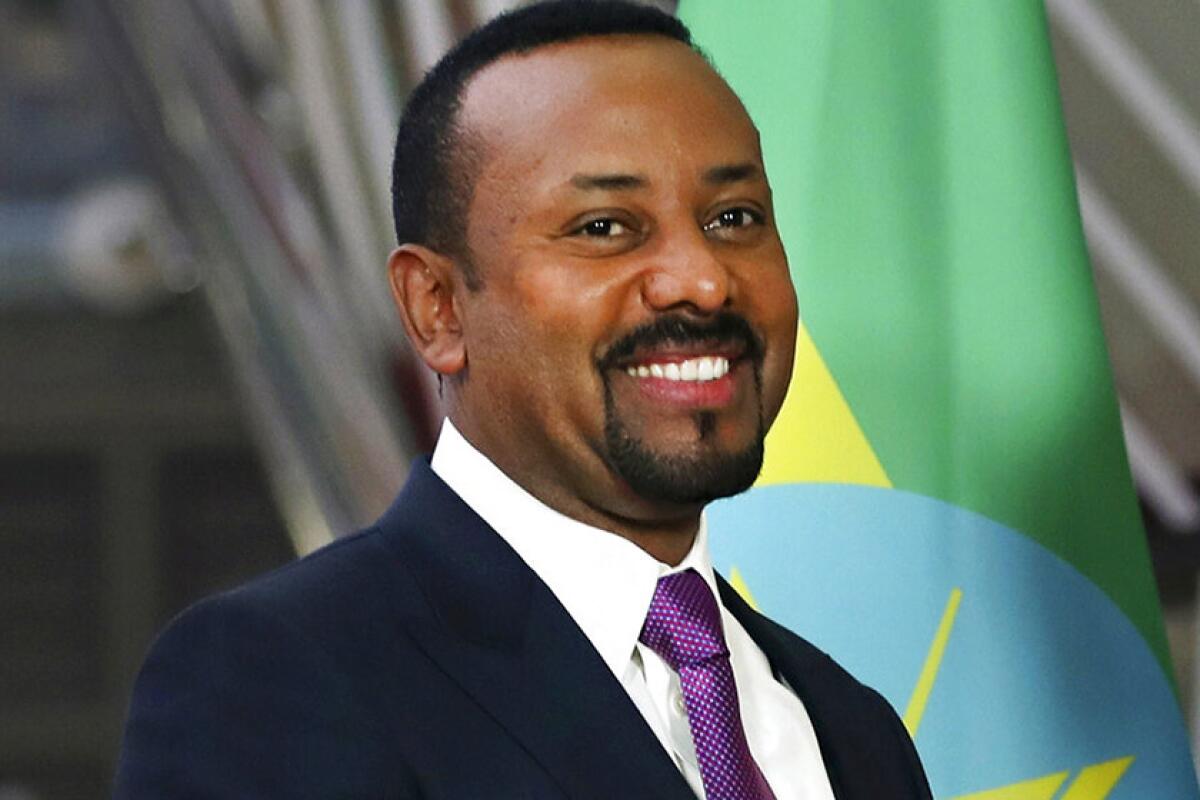
Prime Minister Abiy Ahmed
Polls open across most of the country as Abiy Ahmed’s Prosperity Party dominates the ballot, with voting blocked in Tigray and disrupted in Amhara and Oromia.
By Norman Mwale
Ethiopians headed to the polls on 1 June 2026 for the country’s seventh general election, a vote widely expected to extend Prime Minister Abiy Ahmed’s tenure even as insecurity and political fragmentation continue to test the federal system. The National Electoral Board of Ethiopia (NEBE) said polling stations opened at 6 a.m. local time across most of the country, with more than 54 million registered voters eligible to cast ballots for the 547-seat House of Peoples’ Representatives and regional councils.
NEBE Chairperson Melatwork Hailu told reporters that “all necessary preparations have been completed to ensure the successful conduct of a free and peaceful election,” adding that 52,029 polling stations were established nationwide. The board introduced a new digital voter and candidate registration platform, “Mirichaye” (“My Election”), developed with Ethio Telecom, to modernise administration and improve transparency. Special arrangements were put in place for internally displaced persons, members of the defence forces and students, while all non-essential workplaces were closed on polling day to facilitate turnout.
Prime Minister Abiy cast his ballot in his hometown of Beshasha in Oromia region and said Ethiopians “do not need anyone to advise or lecture them in order to build their state and establish a democratic system,” adding that “these next five years will be a period where we see many historic turning points for Ethiopia”. His Prosperity Party, which secured 410 out of 484 seats in 2021, fielded candidates for 461 of the 547 federal parliamentary seats, roughly 84 per cent of the total. The party has campaigned on its economic record, with officials projecting growth will top 10 per cent in 2026, one of the fastest rates on the continent.
A total of 42 political parties and 10,437 candidates contested the election at federal and regional levels. The Ethiopian Citizens for Social Justice party, Ezema, is among the main opposition groups, alongside the National Movement of Amhara and other regional formations. However, opposition parties have accused the government of restricting political space. “Opposition parties struggle against legal obstacles and leadership arrests, which they attribute to federal government meddling,” one analysis noted, though the government denies the claims.
Security concerns have overshadowed the vote. NEBE confirmed that 143 polling stations failed to open due to security-related problems, while voting was interrupted in “some constituencies of Amhara and Oromia”. Abiy faces insurgencies in Ethiopia’s two largest regions: fighting between government forces and the Oromo Liberation Army has killed hundreds in Oromia, while the Fano militia has seized swathes of countryside in Amhara since 2023, preventing voting in at least eight of the region’s 138 constituencies. Voting did not take place in the entire Tigray region, home to roughly six million people, which NEBE said had “unfavourable conditions” following the 2020 to 2022 civil war and continuing political turmoil.
International observers are monitoring the process. The head of the African Union Election Observation Mission, former Kenyan President Uhuru Kenyatta, said voting was “progressing smoothly”. NEBE accredited more than 220,000 party agents and 1,814 local and international journalists, and deployed independent grievance officers at polling stations.
The election takes place under Article 54 of the constitution, which mandates general elections every five years to enable citizens to choose their representatives. President Tayé Atske Selassie told parliament earlier this year that “the government will work responsibly to ensure that the national election to be held in our country this year is fair, peaceful, democratic, and credible among Ethiopians”.
Civil society groups and rights organisations have raised concerns about the broader environment. Critics argue that the government has “reversed gains in recent years by detaining journalists, shutting down civil society groups and overseeing military campaigns marked by atrocities,” charges the government denies, saying its actions are necessary to protect national security. Amendments to the electoral code in July, including a mandatory digital identification requirement for candidates, drew criticism from opposition parties, with the Freedom and Equality Party warning the law “could be misused”.
Results are expected by 11 June. Analysts predict a landslide for the Prosperity Party against a fragmented opposition weakened by internal rivalries, but note that the exclusion of Tigray and parts of Amhara, combined with ongoing conflicts in Oromia and Amhara, means millions remain disenfranchised. As one commentary put it, “a national vote alone cannot address all challenges in the country, but it can be a step toward democratic consolidation”.
Similar Posts by The Mt Kenya Times:
- 89 junior golfers chase glory at NCBA Lisle Shaw Championship
- Scaloni set to stay: Argentina coach to sign 2030 World Cup deal
- Mt Kenya Times ePAPER October 22, 2026
- Ruto heads to Harare for COMESA summit on trade and regional security
- Mudavadi and Wetangula walk out as Sifuna speaks at Nabwera memorial
About the Author