Colombian president refuses to accept first-round election results, alleging fraud without evidence
 The Mt Kenya Times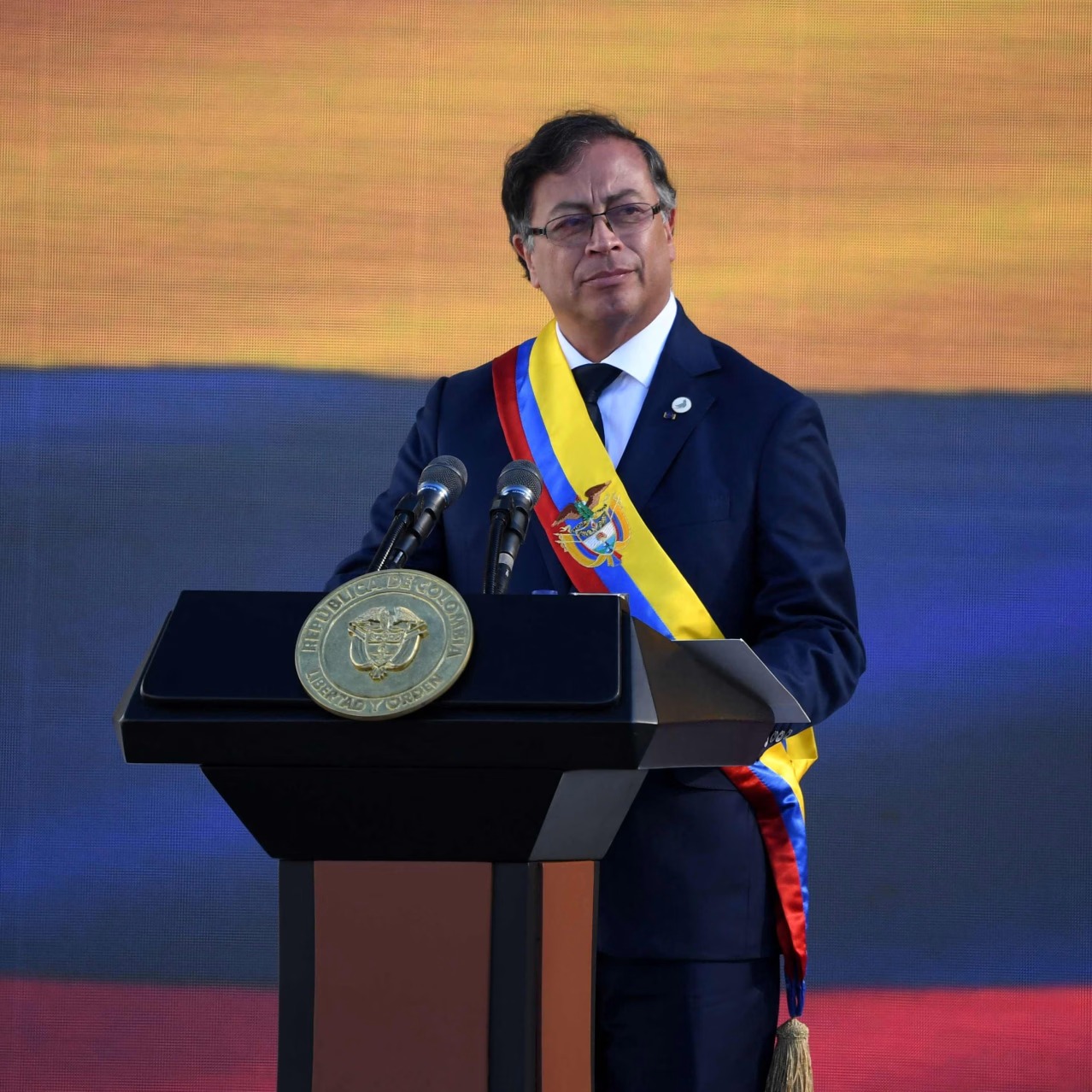
Colombian President Gustavo Petro
Petro rejects preliminary tallies, claiming manipulation and foreign interference as hard-right outsider De la Espriella leads ahead of a June run-off.
By Norman Mwale
In a dramatic rupture with electoral norms, Colombian President Gustavo Petro declared on Sunday that he “does not accept the results” of the first round of the country’s presidential election, claiming without presenting evidence that hundreds of thousands of ballots were manipulated and that foreign actors interfered in the vote. The rejection came moments after the National Civil Registry reported that hard-right outsider Abelardo de la Espriella had secured 43.7 per cent of the vote, ahead of Petro’s chosen successor, Senator Iván Cepeda, who took 40.9 per cent. With no candidate achieving the absolute majority required for an outright victory, the two men are scheduled to contest a run-off on 21 June.
Addressing supporters in Bogotá, Cepeda echoed the president’s position, stating that he would not comment on the outcome “until the vote-counting committees have fully, clearly, and thoroughly clarified this matter”. He told a crowd at the Hotel Tequendama that “atypical voting has occurred” at an unknown number of polling stations and said his campaign’s security and electoral observation mechanism was verifying the scale of the alleged irregularities. Petro went further on social media, writing that “the so-called count being transmitted is not legally binding” and alleging that the tally included “800,000 additional people” not in the official census. He also repeated earlier accusations that electoral software managed by Thomas Greg & Sons had been altered three times in the past week, claims the firm and the campaign of De la Espriella have denied.
The National Civil Registry stressed that the preliminary “pre-conteo” is for informational purposes only and has no legal standing, with the scrutinised results to be ratified by judges in the coming days. Independent analysts and Colombia’s neutral electoral observation mission, MOE, said they had found no evidence of software manipulation. International observers, including the African Union and the European Union, were present at polling stations across the country. Former Kenyan President Uhuru Kenyatta, head of the AU mission, had said voting was “progressing smoothly” earlier in the day.
De la Espriella, a lawyer who brands himself “El Tigre” and campaigned on a pledge to dismantle cocaine-fuelled armed groups, celebrated with his family in Barranquilla after nearly 99.97 per cent of votes were counted. “More than 10 million Colombians placed their trust in El Tigre and joined the pack,” he said, adding, “In 21 days, we are going to change the history of Colombia forever.” The right-wing candidate, who has described himself as a supporter of United States President Donald Trump, surged in the final weeks of the campaign after trailing Cepeda for months. Senator Paloma Valencia of the Democratic Centre, who finished third with 6.9 per cent, immediately endorsed De la Espriella, urging voters not to let “the new communism” continue.
Cepeda, the son of a murdered communist leader, has promised to continue Petro’s “total peace” policy of negotiating with guerrillas and criminal gangs, while expanding social investment and raising taxes on high-income earners. He has characterised De la Espriella as a representative of “mafia fascism”. De la Espriella counters that Cepeda would extend Petro’s ban on new oil projects and pursue economic policies that he says have fuelled record cocaine production and violence.
The dispute sets the stage for a deeply polarised run-off in a country grappling with rising violence, a booming cocaine trade, and fragile progress since the 2016 peace agreement. Colombia’s constitution bars Petro from seeking re-election, but his refusal to recognise the preliminary tally has injected uncertainty into the transfer of power. As of Sunday night, about 37 per cent of results had been certified, and the Registrar’s Office said the scrutinised count could take several days. Despite his rejection of the outcome, Cepeda acknowledged that the vote was “likely going to a second round” and told supporters, “We are going to win in the second round.”
Analysts note that the 700,000-vote gap between the two frontrunners is unlikely to be overturned in the scrutiny, yet the allegations have already raised tensions. The UN Verification Mission in Colombia, which was restructured last year following the attempted assassination of a presidential candidate, has called on all parties to ensure a safe environment free of violence and stigmatisation ahead of the June ballot. With voter abstention at 42.1 per cent and armed groups still active in several regions, the coming weeks will test Colombia’s institutions and the public’s faith in its democratic process.
Similar Posts by The Mt Kenya Times:
- Mt Kenya Times ePAPER October 24-25, 2026
- Muturi calls on IEBC to keep election technology tender clean and on schedule
- Ruto meets UAE minister in push to deepen trade ties
- Gideon Moi breaks silence on Ruto fallout, cites broken promises
- The doctor who refused to abandon a sick Uganda
About the Author