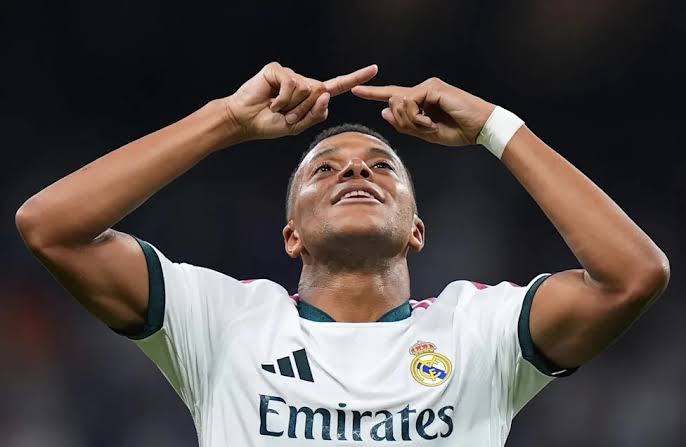
Kylian Mbappé
A Paris appeals court awards the French club €60,000 in damages — a symbolic win after years of bitter legal warfare with their former star.
By Andalo Christine Ingutia
Kylian Mbappé has been ordered to pay Paris Saint-Germain €60,000 in compensation after a Paris Court of Appeal ruled yesterday that a legal manoeuvre by the French striker caused real financial harm to his former club. The ruling marks the latest development in a multi-year dispute that began when Mbappé left PSG for Real Madrid on a free transfer in 2024.
The case has its roots in the circumstances of Mbappé’s departure. PSG withheld his final three months’ wages after his contract expired and he joined Real Madrid without a transfer fee. The club claimed Mbappé had verbally agreed that PSG would not suffer financially if he left for free. Mbappé’s legal team rejected that argument, citing French labour law, which requires any contract amendment waiving salary to be set out in writing. No such document existed.
The Paris labour court sided with Mbappé in December 2025, ordering PSG to pay him approximately €61 million to cover unpaid wages, a signing bonus, paid leave, and an ethics bonus. Mbappé’s team had sought to expand the claim to more than €260 million, accusing the club of psychological harassment and deliberately isolating him from first-team activities. The court dismissed those additional claims.
The dispute took a sharper turn in the spring of 2025 when Mbappé’s legal team obtained a conservatory order freezing €55 million in PSG’s accounts for 45 days. The move, a procedural mechanism used to secure funds pending a ruling, caught the club off guard. PSG argued the sudden asset freeze disrupted its liquidity and forced it to arrange a credit line to meet normal financing obligations while the funds remained inaccessible.
The appeals court agreed that the freeze had created genuine financial cost for the club. Ruling on 14 September 2026, it ordered Mbappé to pay €60,000 in compensation for that disruption. However, the court drew a firm line there. PSG’s additional claims — for moral damage and harm to its image and reputation — were rejected in full.
The €60,000 award represents a fraction of the damages PSG had originally sought. For a player of Mbappé’s earning power, the sum is financially negligible. But the ruling carries symbolic weight. It is the first time a court has found against Mbappé in this protracted dispute, and it gives PSG a measure of legal vindication — however modest — after years of costly and reputationally uncomfortable litigation.
The broader context matters. Mbappé’s exit from PSG was one of the most turbulent departures in European football in recent memory. Relations between player and club had deteriorated sharply in his final year, with reports of training exclusions, public standoffs over contract negotiations, and mutual accusations aired through lawyers and the press. The legal proceedings that followed his departure have kept the dispute alive long after he pulled on a Real Madrid shirt.
For PSG, yesterday’s ruling offers partial closure. The club had sought broad damages — financial, moral, and reputational — and received only a narrow slice. The court’s refusal to award moral damages or acknowledge reputational harm suggests judges were unwilling to extend the ruling beyond what could be directly and quantifiably attributed to the asset freeze.
For Mbappé, the outcome is a minor setback in proceedings that have otherwise gone largely in his favour. The December 2025 labour court ruling — ordering PSG to pay him €61 million — remains the defining judgment of this dispute. Yesterday’s €60,000 award to PSG does not alter that picture materially.
What the ruling does confirm is that the conservatory freeze, while ultimately a successful legal tactic in securing Mbappé’s wage claim, was not without consequence. Courts will not allow procedural instruments to be deployed cost-free when they demonstrably disrupt the operations of the opposing party.
The legal battle between one of world football’s most recognisable players and one of its wealthiest clubs has run for years, consumed millions in legal fees on both sides, and generated headlines across Europe. Yesterday’s ruling may not be the final chapter — but it signals the dispute is, at last, approaching its conclusion.
Similar Posts by The Mt Kenya Times:
- JJ Gabriel asks to leave Manchester United
- Why emotional intelligence matters more than academic scores
- Mt Kenya Times ePAPER September 15, 2026
- Court ruling clips Kenyatta’s wings at the worst possible moment
- Ruto takes the sponsor war to Nyanza — and finds a warmer welcome than his opponents expected
About the Author