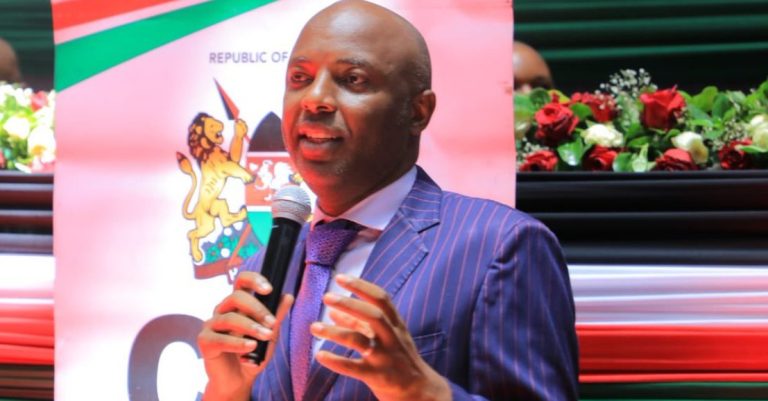
Gachagua must end political bullying, Muturi warns as opposition unity fractures
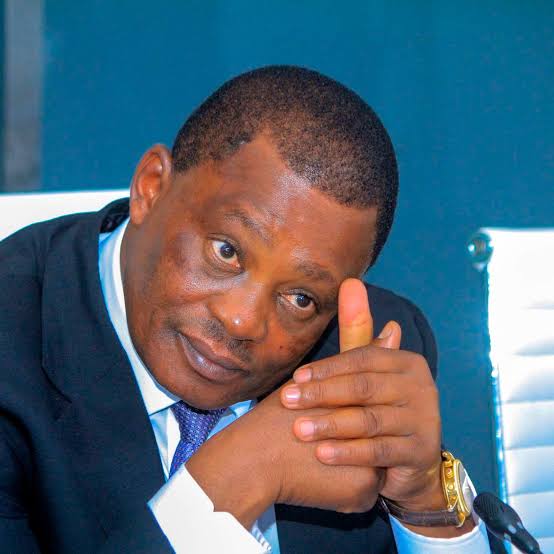
Democratic Party leader Justin Muturi
Democratic Party leader Justin Muturi accuses the former Deputy President of intimidation and double-speak, warning that no single community or individual can claim ownership of Kenya’s presidency or its fragile opposition coalition.
By James Mwangi
Democratic Party leader Justin Muturi on Monday delivered his sharpest public rebuke yet of former Deputy President Rigathi Gachagua, accusing him of political bullying, intimidation and systematically undermining the opposition unity that Kenya’s anti-government coalition must maintain if it is to mount a credible challenge to President William Ruto in the August 2027 General Election.
In a strongly worded statement issued on Monday, Muturi — a former Attorney General and Speaker of the National Assembly — called on Gachagua to abandon what he described as double-speak and attempts to dominate partner political parties, warning that the opposition’s presidential ambitions could not survive if one individual was allowed to dictate terms to everyone else.
“Mr Gachagua must understand one fundamental truth: no Kenyan President has ever been made by one community alone,” Muturi said. “The presidency is won through national consensus, strategic alliances and the ability to unite Kenyans across ethnic and regional boundaries.”
The statement is the most direct and public challenge yet to Gachagua’s growing authority within the opposition, arriving at a moment of acute sensitivity for a coalition struggling to reconcile competing presidential ambitions, regional interests and questions of party identity ahead of one of Kenya’s most consequential elections in recent memory.
At the heart of Muturi’s intervention is a dispute over the tripartite arrangement that Gachagua has been advocating as the structural basis for opposition cooperation. The former Deputy President has argued that dividing the opposition into three political formations would create a coherent governing framework and strengthen the coalition’s hand against Ruto. Muturi was blunt in his rejection of that logic. “A tripartite arrangement is not a magic formula for State House,” he said. “Fragmenting an opposition that needs unity raises serious questions about the political direction being pursued.”
He went further, questioning whether Gachagua was genuinely committed to the collective goal of capturing the presidency or was instead using the opposition umbrella as cover to secure parliamentary seats, county positions and regional influence for himself and his allies. “Is the objective to win the presidency or to control MPs, legislators and devolved units while sacrificing the bigger national ambition?” he asked — remarks that will have landed with considerable force within Gachagua’s inner circle.
Muturi also reached into political history to reinforce his argument, invoking the memory of Gachagua’s late brother, former Nyeri Governor Nderitu Gachagua, as evidence that political alliances carry no guarantees of regional loyalty. He recalled that Nderitu won the Nyeri gubernatorial race against The National Alliance — the party associated with former President Uhuru Kenyatta — despite the Grand National Union backing Kenyatta’s formation at the time. The implication was deliberate and pointed: no individual or party holds permanent title over any region’s political support, however confidently they may claim it.
“Let it be clear: no individual owns the United Opposition, and no community has a monopoly on Kenya’s presidency,” Muturi said. “Political partnerships must be built on mutual respect, not ultimatums, political bullying or supremacy contests.”
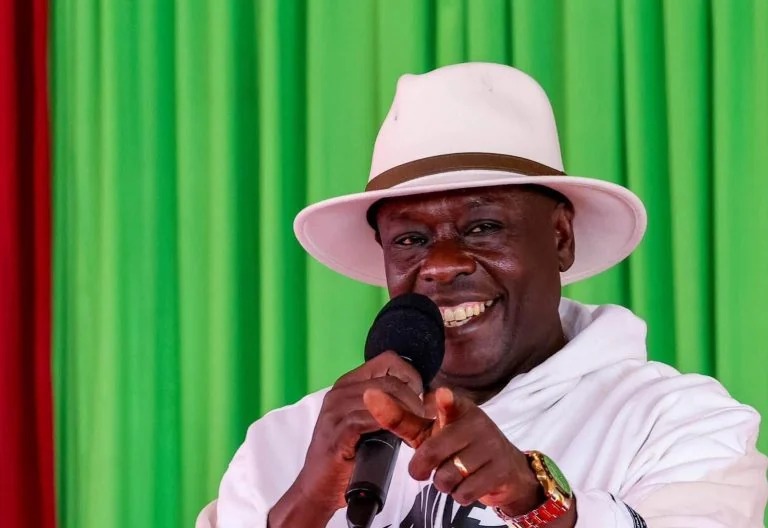
These are not diplomatic words. They are words chosen to sting, and they reflect the depth of frustration that has been building within sections of the opposition since August 2026, when Muturi joined Party of National Unity leader Peter Munya and Devolution Empowerment Party leader Lenny Kivuti in publicly rejecting Gachagua’s calls for smaller opposition parties to dissolve and merge into his Democracy for the Citizens Party. The three leaders accused Gachagua then of belittling his coalition partners and attempting to dictate their political futures. They insisted that opposition cooperation did not require parties to surrender their individual identities, and that alliances must be grounded in equality, trust and institutional respect — not absorption.
Gachagua had argued that parties seeking relevance in opposition negotiations should demonstrate genuine grassroots strength, positioning DCP as the vehicle capable of fielding candidates nationally and anchoring a credible presidential bid. His critics interpreted those arguments as thinly veiled pressure on smaller parties to fall into line or face marginalisation. Monday’s statement from Muturi suggests that interpretation has hardened into conviction.
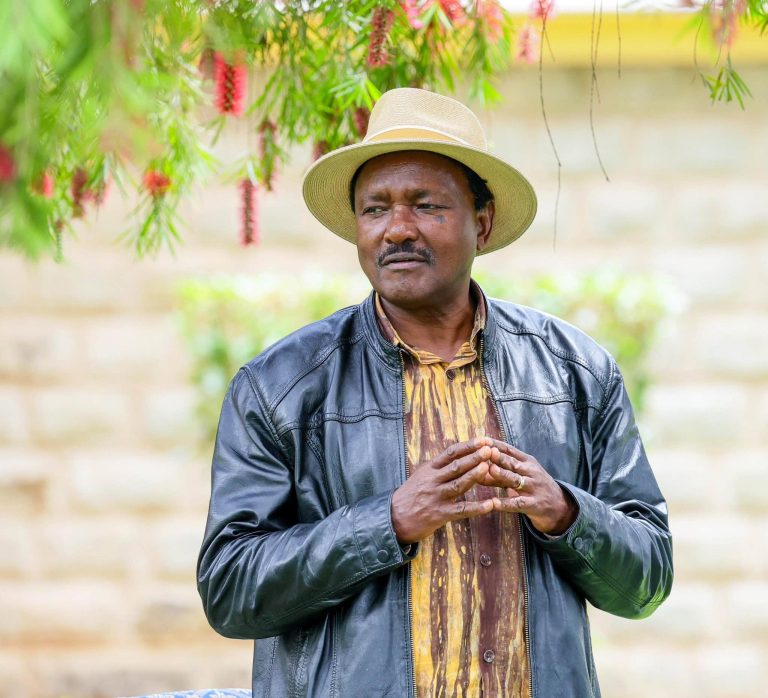
The immediate backdrop to the confrontation is the increasingly urgent and unresolved question of who will carry the opposition’s presidential banner in August 2027. On 26 October, Gachagua hosted Wiper Patriotic Front leader Kalonzo Musyoka at his Wamunyoro residence in Nyeri, where the two leaders reaffirmed their commitment to backing a single presidential candidate and pledged that the opposition would make the necessary sacrifices to agree on a joint flagbearer. The meeting followed separate engagements between Gachagua and Nairobi Senator Edwin Sifuna of the Linda Mwananchi movement, whose 13 November National Delegates Conference is expected to clarify that formation’s coalition strategy and potentially sharpen the timeline for a presidential candidate decision.
Taken together, these engagements reveal an opposition that is simultaneously drawing closer together on rhetoric and pulling itself apart on substance — united by its opposition to Ruto’s administration, but divided by questions of leadership sequencing, party hierarchy, regional entitlement and the distribution of political reward when power is eventually won or lost.
Muturi and his allies have been careful to frame their criticism as internal correction rather than a clean break. They say they remain committed to the broader opposition project. But the language he deployed on Monday — bullying, intimidation, ultimatums, supremacy contests — is not the language of an alliance in rude health. It is the vocabulary of a coalition under real strain, one in which trust is depleting faster than strategy is advancing, and in which the gap between public declarations of unity and private calculations of advantage is widening by the week.
With less than nine months before Kenya’s political formations must begin the formal business of candidate selection and party nominations, the opposition faces a defining test of character. It can find a mechanism for resolving its internal disputes with the discipline and maturity the moment demands — or it can allow personal rivalries, ethnic arithmetic and individual ambition to fracture a movement that, united, would represent a formidable threat to an incumbent administration facing its own mounting pressures.
Muturi’s warning to Gachagua was personal, public and unambiguous. Whether it will be heeded — or whether it simply deepens the very divisions it has sought to address — may well determine the opposition’s fate long before a single vote is cast in August 2027.
Similar Posts by The Mt Kenya Times:
- Mt Kenya Times ePAPER November 3, 2026
- Kang’ata: ‘I turned down the Deputy President’s job — it was a trap’
- World Bank’s KSh26B project to restore Kenya’s degraded landscapes and transform 750,000 lives
- Wiper sets final deadline for 2027 aspirants as Kenya’s electoral race begins in earnest
- Kalonzo draws his line in the sand
About the Author