Gold beneath the ground, danger above it: How long will Kenya ignore the risks facing artisanal miners?
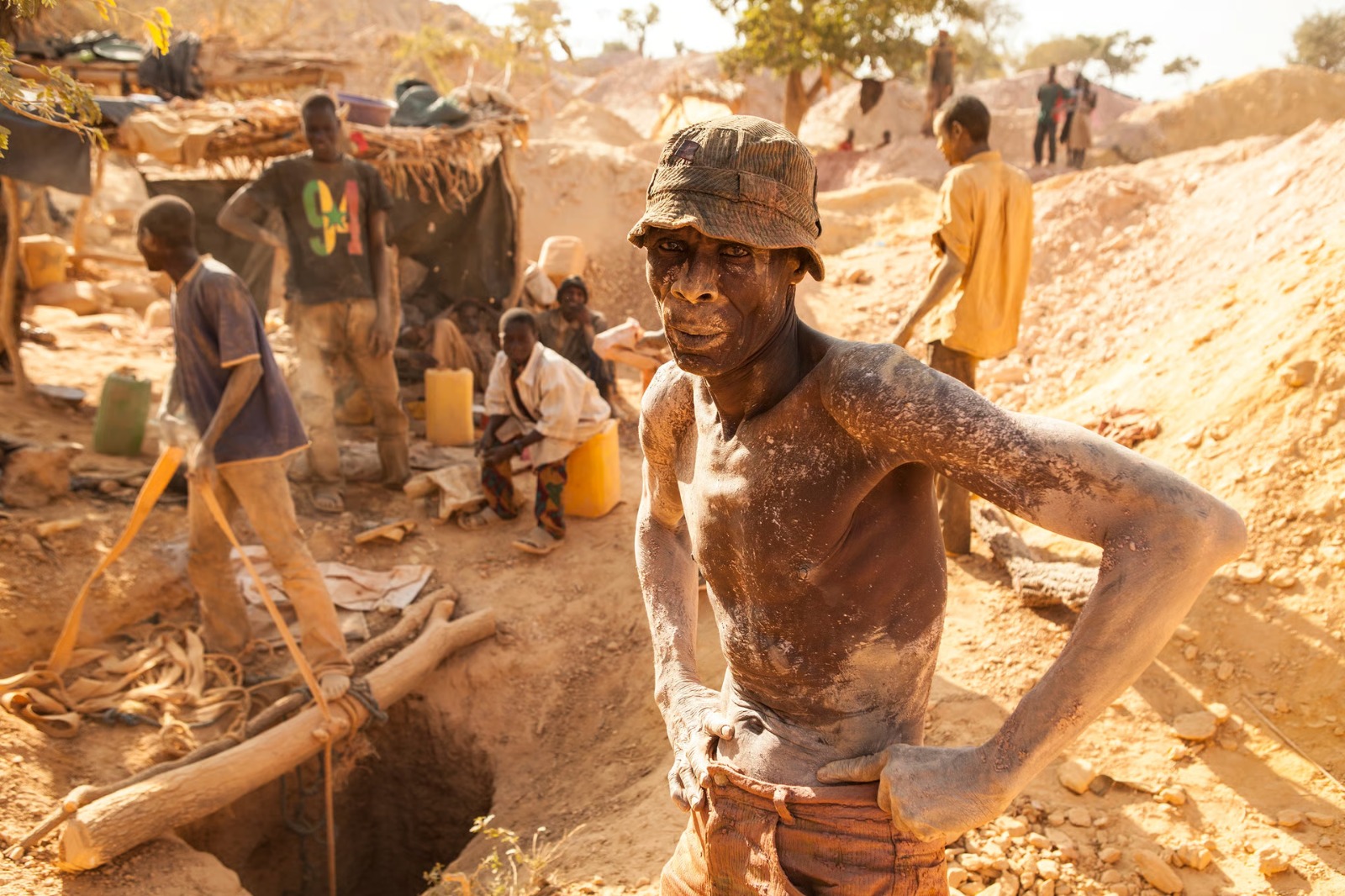
Artisanal miners
Gold beneath the ground, danger above it: How long will Kenya ignore the risks facing artisanal miners?
Two collapses in one month expose a pattern of neglect that is costing lives in Kenya’s gold-mining communities.
By Collins Kibet
What happens when the ground beneath a community becomes more dangerous than the poverty it is trying to escape? That question confronted Kenya again yesterday after a gold-mining site at Osiri-Matanda in Nyatike, Migori County, collapsed, with two residents feared trapped underground as rescue teams worked to locate them. Several residential and commercial structures sank into underground mining shafts after the ground gave way shortly before midnight. The full extent of casualties and damage remained unclear as operations continued.
For the people of Osiri-Matanda, gold is not simply a precious mineral. It is school fees, food, rent and hope. For generations, artisanal and small-scale mining has sustained communities where formal employment is scarce. But when homes, hotels and businesses can vanish into abandoned or active underground shafts, an uncomfortable question becomes unavoidable: how much risk should ordinary Kenyans absorb simply to survive?
The latest collapse is particularly alarming because the danger was not confined to miners working below ground. Residential apartments and commercial establishments — including a hotel and a gaming lounge — sank into the shafts. The incident occurred at around 11pm, when many residents were asleep. The Nyatike Small-Scale Gold Miners Association said the number of people inside the affected structures had not been immediately established.
That detail changes the conversation entirely. This is no longer only about miners descending into dangerous shafts in search of gold. It is about entire communities living and working above unstable underground workings. When the earth becomes unreliable, a neighbourhood can become a danger zone without warning.
The immediate priority remains the rescue operation. Migori County’s disaster management team was deployed to Matanda Mines, while authorities urged the public to stay away from the affected area. The families of those feared trapped are waiting for answers, and every minute counts.
But once the rescue concludes, Kenya must resist the familiar temptation to let the incident fade. There will be condolences, official statements and perhaps an investigation. Then, as memories dim, mining resumes and the cycle repeats. That pattern cannot be allowed to continue.
This is not the first warning this month. Earlier, two miners died after a shaft collapsed in Kowidi Location, Rachuonyo South Sub-County, Homa Bay County. Witnesses and police reported the shaft walls gave way while the men were underground; both later died in hospital from their injuries.
Two separate incidents within weeks of each other demand serious national reflection. Are mining shafts being properly inspected? Are hazardous sites identified and secured before tragedy strikes? Are communities informed about the dangers of building homes and businesses above active mining areas? Are miners receiving the technical support and protective equipment they need? And when regulations are violated, who is held to account?
These are not rhetorical questions. Artisanal mining operates within a harsh economic reality. Telling poor communities to stop mining without offering alternative livelihoods does nothing to address the underlying problem. For many families, the shaft is not a speculative gamble — it is how they put food on the table.
The challenge is therefore not to choose between safety and livelihoods. Kenya needs to make mining safer while ensuring communities genuinely benefit from the resources beneath their land. Regulation must not exist only on paper. It must be visible at the mining face, where lives are actually on the line.
Government agencies, county authorities and local communities all have roles to play. Mining areas must be properly mapped, hazardous shafts identified and secured, and construction around unstable ground controlled. Rescue teams need specialist equipment capable of responding rapidly to underground emergencies. Miners need training in ventilation, structural stability, protective gear and emergency procedures.
The issue extends well beyond Migori. Kenya’s mineral wealth spans many counties, offering real potential for employment and development. But natural resources become a curse when the pursuit of wealth consistently outpaces the protection of human life.
There is also a distributional question that must be asked plainly. Who benefits when the gold comes out of the ground? If local communities bear the greatest risks while receiving the smallest share of the returns, Kenya has a development failure that cannot be papered over by celebrating mineral output. Mining should generate safer jobs and sustainable economic opportunities — not collapsed structures, injured workers and bereaved families.
The tragedy at Osiri-Matanda must therefore become a national conversation about responsible mining. Kenya cannot keep treating mining accidents as isolated incidents when the same dangers repeatedly surface across its gold-producing regions.
There is nothing wrong with a young Kenyan seeking a livelihood from the country’s natural resources. There is nothing wrong with communities pursuing prosperity from minerals beneath their land. But there is everything wrong with allowing economic desperation to drive people into conditions where a day’s work can become their last.
Gold may be valuable. Human life is priceless. No ounce of gold is worth more than the person who risks everything to extract it.
As rescue teams continue searching at Osiri-Matanda, the country waits. But after the rescue, Kenya must do more than count victims and assess damage. It must investigate what went wrong, identify the failures that allowed the danger to develop, and take concrete steps to prevent the next collapse.
The real test is not how Kenya responds today. The real test is whether the country still remembers tomorrow.
Similar Posts by The Mt Kenya Times:
- The Samaritan
- Kingdom Bank charts new path for MSME growth through chamber partnership
- Mt Kenya Times ePAPER September 25, 2026
- Babu Owino’s party predates Linda Mwananchi, clarification shows
- Anglican church tells Kenyans: The country is getting worse and silence is complicity
About the Author