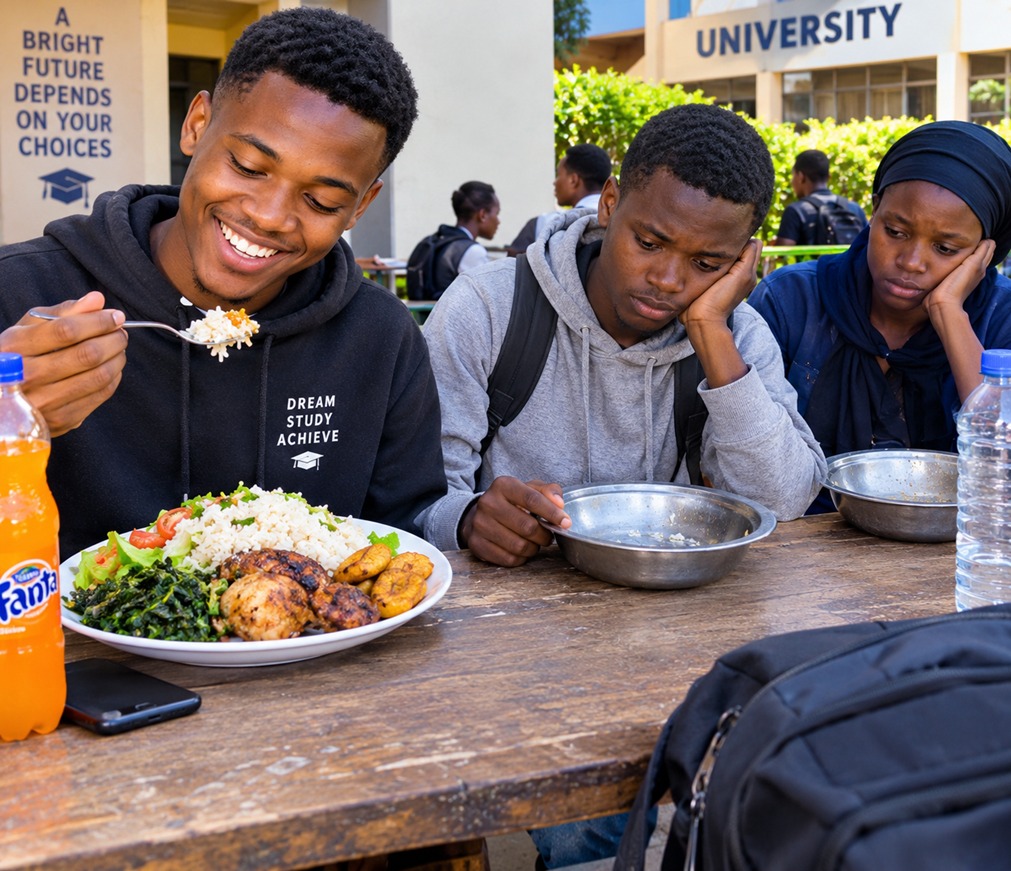
For many Kenyan students, campus life is a daily negotiation between survival and social belonging.
By Nicholas Mwendwa
Rising commodity prices have made university life increasingly difficult for students from modest backgrounds — and the gap between those who have and those who do not has never been more visible on campus.
While some students move through university comfortably, others skip meals, wear the same clothes and watch peers flaunt smartphones and laptops they can only dream of owning. That daily contrast breeds something corrosive: pressure to appear equal to people whose circumstances bear no resemblance to your own.
Peer pressure in Kenyan universities is no longer simply about behaviour. It is fundamentally about money. The desire to fit in drives some students to overspend, make poor financial decisions and in extreme cases pursue unethical means to fund lifestyles they cannot honestly afford. When a student skips lunch to save money while a roommate orders takeaway, the psychological weight of that difference is real and cumulative.
Food, clothing, accommodation and personal gadgets have become informal measures of social standing. Students who cannot meet those unspoken standards often withdraw, lose confidence or make choices that damage their academic prospects and personal integrity.
The antidote is not simple, but it begins with honesty. Students must learn to live within their means, resist comparisons fed by social media and choose friendships that are grounded in substance rather than spending power. Universities and student welfare offices also carry responsibility — financial counselling, mental health support and peer mentorship programmes should be standard, not optional.
A degree is worth more than the lifestyle surrounding it.
Similar Posts by The Mt Kenya Times:
- Optimizing traffic flow at urban intersections and methods for reducing congestion
- Kenya as a global nation
- Laikipia students swap lectures for Ingwamiti Hills
- We told our children to study, but where are the jobs?
- Kenya’s research reactor: A bet on knowledge and self-reliance
About the Author