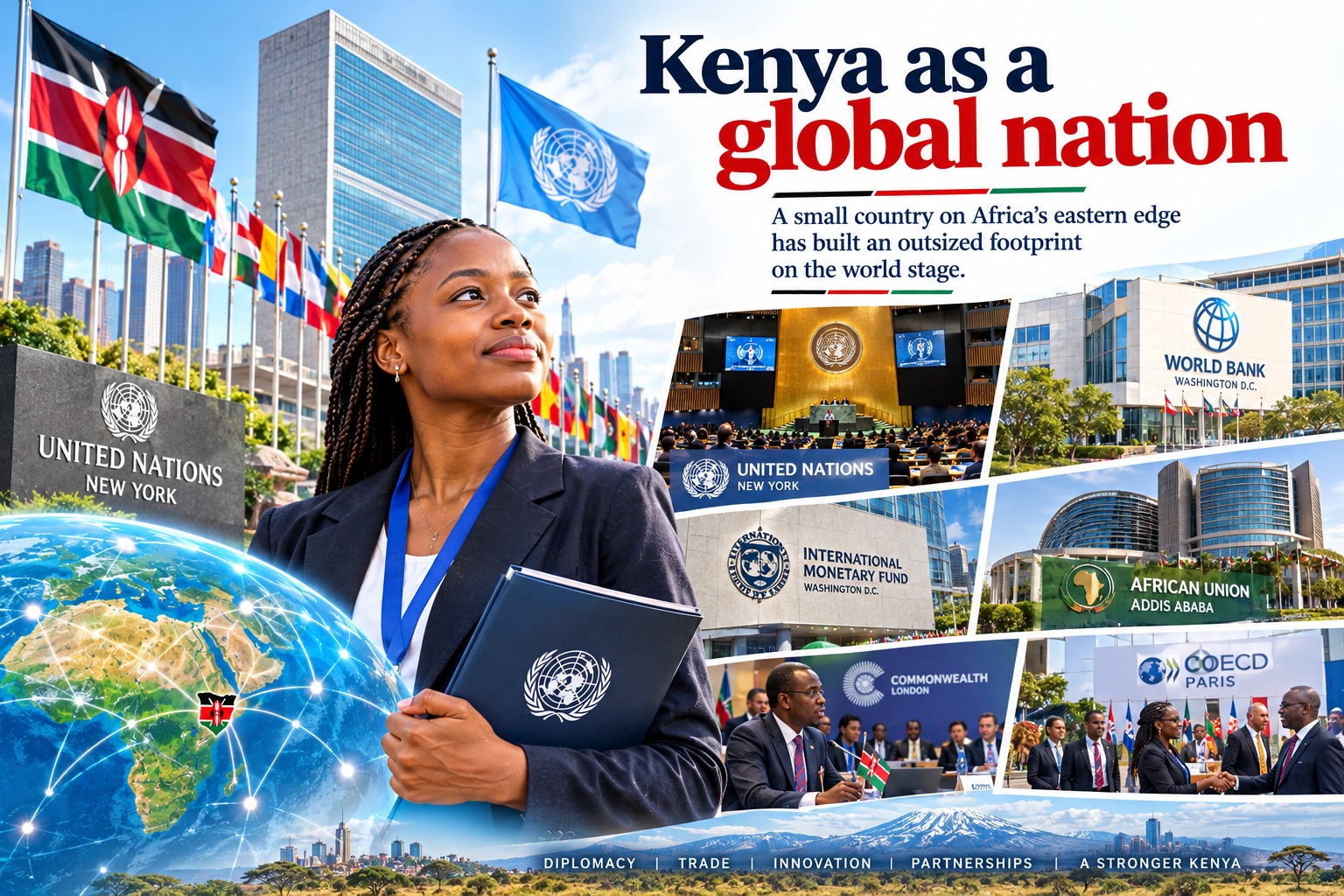
A small country on Africa’s eastern edge has built an outsized footprint on the world stage.
By Sofi Emelda
Kenya punches well above its weight. For a developing nation without superpower status or vast oil reserves, its global reach — through technology, diplomacy, sport, culture and trade — is remarkable and still growing.
The clearest proof is M-Pesa. Launched by Safaricom in 2007, the mobile money platform solved a problem that banks had ignored for decades: financial exclusion. It spread rapidly across Africa and is today studied at Harvard as a model of homegrown innovation. What began as a local fix became a global template.
Kenya’s diaspora extends that reach further. Kenyans working as doctors, nurses, engineers and teachers across the United States, United Kingdom, Canada and the Gulf send home billions in remittances annually while carrying Kenyan culture — language, food, fabric — into communities worldwide. The late Barack Obama Sr, father of a former US president, came from Kogelo in Siaya County. Kenya’s human export has quietly shaped global leadership.
On diplomacy, Kenya’s record is substantive. Nairobi is the only city in the developing world hosting a United Nations headquarters, home to both UNEP and UN-Habitat. Kenyan peacekeepers have served in Haiti and Somalia, while the country has played a sustained role in peace negotiations for South Sudan and the Democratic Republic of Congo.
Then there is sport. When Eliud Kipchoge broke the two-hour marathon barrier and Faith Kipyegon shattered world records, the Kenyan flag rose in stadiums across the globe. Athletics has made Kenya synonymous with excellence and endurance.
The true map of Kenya is not drawn on paper. It is drawn in the world.
Similar Posts by The Mt Kenya Times:
- Optimizing traffic flow at urban intersections and methods for reducing congestion
- Hardship and peer pressure in universities
- Laikipia students swap lectures for Ingwamiti Hills
- We told our children to study, but where are the jobs?
- Kenya’s research reactor: A bet on knowledge and self-reliance
About the Author