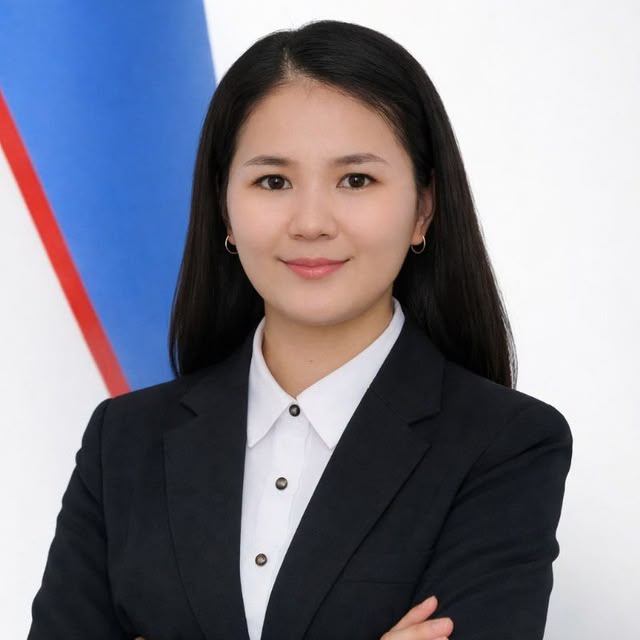
Muslima Topvoldiyeva

**Alfraganus University, Faculty of Medicine**
**Pharmacy Department, 2nd-year student**
**Muslima Topvoldiyeva**
### **Abstract**
Lemon (*Citrus limon*) is a fruit that grows in tropical and subtropical climates, usually yellow in color, with a sweet and sour taste.
Lemon belongs to the citrus fruit family and has unique properties that are widely used in various fields, including cooking, medicine, and cosmetology.
Lemon mainly originates from South Asia, particularly India, China, and Malaysia. It belongs to the *Citrus* family, which also includes oranges, grapefruits, and limes, growing in many tropical and subtropical regions.
Although the exact history of lemon is uncertain, it is believed to have existed in India and China around 2000 BCE.
### **Historical Background**
1. **China and India**: India and China are considered the primary sources of lemons. They have been used for centuries as food and medicine.
2. **Islamic Empire and Arabs**: Lemons were introduced to the Arabian Peninsula in the 10th century. Through Arab traders, they spread throughout the Middle East and North Africa.
3. **Introduction to Europe**: Lemons were brought to Europe by Arabs and initially played a significant role in agriculture. Christopher Columbus introduced them to the Americas in the 15th century.
### **Key Properties of Lemon**
1. **Composition**: Lemon primarily contains water, vitamin C (ascorbic acid), carbohydrates, potassium, and flavonoids. Its juice contains antioxidants that help protect cells from free radicals.
2. **Health Benefits**:
– **Boosts Immunity**: Due to its high vitamin C content, lemon strengthens the immune system.
– **Detoxification Effect**: Helps cleanse the body of toxins.
– **Strengthens Bones**: Contains calcium and magnesium, which improve bone strength.
– **Heart Health**: Flavonoids and other biologically active substances in lemon help maintain cardiovascular health.
3. **Culinary Uses**: Widely used in the food industry to add acidity and sweetness. It is used in drinks, desserts, sauces, salads, and other dishes.
4. **Cosmetic Uses**: Lemon’s antibacterial and whitening properties make it useful in skincare. Lemon masks and creams help cleanse, brighten, and rejuvenate the skin.
5. **Detoxification**: Helps remove toxins from the body and supports liver and kidney function.
6. **Digestion**: The acids in lemon stimulate gastric juice production, aiding digestion and bowel movement.
7. **Stress Reduction and Mood Enhancement**: The scent and taste of lemon can improve mood and reduce stress.
8. **Weight Management**: Drinking lemon water can help regulate body weight by stimulating metabolism.
### **Lemon Varieties and Cultivation**
Lemon (*Citrus limon*) belongs to the Rutaceae family and is a perennial evergreen fruit tree. It originates from South and Southeast Asia.
It is cultivated in the Mediterranean region, the USA, Mexico, Argentina, and along the Black Sea coasts of the Caucasus, as well as in Uzbekistan and Tajikistan in greenhouses and trenches.
Uzbekistan began cultivating lemons in trenches in 1949, but this method was initially unsuccessful. However, since the 1960s, greenhouse lemon cultivation has been successfully established, leading to a flourishing lemon-growing industry in Uzbekistan.
Currently, four varieties of lemon are grown in the country, and Uzbek lemons are exported to Afghanistan, Kazakhstan, Kyrgyzstan, UAE, Russia, and Ukraine.
One notable variety, **Meyer Lemon**, is a natural hybrid of lemon and orange. It is a slow-growing tree, with or without thorns, that starts bearing fruit in 2–3 years. Its fruits ripen in October and come in various shapes, including oval, round, or pear-shaped.
Meyer lemons do not store for long periods but produce abundant harvests every year. They retain their vitamins even when stored or processed, making them a valuable fruit.
The variety was officially registered in China and included in the national registry in 2015. It is recommended for cultivation throughout Uzbekistan.
Lemon is cherished worldwide for its many beneficial properties.
By: Muslima Topvoldiyeva
Tashkent City
Alfraganus University
Faculty of Medicine
Pharmacy Department
2nd-year student
Achievements:
1st place winner in Zakovat
Winner of several scientific articles
Member of the “New Renaissance” Club
### **References**
1. Kulkov O.P., Mukhamedov Sh.Z. *Subtropical Plants of Uzbekistan*, 1968.
2. Fakhriddinov Z. *Tashkent Lemon*, 1969.
3. Uzbek National Encyclopedia, Volume 1, Tashkent, 2000.
Similar Posts by The Mt Kenya Times:
- Mt Kenya Times ePAPER September 19-20, 2026
- Kenya joins US and UK to put citizens on the terrorism frontline
- Kenya’s parliament races to tame the AI frontier
- Kalonzo calls Ruto to order over Uhuru attacks
- Gachagua takes his 2027 campaign to America
About the Author