An official explaining to stakeholders during the forum

By MKT Correspondent
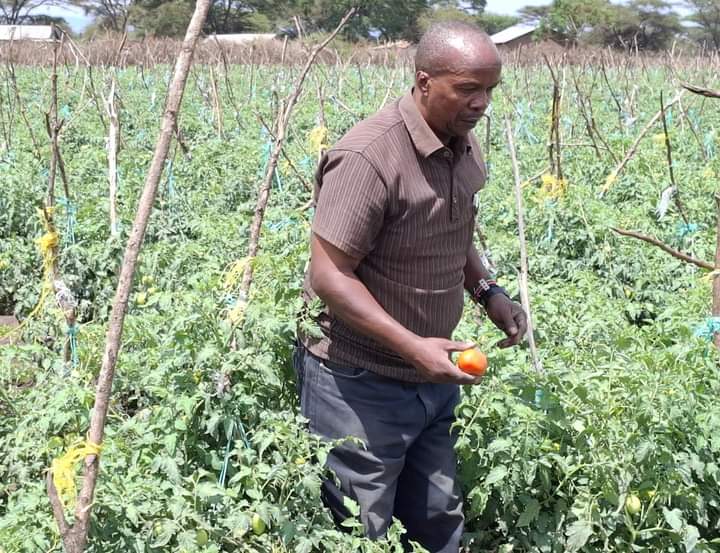
Five years ago, the government launched the Korea-Africa Food and Agriculture Initiative (KAFACI) to enhance tomato production and address a deficit of 200,000 metric tonnes.
In partnership with the Kenya Agricultural and Livestock Research Organisation (KALRO), the project focuses on validating improved tomato varieties, agronomic practices, and pest management.
With activities spanning Kiambu, Kirinyaga, Kajiado, Garissa, Bungoma, and Busia Counties, the initiative aims to improve post-harvest handling and value addition.
Dr. Lusike Wasilwa, Director of Crop Systems at KALRO, highlighted the importance of tomatoes, where each household consumes the vegetable in at least two meals every day.
Despite over 300 tomato varieties in Kenya, challenges like poor seed quality and pest threats, including the invasive ‘tuta absoluta,’ hinder local farmers from meeting demand.
“We have over 300 varieties of tomatoes in Kenya, and KALRO is still improving and breeding new ones and currently working on identification of the best irrigation practices for tomato production,” she said.
“We are doing our best to ensure we have the best technologies for tomato production. We have had lots of pests and diseases affecting this crop and are having different control mechanisms that are organic where farmers do not spray so much,” she said, giving an example of using the hedge system.
With 500,000 tomato farmers struggling to produce the average yield of 8.8 metric tonnes per acre (compared to the potential 20 MT), the country often relies on imports from neighbouring nations.
“Production of tomatoes is largely constrained by the high cost of certified seeds, limited skills on seed establishment, pests, and diseases, poor post-harvest management practices, as well as a low technology adoption rate among the smallholder farmers who are the majority of producers,” she added.
Dr. Wasilwa emphasized the need for better technologies, including greenhouse systems and button drip irrigation, which help manage resources efficiently and can triple financial outputs.
With advancements in pest and disease control methods, the future of tomato production in Kenya looks promising.
Similar Posts by The Mt Kenya Times:
- Mt Kenya Times ePAPER October 19, 2026
- DCP takes healthcare pledge to Murang’a heartland
- Sifuna bets his political life on a presidential run
- Ruto turns Nandi rally into opposition assault as 2027 battle lines harden
- Kenya’s Ebola cases climb to eight as outbreak spreads beyond health workers
About the Author