President Dr William Ruto

Head of State Also ‘Changing’ World Thinking On Some Issues
By Moses Kinyanjui and William Muchiri
Worth Noting:
- The last time there was reasonable consistency in Dr Ruto’s ADC appearance, according to Citizen Digital research, was in March when the Head of State was even enjoying the privilege of juggling between Col Lengusuranga and Female ADC Lieutenant Colonel Damaris Agnetta.
- Since then, President Ruto has only had an ADC accompanying him to the stage during the official opening of the Kenya Social Protection Conference at the Kenya School of Government in Lower Kabete on April 4.
- Others were during the Prison Officers Cadet pass-out parade in Ruiru, Kiambu County on April 24, during the 60th Madaraka Day celebrations at the Moi Stadium, Embu on June 1.

All indications points to a Strong man who is out to change the normal and work differently from his predecessors.
From the way he is handling local and international issues, Dr William Ruto is emerging as a different brand of President who is not easy to predict his next move.
Currently, there is an international debate on some moves, the President is taking.
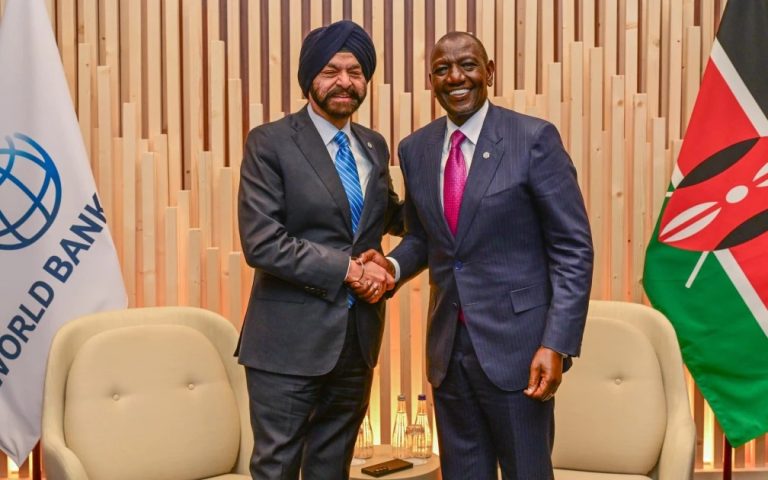
These include his call for use of local currencies in international trade as opposed to the traditional use of American dollars and his call for “equalisation” among all countries before the international monetary organization like World Bank and International Monetary Fund (IMF).
Away from the international outlook, close at home, Kenyans are not used to seeing a President standing alone in a podium.
Since the country gained independence, a Head of State is always accompanied by a senior Military officer.
But it seems things are changing.
Chemistry issues, a deep appreciation for personal space, a preference to be less formal and trying to do away with strict traditional practices that should have been done away with a long time ago?
President William Ruto has, for the last few weeks managed to shake off the ever-present presence of his aide-de-camp, Colonel Fabian Lengusuranga and his deputy ADC Lieutenant Colonel Damaris Agnetta.
It has almost gone unnoticed but the President seems to have, or at least ditched his ADC as we know it.
Kenyans are used to the President always having an unsmiling, always-alert military personnel standing behind him when they are speaking at an official public function.
An aide-de-camp is a military officer who stands behind the President during official functions.

Contrary to popular notion, the ADC is not a bodyguard but one mandated with managing the president’s diary and liaising with his or her main security team.
Reporters have observed that there had been a definite change of protocol in the last few weeks as ADC Colonel Fabian Lengusuranga has been ‘benched’ whenever President Ruto walks up to the lectern to talk.
The last time there was reasonable consistency in Dr Ruto’s ADC appearance, according to Citizen Digital research, was in March when the Head of State was even enjoying the privilege of juggling between Col Lengusuranga and Female ADC Lieutenant Colonel Damaris Agnetta.
Since then, President Ruto has only had an ADC accompanying him to the stage during the official opening of the Kenya Social Protection Conference at the Kenya School of Government in Lower Kabete on April 4.
Others were during the Prison Officers Cadet pass-out parade in Ruiru, Kiambu County on April 24, during the 60th Madaraka Day celebrations at the Moi Stadium, Embu on June 1.
Save for during church services or on top of his car, President Ruto always has Colonel Lengusuranga behind him whenever he is addressing a gathering.
But from records, he has been leaving his ADC seated while he takes the podium. Worth noting that the ADC is always within the president, he/she just does not accompany him on stage.
As recently as last Monday, President Ruto was alone on stage at three events; when he launched the Boda Boda Empowerment, during the inauguration of the Kenya Health Human Resource Advisory Council that seeks to accelerate the realisation of Universal Health Coverage and during the 93rd Annual Inspection Parade of the St. John Ambulance.
Since March, there are more instances of the president without his ADC than with him.
According to a source with knowledge of military and security intelligence, there could be a few reasons why the president is pushing his ADC to the side.
“It could be a lack of chemistry with the ADC, or the President prefers to be less formal, less strict about adherence to traditional protocol practices,” said our source.
“The ADC is typically a symbol of authority and projects the President’s role as C-I-C because no other Kenyan can have a uniformed ADC from KDF. Symbolically the President must be owned by his security agencies.
They each have a role to play in his daily activities and the role of the ADC is the connection to the KDF.”
However, our source says none of the reasons stated is alarming but says an issue like lack of chemistry can be deeper than people think.
“If the chemistry is the issue, then it is likely there is tension with the close protection team. So, to avoid unnecessary squabbling the army guys usually take a back seat to avoid causing untidy scenes in public,” he adds.
Individuals holding this position are highly-trained senior military officers who are required to be part of the president’s itinerary at all times.
According to Encyclopedia Britannica, an aide-de-camp is a French word meaning “camp assistant”.
This was an officer on the personal staff of a general, admiral, or other high-ranking commander who acted as a confidential secretary in routine matters.
On Napoleon’s staff, such officers were frequently of high military qualifications and acted both as his “eyes” and as interpreters of his mind to subordinate commanders, even on occasion exercising delegated authority.
In modern times aides-de-camp are usually of junior rank and their duties are largely social. Military, naval, and air force officers, frequently of high rank, who act as aides to chiefs of state, such as kings or presidents, are also called aides-de-camp.
In Kenya, an ADC is largely a colonial hangover that has come to define the presidency.
The first ADC in Independent Kenya was Lt. Col. (Rtd) Samuel Ngure Matu who was Jomo Kenyatta’s first ADC before he was replaced by Major (Rtd) Marsden Madoka and Major Samuel Macharia was Kenyatta’s last ADC.
President Moi took the reigns of power in 1978 and ended up having six ADCs during his 24-year rule.
They were; Major Macharia, Major Peter Ngugi Ikenye, and Colonel Wilson Boinett – one of the longest-serving ADCs – who took over and was later promoted to the Director General of the National Security Intelligence Service (NSIS).
Colonel Alexander Sitienei replaced Boinett and later Lt. Col. Jonathan Rono took over. Colonel Stephen Boiywo was Moi’s last ADC when he retired in 2002.
When President Mwai Kibaki came into power, Lt. Col. Josiah Mrashui served as his first ADC who was then replaced by Lt. Col. Godfrey King’angi who later pursued politics and was elected as Member of Parliament for Mbeere South constituency. He was replaced by Col. Peter Mbogo Njiru who also served President Uhuru Kenyatta before being replaced him with Col. Victor Mburu.
Col. Mburu went on to serve as President Uhuru Kenyatta’s ADC from 2013 to 2018 when he was replaced by Brig. Timothy Stelu Lekolool.
President Kenyatta promoted Lieutenant General Peter Mbogo Njiru as the Commander of the Kenya Army.
Report courtesy of Citizen Digital and Mt Kenya Times reporters
Similar Posts by The Mt Kenya Times:
- Mt Kenya Times ePAPER October 3, 2026
- Ruto puts Coast landlords on notice over squatter harassment
- Nairobi lights candles for Raila in Uhuru Park tribute
- Jambojet returns to Entebbe with daily flights and fares from KSh22,950
- From Lamu to the region: What the Dangote Refinery could mean for Kenya’s energy economy
About the Author