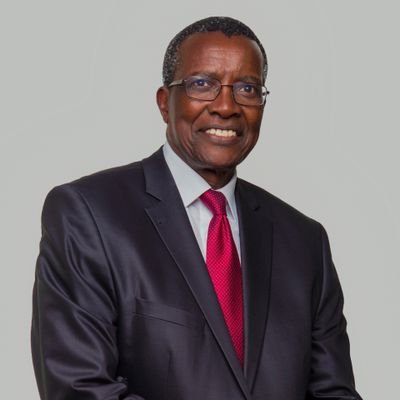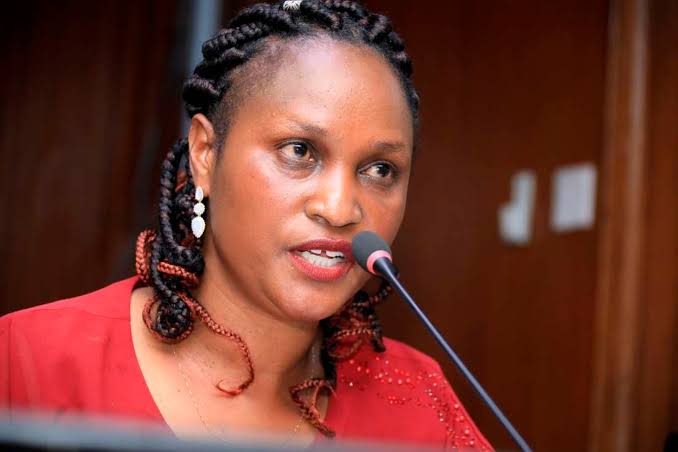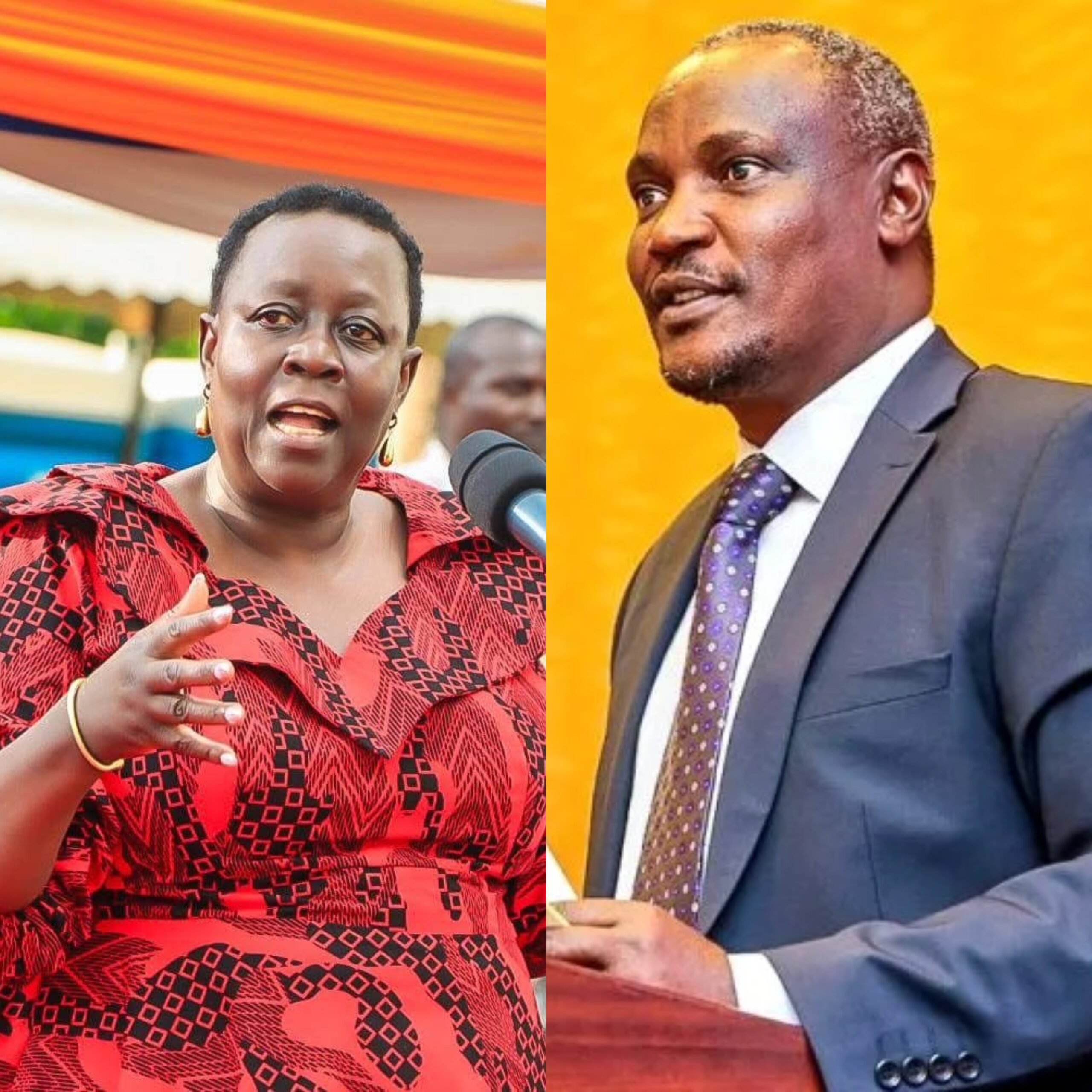
Treasury Cabinet Secretary John Mbadi and Ruth Odinga
Alliances are cracking, communities are being mobilised and old rivalries are returning — long before a single ballot paper has been printed.
By Levis Wangamati
Kenya has barely settled into 2026, yet its political class is already behaving as though the next election is tomorrow. The ballot remains more than a year away, but the language of succession has arrived early. Alliances are being tested, communities courted, old rivalries resurrected and political parties are discovering that the closer an election gets, the harder it becomes to keep internal disagreements behind closed doors. Kenya is not merely preparing for 2027. It is already fighting it.
The tensions within the Orange Democratic Movement offer a telling glimpse of what lies ahead. The public clash between Treasury Cabinet Secretary John Mbadi and Ruth Odinga is not simply another disagreement between politicians. It reflects the pressure building inside a party navigating a transformed political landscape following the departure of its long-time leader, Raila Odinga. With ODM’s grassroots strength now facing competing internal ambitions, disagreements that might once have been contained are increasingly becoming public tests of influence. The Linda Mwananchi mobilisation in Homa Bay has framed that county as an early referendum on whether ODM’s traditional political grip remains as firm as it once was.
That is how an election begins long before ballot papers are printed. It begins when every disagreement acquires political meaning, every rally becomes a measure of strength and every public statement is read as either a declaration of war or an invitation to negotiate. Political parties stop asking what is good for the country and start asking who benefits, who loses and who will remember it when the votes are counted.
The developments in Homa Bay make that transformation particularly uncomfortable. Reports of political confrontations, damaged vehicles and blocked roads illustrate how quickly competition can migrate beyond speeches and into the physical space occupied by ordinary citizens. A political contest should be a competition over ideas, leadership and national direction. It should not become a contest over who can intimidate whom, control which road or demonstrate the greatest capacity to mobilise confrontation. When politics begins to resemble a struggle for territory, democracy is already paying the price.
Nakuru and the wider Rift Valley offer another instructive lesson. The accusations involving Nakuru MPs and Rift Valley politicians, alongside the continuing fallout surrounding figures such as Oscar Sudi, demonstrate that political alliances are rarely permanent. Today’s ally can become tomorrow’s rival when interests, influence and succession calculations shift. The closer Kenya moves towards 2027, the more difficult it will become for politicians to maintain a common front when their individual political futures begin pointing in different directions.
The Jackson Mandago case adds yet another dimension. His acquittal in the Finland scholarship matter is fundamentally a question for the courts, and the distinction between a legal outcome and its political interpretation should remain clear. Yet the reactions surrounding the case reveal how quickly court decisions can be absorbed into political battles. Once judicial outcomes are routinely read according to who gains or loses politically, institutions risk becoming yet another battlefield in Kenya’s electoral competition rather than pillars of an independent legal order.
Kenya Kwanza, meanwhile, is already thinking about the arithmetic of the next presidential contest. Farouk Kibet’s appeal for Kamba community support for President William Ruto’s administration, paired with his criticism of former Deputy President Rigathi Gachagua, illustrates how early coalition-building has already begun. The message is unmistakable: communities are being counted, alliances tested and political loyalties negotiated — eighteen months before election day.
This is where the real danger lies. There is nothing unusual about politicians preparing for an election. Democracy requires competition, parties need strategies and voters deserve choices. The problem begins when the next election becomes so dominant that it starts determining how leaders govern the present.
Kenya still has unfinished business that cannot be deferred until after 2027. The cost of living, employment, education, healthcare, public debt, devolution and the aspirations of young people will not disappear because the political class has moved on to succession calculations. A government cannot place today’s problems in suspension while computing tomorrow’s votes. Public policy cannot be reduced to campaign material, and citizens cannot be treated as numbers on a political spreadsheet.
Kenya has experienced the consequences of allowing electoral competition to displace political responsibility. Election tensions do not materialise suddenly on voting day. They accumulate through speeches, accusations, mobilisation, defections, rallies and the gradual normalisation of treating political opponents as enemies rather than competitors in a shared democratic process.
That is precisely why the developments unfolding now deserve more than passing attention. The disagreements within ODM, the contest in Homa Bay, the tensions between Rift Valley politicians, the reactions surrounding the Mandago case and Kenya Kwanza’s early community mobilisation are different stories pointing towards the same destination. Kenya’s political class is already positioning for the next contest, and the terrain is becoming crowded long before the official campaign has begun.
The uncomfortable question, therefore, is not whether Kenya is preparing for 2027. It clearly is. The question is whether the country can prepare for the next election without losing sight of the one thing that should matter before any election: governing the country it already has.
There is a difference between preparing for an election and living permanently inside one. The first is part of democracy. The second is a threat to effective governance. When leaders spend more time calculating coalitions than delivering results, politics becomes an endless rehearsal for tomorrow while today’s problems remain unaddressed on the stage.
Kenya cannot afford that cycle. The election will arrive in due course, and voters will have their say. Until then, politicians still have a country to run, institutions to protect and citizens to serve. If Kenya has already started fighting the 2027 election, the least its political class can do is remember that 2026 is not a campaign trailer. It is a year in which Kenyans still expect — and deserve — to be governed.
Similar Posts by The Mt Kenya Times:
- Mt Kenya Times ePAPER October 7, 2026
- Ruto signs KSh389B electric vehicle deal at State House
- Kenya mobilises KSh70B to fight Ebola as US and World Bank step in
- High Court freezes law school admissions over disputed entry rules
- Grade 11 textbooks head to schools as CBC transition gathers pace
About the Author