Kenya Unveils Ambitious 10-Year Mau Forest Restoration and Livelihood Programme
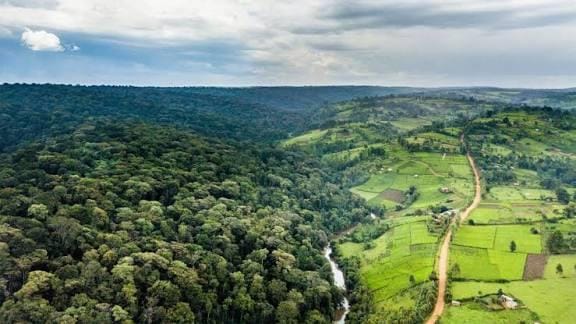
A File photo of the Mau Forest.
The Ministry of Environment, Climate Change and Forestry has launched an ambitious initiative to restore and conserve the Mau Forest Complex, Kenya’s largest water tower and one of East Africa’s most critical ecosystems. Speaking during a media and partners’ roundtable at a Hotel in Nairobi, Principal Secretary for Environment and Climate Change, Dr. Eng. Festus K. Ng’eno, unveiled the Mau Forest Complex Integrated Conservation and Livelihood Improvement Programme (MFC-ICLIP), a 10-year plan designed to restore degraded forest lands while creating green jobs and enhancing community livelihoods.
Operating under the clarion call “Linda Mau, Boresha Maisha” (Protect Mau, Improve Livelihoods), the programme aims to tackle the forest’s mounting threats illegal logging, unsustainable land use, encroachment, and climate change through an integrated, multi-stakeholder approach. “The Mau Forest Complex is Kenya’s largest water tower and an ecological lifeline. It sustains households and farming, generates about 600 MW of hydropower, supports the tourism economy, and anchors regional and global ecosystems,” Dr. Ng’eno said.
The Mau Forest Complex is central to Kenya’s water and food security, supplying rivers that feed major hydropower plants and mega-dam projects across several counties. It also sustains Lake Nakuru National Park, the Maasai Mara, and the wider Lake Victoria Basin, which connects to the Nile River and supports millions of people across Uganda, South Sudan, Sudan, and Egypt. Globally, the Mau contributes to biodiversity conservation, carbon sequestration, and climate resilience.
The first edition of MFC-ICLIP, scheduled for official launch on October 24, 2025, seeks to restore 3,313 hectares of degraded forest with 4 million seedlings. Already, a weekly tree-planting campaign launched last month has seen over 150,000 seedlings planted in Eastern Mau, signaling early progress. Dr. Ng’eno emphasized that the programme is not only a government project but also a “whole-of-government and whole-of-society” effort, bringing together county governments, private sector players, development partners, civil society, local communities, and the media.
To support long-term financing and accountability, a Mau Water Fund and regular partners’ coordination forums will be established. “Partnership is at the heart of MFC-ICLIP. We are combining government leadership, community participation, private sector investment, and development partner expertise. Together, we can turn the tide from degradation to restoration,” he noted. Dr. Ng’eno, who hails from the Mau region, described the initiative as deeply personal, noting that he had witnessed firsthand the environmental decline over the years.“This programme is a game-changing legacy initiative and a model for the rest of the country. It is about restoring ecosystems while improving livelihoods,” he said.
The Mau Forest has traditionally been inhabited by the Ogiek people, who practiced a sustainable hunter-gatherer lifestyle. But over the decades, immigration, farming, logging, and charcoal trade have led to significant deforestation with more than a quarter of the forest lost since the 1970s.The destruction has had far-reaching effects, including the postponement of the Sondu-Miriu hydro power plant’s inauguration in 2008 due to low water levels.
Similar Posts by The Mt Kenya Times:
- Mt Kenya Times ePAPER October 1, 2026
- Museveni backs Lamu but keeps Uganda’s money at home
- Sifuna’s party wins its name — and Kenya’s opposition race begins in earnest
- Lamu’s $16B gamble: Africa’s biggest refinery divides the region
- Ruto launches KSh2.2 trillion Lamu refinery in East Africa’s biggest energy bet
About the Author